
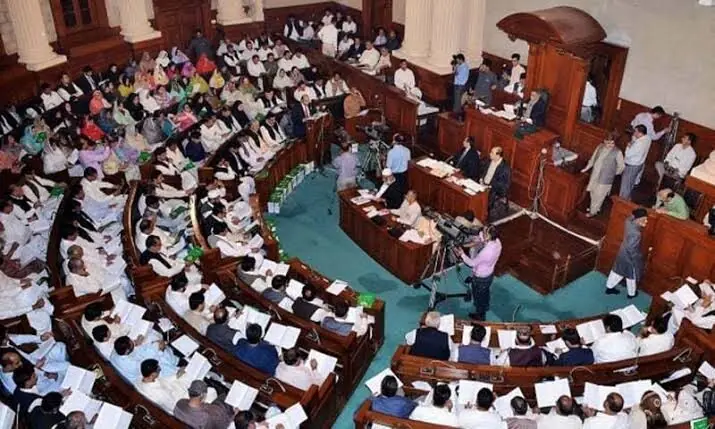
The Punjab Assembly has unanimously adopted a resolution condemning India for violating the Indus Waters Treaty, calling the infringement a breach of Pakistan’s water rights and of international principle (Dawn).
Who moved it
The resolution was tabled by ruling-party members Rana Muhammad Arshad and Ahsan Raza. All members voted in favour.
What it demands
– strict implementation of the treaty – that the government use every available means to secure Pakistan’s legitimate share of water – no compromise on water rights
The House also welcomed the Court of Arbitration decision supporting Pakistan’s position — the same ruling the Foreign Office cited on Wednesday, confirming that India’s move to place the treaty in abeyance does not relieve it of its obligations.
Members paid tribute to Prime Minister Shehbaz Sharif, Field Marshal Syed Asim Munir, Deputy Prime Minister Ishaq Dar and the Pakistani delegation for their work on the case.
What a resolution does, and does not, do
A provincial assembly resolution carries no legal force against another state. It is a statement of position, and it is worth reading as one: Punjab is the province the treaty’s waters overwhelmingly irrigate, which makes its legislature the most directly interested chamber in the country on this question.
The substantive movement this week came from the arbitral tribunal, not the floor of the assembly. What the unanimous vote signals is that there is no domestic political division to exploit on the issue — government and opposition benches took the same line.
Prime Minister Shehbaz made the same argument at the SCO summit in Bishkek on Monday, telling the Council of Heads of State that water “must never be weaponised; it cannot be used as an instrument of coercion.”
[Image: Dawn/File]



