
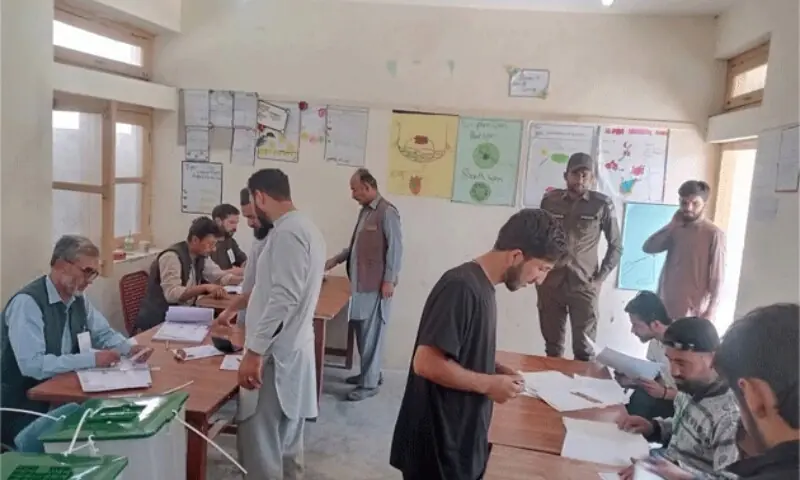
The Pakistan People’s Party and Pakistan Muslim League–Nawaz reached a power-sharing agreement on June 20, establishing a coalition government in Gilgit-Baltistan after neither party secured a majority in the June 7 assembly elections (Dawn; Arab News).
PPP won ten of the 24 general seats, making it the single-largest party, while PML-N took six. Independent candidates backed by Pakistan Tehreek-e-Insaf won two seats; Majlis Wahdat-e-Muslimeen won one; the remaining five independent candidates subsequently declared support for the Istehkam-e-Pakistan Party, which on June 21 also announced backing for the PPP-led arrangement, giving the coalition a working majority.
Under the deal, PPP will hold the offices of Chief Minister and Speaker of the GB Assembly, while PML-N takes the Governor’s post, the Deputy Speaker’s seat, and the Leader of the Opposition role — a division that mirrors the federal power-sharing arrangement between the two parties in Islamabad (Geo.tv).
PTI’s diminished footprint
PTI-backed candidates managed only two of 24 seats despite the party’s strong national showing in the February 2024 general elections. The result reflects the constrained electoral position of a party whose formal machinery has been curbed and whose founder Imran Khan remains imprisoned on a 14-year sentence. The Gilgit-Baltistan elections drew unusually close attention from Islamabad this cycle: the territory, administered by Pakistan but lacking provincial status or representation in the national parliament, is the entry point of the China-Pakistan Economic Corridor.



