
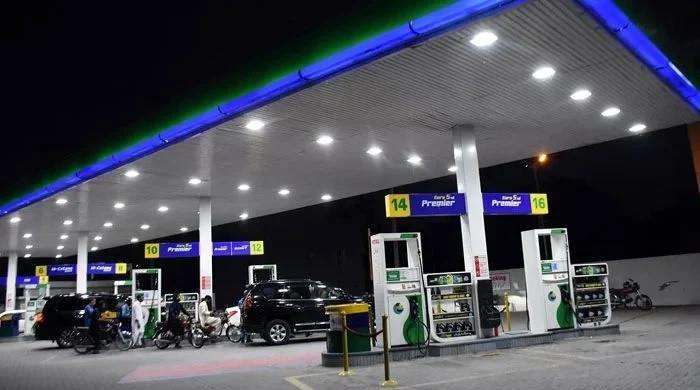

- The revised fuel prices will remain in effect from November 1 to 15.
- OGRA looks at global oil trends before finalizing recommendations.
- The Finance Directorate issues a notification after examining the Ministry’s summaries.
The price of petrol has been increased by Rs 2.43 per liter for the next fortnight, effective November 1, following recommendations by the Oil and Gas Regulatory Authority (OGRA) and relevant ministries.
Petrol has been set at Rs 265.45 per liter for the next fortnight, the Finance Directorate said in a notification based on the authority’s latest revision.
High-speed diesel (HSD) has also become costlier, rising by Rs 3.02 to Rs 278.44 per litre, a change officials say reflects adjustments proposed by relevant ministries.

Meanwhile, sources said kerosene rose by Rs 3.34 to Rs 185.05 per liter and light diesel rose by Rs 1.22 to Rs 163.98.
The News On Wednesday it said oil prices are expected to rise by as much as Rs 2.34 per liter from the next fortnight due to fluctuations in global oil markets and the impact of recent US sanctions on major Russian producers.
Preliminary calculations for the first 12 days of the pricing cycle had suggested that petrol may rise by Rs 1.48 per liter and high-speed diesel (HSD) by Rs 1.38. Kerosene could see a bigger jump of Rs 2.34 per litre, while LDO may increase by Re 0.49.
In line with the fluctuations in the international fuel market, the federal government earlier this month reduced the price of petrol by Rs 5.66 per liter for a fortnight.
According to a release issued by the Finance Department, the price of petrol was Rs 263.02 per litre. The price of high speed diesel (HSD) was also reduced by Rs 1.39 to Rs 275.41 per litre.
Similarly, kerosene oil price fell by Rs 3.26 to Rs 181.71 per litre. The government had fixed the price of light diesel at Rs 162.76 per liter for the fortnight.
Petrol is mainly used in private transport, small vehicles, rickshaws and two-wheelers. Higher fuel prices have a significant impact on the budgets of members of the middle and lower middle classes, who mainly use gasoline for their transportation.
On the other hand, a significant part of the transport sector relies on high-speed diesel.
Its price is considered inflationary as it is mainly used in heavy goods vehicles, trucks, buses, trains and agricultural machinery such as tractors, tube wells and threshers.
The consumption of high-speed diesel is a major contributor to the increased prices of vegetables and other food items.
a href=”https://www.geo.tv/latest/631531-govt-hikes-petrol-diesel-rates-for-next-fortnight”>Source link



