Both bills are through.
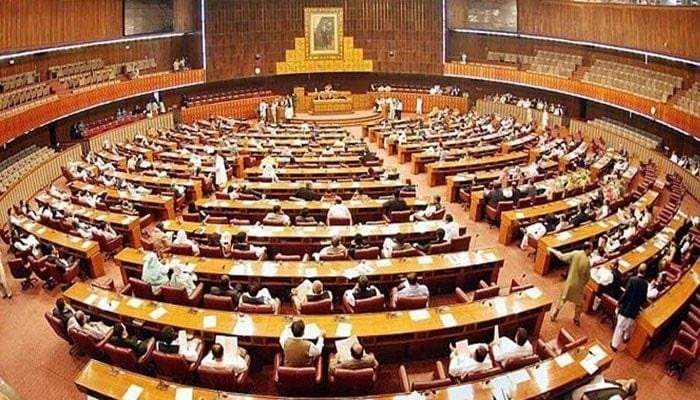
The National Assembly and the Senate passed two pieces of legislation by majority vote on Thursday: the Defence Forces Act, 2026, and an amendment to the National Command Authority Act, 2010 — the statute governing Pakistan’s nuclear command and control (Geo News).
The bills were passed first by the National Assembly and then by the Senate.
The speed is the story
This newspaper reported on Thursday that the federal cabinet, chaired by Prime Minister Shehbaz Sharif, had approved the two drafts and that they would be laid before Parliament during the session that began on August 17.
They were laid before Parliament and passed by both houses the same day. Geo News reports that the cabinet endorsed the drafts “moments before” the legislation moved.
Nuclear command legislation cleared both chambers of Parliament within hours of the cabinet seeing it. The text was not published in advance, and there is no indication of committee scrutiny in either house.
What the bills do
The Defence Forces Act, 2026 establishes the legal and administrative framework for the office of the Chief of Defence Forces and for its headquarters.
The amendment to the NCA Act, 2010 updates the nuclear command framework to reflect constitutional change.
Both give effect to the 27th Constitutional Amendment, passed in November 2025, which abolished the office of Chairman Joint Chiefs of Staff Committee and created the office of Chief of Defence Forces. Chief of Army Staff Field Marshal Asim Munir became the first holder of that post.
The same amendment provided for a National Strategic Command, headed by a four-star officer and tasked with overseeing the operational integration of Pakistan’s strategic forces. Prime Minister Sharif promoted General Syed Aamer Raza — then Chief of the General Staff — from lieutenant general to four-star rank and appointed him to head it (Express Tribune).
Still unpublished
The provisions remain unknown. Neither draft was published before passage, and neither has been published since.
Reporting ahead of the cabinet decision indicated the amendments would replace references to the abolished CJCSC with the Chief of Defence Forces, who would become Deputy Chairman of the National Command Authority, with the prime minister continuing as Chairman. That expectation has been reported rather than confirmed, and the text has not been released to test it.
Under the 2010 Act the prime minister chairs the NCA, which holds ultimate authority over nuclear policy and employment, with the Strategic Plans Division as its secretariat. Nothing in the announcements indicates a change to that arrangement.
The politics
The 27th Amendment was contested, characterised by opponents as militarising the constitution, and passed by a parliament the PTI does not recognise as legitimately constituted.
The arithmetic around implementing legislation has been shifting. PPP Chairman Bilawal Bhutto-Zardari said on Wednesday that his party’s members would not vote for government legislation until its concerns were addressed, while allowing an exception for matters of national importance. On the same day the PPP agreed with opposition parties to cooperate on legislative matters in parliament.
Both bills passed by majority vote in both houses regardless.