
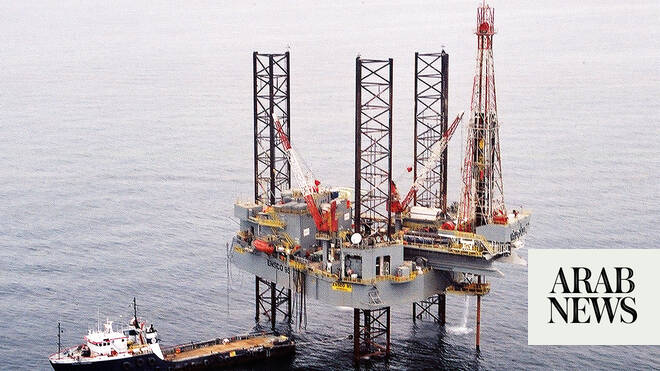
Pakistan is preparing to drill its first-ever offshore oil well, a milestone that state-owned Pakistan Petroleum Limited (PPL) hopes will open a new frontier in the country’s long search for domestic hydrocarbons and ease its reliance on costly imports.
The well sits in the Sirani Block off the southern shoreline of Sindh, near Sujawal district and roughly 30 kilometres from the mainland, with drilling — or “spudding” — targeted for March 2026, according to Arab News. PPL has said it expects to assess whether the well holds commercial volumes within about three months of the spud date, the same report noted.
The campaign marks Pakistan’s first attempt to tap offshore reserves after decades of depending on onshore discoveries. Should the initial well prove successful, the company could eventually drill up to 25 wells in the block, Arab News reported, a figure separately corroborated by Energies Media.
The prospect rests on seismic data PPL acquired in 2006–07, per Arab News. Arshad Hussain Palekar, the company’s General Manager Exploration and Core Business Development, framed the venture as a natural progression of existing onshore work, describing it as “the further extension of our onshore discoveries in the southern-southeastern which is located at the shoreline,” Arab News quoted him as saying.
The terrain has slowed progress. The Sirani site lies in marshy, tide-affected ground that has long deterred exploration, and PPL has called the project technically complex. To withstand tidal movement and unstable subsoil, the site has been elevated by about nine feet, while a 17-kilometre natural channel is being used for barge transport, Arab News reported. The company added that construction is under way “to support drilling operations, including development of loading, offloading jetties and an access road linking the offloading jetty to the well site,” according to Arab News. At peak operations the location is designed to host up to 250 personnel, the report said.
The strategic stakes are considerable. Pakistan imports more than 60 percent of its oil, Arab News noted, a dependence echoed by Energies Media, leaving the economy exposed to swings in global prices and pressure on foreign-exchange reserves. PPL itself contributes roughly 20 percent of the country’s natural gas supply, Arab News reported.
The Sirani well is part of a wider revival in exploration. PPL has recently been awarded eight new exploration blocks, according to Arab News and Energies Media. Roughly 70 kilometres from the Sirani site lies Block C, in which Turkish Petroleum holds a 25 percent interest, Arab News reported.
Industry observers caution that frontier offshore drilling carries elevated geological and execution risk, and a single well rarely confirms a commercial play on its own. But for a country that has leaned almost entirely on onshore fields, a successful Sirani result would be a significant step. If the well delivers, the planned follow-on programme of up to 25 wells could anchor a domestic offshore industry that Pakistan has talked about for years but never realised.
For now, attention turns to the spud and the three-month assessment window that follows — the first real test of whether Pakistan’s offshore ambitions can move from seismic maps to flowing barrels.



