ISLAMABAD — Pakistan has confined its wild poliovirus tally to three cases so far in 2026, a sharp improvement that has placed the country within reach of a long-sought goal: interrupting transmission of the paralysing virus during the first half of this year.
The year’s first case, reported in early March, was a four-year-old girl from Sujawal district in Sindh, confirmed by the Regional Reference Laboratory for Polio Eradication at the National Institute of Health (NIH) in Islamabad. Two further cases followed in Khyber Pakhtunkhwa — in the Jani Khel union council of Bannu and the Garyom union council of North Waziristan — bringing the national total to three by early May.
The figure marks a steep decline from recent years. Pakistan recorded 74 cases in 2024 and 31 in 2025, part of what officials describe as a 99.8 percent reduction in poliovirus since the early 1990s, according to The Nation.
The World Health Organization has framed the coming months as decisive. In its forty-fourth statement on the polio emergency, dated March 4, the IHR Emergency Committee said “the current momentum in the Pakistan programme, combined with the ongoing low transmission season, offers an opportunity to fast-track progress towards stopping WPV1 transmission during the first half of 2026.” The committee cautioned, however, that an estimated 250,000-plus children in South Khyber Pakhtunkhwa remain unreached because of insecurity, and that the virus continues to be detected in Karachi despite high reported coverage.
Environmental surveillance points to a narrowing reservoir. In Peshawar, all six sewage sampling sites have tested negative since June 2025, with positive samples in Khyber Pakhtunkhwa now confined largely to Hinjal and Noorabad in Bannu and Haiderkhel in North Waziristan, The News reported in April. An EOC communication official attributed the gains to sustained effort, saying “no single intervention explains this outcome; it reflects consistent alignment across all operational pillars.”
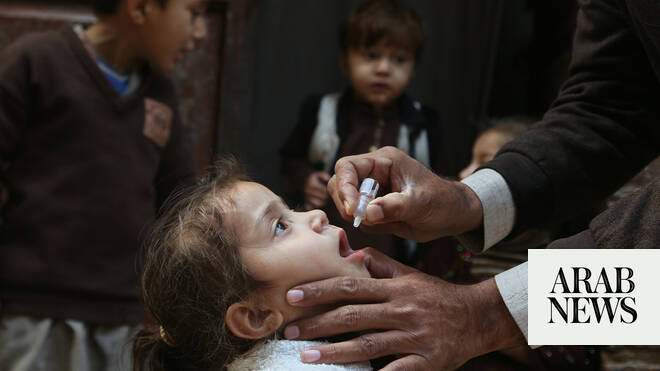
To press the advantage, authorities have layered nationwide and targeted drives. A nationwide campaign from April 13 to 19 aimed to vaccinate 45 million children under five — including 23 million in Punjab and 16 million in Sindh — deploying roughly 413,000 workers who also distributed Vitamin A, the National Emergency Operations Centre said. That was followed by a sub-national campaign across 79 high-risk districts in May.
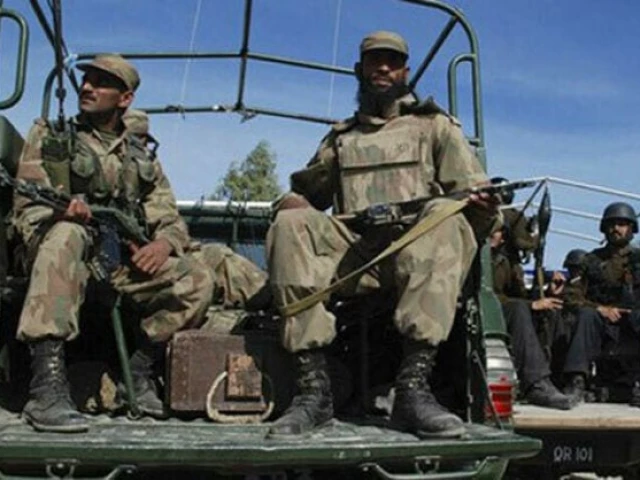
Security remains the gravest obstacle to that effort. On May 18, at least two police personnel escorting vaccination teams were killed in separate incidents in Bajaur district of Khyber Pakhtunkhwa, and on May 24 a police official guarding a team was seriously wounded in a firing incident near Chaman in Balochistan, though the vaccinators were unharmed. Militant groups, particularly the Tehreek-e-Taliban Pakistan, have long weaponised anti-vaccine narratives to target health workers, with attacks concentrated in Khyber Pakhtunkhwa and Balochistan — the same regions that host the country’s persistent virus reservoirs, Prokerala reported.
The WHO committee stressed that success will hinge on “translating national political commitment into functional access to all children everywhere,” singling out South Khyber Pakhtunkhwa, Karachi and southern Afghanistan as the zones that will determine whether Pakistan finally closes the door on a disease it has been fighting for decades.