
Islamabad:
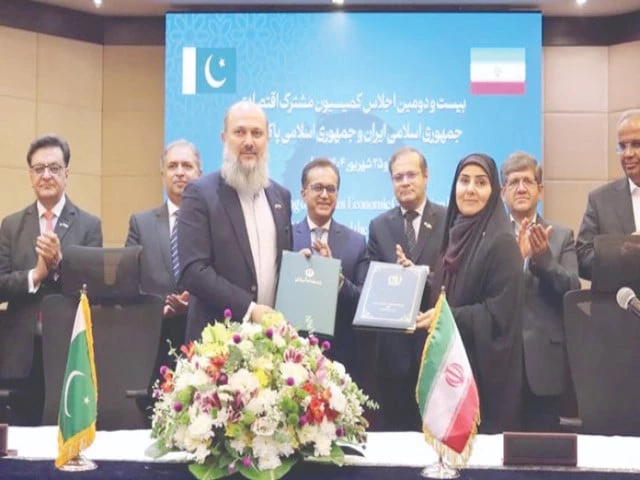
The meeting of the Pakistani-Iran Commune Committee (Jec) ended in Tehran on Tuesday with the signing of basic protocols, where both sides confirmed the determination to achieve the $ 10 billion trade target.
JEC 22nd Session marked a major step forward in strengthening the economic, commercial and cultural ties between Pakistan and Iran, highlighting a common commitment to mutual prosperity and enhanced bilateral cooperation.
The Pakistani delegation was led by Federal Commerce Minister Jam Kamal Khan and the Iranian delegation was directed by Farzaneh Sadegh’s Minister of Road and Urban Development.
The meeting examined bilateral relations and agreed to a strong context for future cooperation. He emphasized the expansion of cooperation in various areas such as trade, investment, energy, agriculture, transport, housing, health, education and cultural exchanges. In the conclusion, both ministers signed the relevant protocols.
The main results of the 22nd JEC Synod included the commitment to achieve the bilateral commercial target of $ 10 billion, as envisioned by the leadership of both nations. In commerce and investment, both sides emphasized the removal of tariff and non -tariff barriers, border operating markets and promoting regular business meetings to strengthen trade ties.
In energy and infrastructure, consensus to enhance the supply of electricity, including the repetition of a 220 -kilometer transmission line on GWADAR and the exploration of renewable energy projects.
A joint working group will promote investment in the energy sector, while cooperation in water resources management and sustainable urban development also prioritized.
In agriculture and the environment, both sides have pledged to implement veterinary agreements, to combat parasites and work together on agricultural seeds and equipment, along with common strategies to tackle climate challenges such as sand and dust storms.
Transfers and connectivity were the main catering areas, where the agreements were bruised to strengthen the bonds of road, rail, air and sea transport. They included the increase in rail cargo volumes, the strengthening of air navigation services and the exploration of ferry services for passengers, including pilgrims, among sea ports.
Cultural and educational ties were strengthened through plans for cultural festivals, media collaborations, academic collaborations, student exchanges and vocational training programs.
The cooperation of the health sector was promoted by agreements on joint training, pharmaceutical registration and cross -border monitoring of the disease.
A Joint Work Cooperation Committee will facilitate workers’ mobility in areas such as construction, textiles and agriculture. Both nations have also confirmed their commitment to offset drug efforts through information -based businesses and border cooperation, while discussing proposals to rationalize the visa procedures for entrepreneurs and drivers.
On the sidelines of JEC, a common business forum was organized, which gathered top businesses from both countries. It has provided the opportunity in the private sectors of Pakistan and Iran to explore new routes of cooperation and to complement government efforts to deepen bilateral trade and investment.
Facing JEC’s closure meeting, Jam Kamal welcomed the successful completion of the talks and the signing of an integrated protocol that sets a clear map for cooperation.
He emphasized the mutual commitment of both countries to strengthen cooperation in commerce, investment, transport, customs facilitation and industrial development.
a href=”https://tribune.com.pk/story/2567310/pakistan-iran-ink-trade-deals”>Source link



