
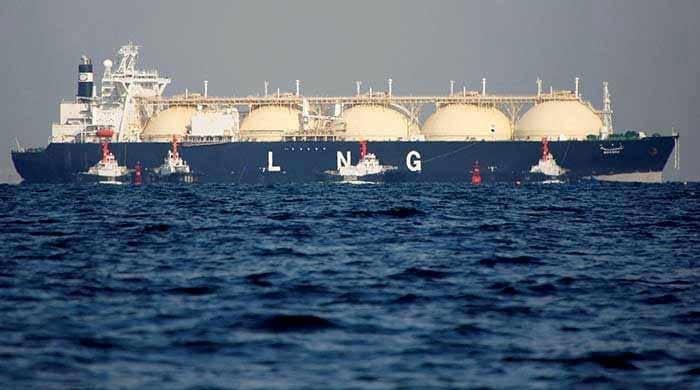
- Pakistan currently imports 9 LNG cargoes from Qatar every month.
- Islamabad wants Qatar to sell 24 contracted LNG cargoes.
- The government is already diverting 1 cargo of ENI per month to the international market.
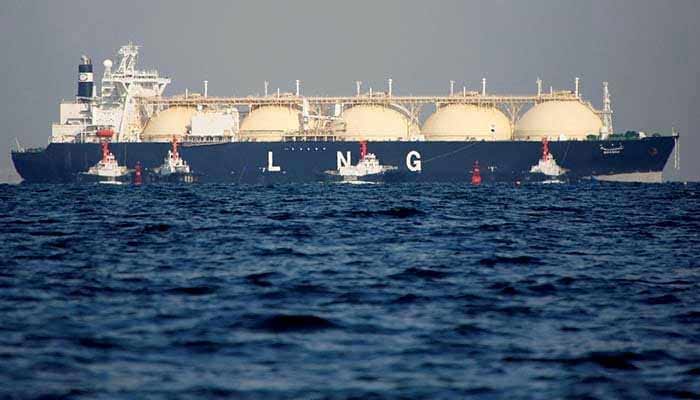
Pakistan has urged Qatar to divert 24 of its contracted liquefied natural gas (LNG) cargoes to the international market in 2026 amid declining domestic demand and an oversupply of natural gas in the country, The News reported on Saturday.
The move comes as Pakistan’s LNG infrastructure faces constraints, with storage and distribution capabilities under pressure due to lower-than-expected demand from the industrial and power sectors.
Petroleum Department officials involved in discussions on the annual delivery plan say the proposal will be finalized by the end of October. The request falls under the net differential procedure (NPD) clause in Pakistan’s long-term LNG deals with Qatar.
While the clause allows for the resale of excess cargo, it offers little financial relief: Qatar keeps any profit from international sales, while Pakistan must absorb any losses if the spot market price is below the contract rate.
“In contrast, Pakistan’s agreement with Italian energy company ENI includes a more favorable NPD clause, allowing profit and loss sharing with Pakistan LNG Limited (PLL). As a result, the government is already diverting one cargo of ENI per month to the international market in 2025 and plans to continue this practice in 2026, excluding the month of January.”
Pakistan currently imports nine LNG cargoes from Qatar each month, five under a 15-year contract at 13.37% of Brent crude and four under a 10-year contract at 10.2% of Brent. Both agreements are based on rigid “Take-or-Pay” terms, which require payment regardless of whether the gas is consumed.
These imports were originally intended to supply four RLNG-based power plants in Punjab, which are now operating at significantly reduced capacity.
Due to the sharp decline in demand, Pakistan faces an annual surplus of 35 LNG cargoes, including 11 from ENI. This oversupply has caused operational challenges, with excessive gas build-up in the RLNG pipeline system.
In recent months, the line pack pressure exceeded 5.17 billion cubic feet (bcf), exceeding the 5 bcf safety limit and triggering alarms of possible system failure.
To mitigate the risk, authorities have shut down domestic natural gas fields that produce between 270 and 400 million cubic feet per day (mmcfd). However, this solution carries its own risks.
Officials from exploration and production companies warn that some wells could be permanently damaged after the shutdown, and the shutdowns are already affecting crude oil and liquefied petroleum gas (LPG) production.
Attock Refinery Limited has warned the Petroleum Directorate that the drop in crude oil supply is hampering its ability to operate at full capacity.
The collapse in RLNG demand was particularly severe in the power and export sectors. As of October 17, the power sector is consuming just 486 mmcfd — well below the committed 800 mmcfd.
Export-oriented industries have cut back even more drastically, with RLNG use plummeting from 350 mmcfd to just 100 mmcfd.
Officials attribute the decline to high RLNG prices, currently around Rs 3,500 per MMBtu, and an additional 5% off-grid levy of Rs 570 per MMBtu.
The four major RLNG-based power plants, Haveli Bahadur Shah, Balloki, Bhikki and Trimmu, were designed to operate as “must-run” units with a 66 percent take-or-pay obligation, based on high efficiency levels of 62 percent. However, in 2020, the Economic Coordination Committee (ECC) approved a reduction of this requirement to 50%.
According to Division Power, the plants now operate on the Economic Merit Order, which dispatches power only from the cheapest sources available, making RLNG less competitive.
This shift in energy dispatch has created a financial headache for the Petroleum Directorate and the state-owned Pakistan State Oil (PSO), which is responsible for managing LNG imports. In FY 2024–25 alone, the government had to divert Rs 242 billion worth of RLNG to the domestic sector to manage excess supply.
a href=”https://www.geo.tv/latest/629173-pakistan-asks-qatar-to-divert-2026-lng-shipments-amid-oversupply-concerns”>Source link



