

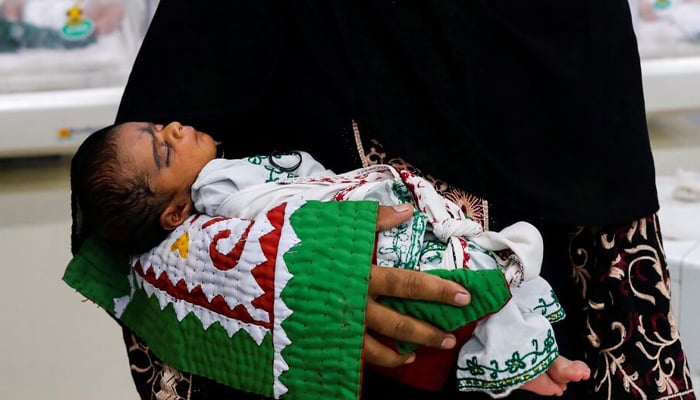
The United Nations: Pakistan is ranked in four countries – along with Nigeria, India and the Congo Republic of Congo (HDC) – which represented almost half of the estimated 260,000 mother’s deaths worldwide in 2023, according to the UN data released by the UN. cuts for US and United Kingdom funding.
Mother’s deaths include those associated with complications during childbirth or pregnancy, three United Nations organizations reported in a joint report.
The trends in the mother’s mortality report were published by the UN Children’s Fund (UNICEF), the World Health Organization (WHO) and the UNS SEUAL AND REPRODUCTIVE HEALTH AGENCY UNFPA, in keeping World Health Day on April 7.
The report showed that Nigeria had the highest number of mother deaths and represented more than a quarter (28.7%) of all estimated world deaths in 2023, with about 75,000 deaths.
Only three other countries had more than 10,000 motherboard deaths in 2023 – India and the GDC tied to 19,000, with Pakistan a total of 11,000. India and the GDC represented 7.2% each, while Pakistan represented 4.1% of the world’s mother’s deaths.
Together, these four countries represented almost half (47%) of all mother’s deaths worldwide in 2023, according to the report.
The report has warned that unprecedented help cuts are jeopardizing worldwide progress to end mothers’ deaths and demand greater investment in midwives and other health workers.
It shows that mothers’ deaths were reduced by 40% between 2000 and 2023, mainly due to improved access to basic health services.
As funding for assistance reduces the countries of the power to overthrow the health services for mothers, newborn and children, United Nations Organizations are aimed at emergency actions to prevent mothers’ deaths, especially in humanitarian environments where the numbers are already high.
“While this report shows the glow of hope, the data also emphasizes how dangerous pregnancy is still in much of the world today-despite the fact that there are solutions to prevent and treat complications that cause the overwhelming majority of mothers’ deaths,” said Tedros.
“In addition to ensuring access to quality maternity care, it will be crucial to strengthen underlying health rights and reproduction of women and girls – factors that support their prospects for healthy results during pregnancy and beyond.”
The report also provides the first global account of the COVID-19 Pandemic impact on mother’s survival.
It is estimated that 40,000 more women died due to pregnancy or childbirth in 2021, increasing to 282,000 in 2022 and 322,000 next year.
This increase was linked not only to the immediate complications caused by COVID-19 but also for widespread holidays in maternity services, emphasizing the importance of ensuring that this care is available during pandemic and other emergency situations.
“When a mother dies during pregnancy or childbirth, her baby’s life is also in danger, very often, and both are lost in reasons we know how to prevent,” said UNICEF Executive Director Catherine Russell.
With global funding cuts that put more moms at risk, especially in the most fragile arrangements, “people need to invest in midwives, nurses and community health workers to ensure that every mother and baby has the opportunity to survive and thrive.”
The exhibition also highlights persistent inequalities between areas and countries, as well as uneven progress.
With maternal mortality decreasing by about 40% between 2000 and 2023, sub -Saharan Africa achieved significant profits. It was also among the three UN areas to see significant drops after 2015, with others being Australia and New Zealand and Central and South Asia.
However, sub -Saharan Africa continued to represent about 70% of the world weight of maternal deaths in 2023 due to high rates of poverty and multiple conflicts.
Meanwhile, five areas have seen progress being stagnant after 2015: North Africa and West Asia, East and Southeast Asia, Oceania (excluding Australia and New Zealand), Europe and North America and Latin.
Dr. Natalia Kanem, executive director of UNFPA, confirmed that access to the mother’s quality health services is a right, not a privilege.
He emphasized the urgent responsibility for building health systems well that protect the lives of pregnant women and newborns.
“With the strengthening of supply chains, the labor force of obstetrics and the detached data needed to identify those at risk, we can and should end the tragedy of deaths that can be prevented by their parent and huge tolls in families.”
The exhibition also underlined the difficulty of pregnant women living in humanitarian emergencies, which face some of the highest risks worldwide. Nearly two -thirds of world deaths by the mother are now occurring in countries affected by fragility or conflict.
In addition to ensuring critical services during pregnancy, childbirth and postnatal periods, the report emphasized the importance of efforts to enhance the overall health of women by improving access to family planning services, as well as preventing underlying health and health conditions.
In addition, the report emphasized the need to ensure that girls remain at school and that they and women have the knowledge and resources to protect their health.
a href=”https://www.geo.tv/latest/598884-pakistan-among-four-countries-making-up-half-of-global-maternal-deaths-un-report”>Source link



