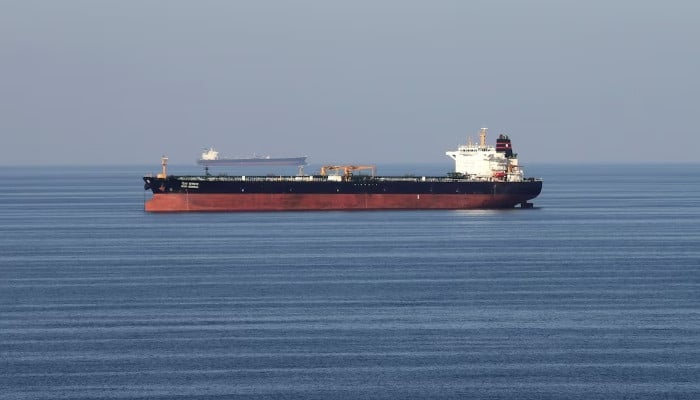
Oil extended its gains on Friday on concerns about the terms under which the Strait of Hormuz would reopen, after Iran, working with Oman, proposed banning vessels it deems hostile and heavily fining those that breach the rules (Geo News).
Brent crude futures rose 80 cents, or 0.97 per cent, to $83.29 a barrel by 0303 GMT. US West Texas Intermediate rose 64 cents, or 0.83 per cent, to $77.93. Both had settled more than $3 higher on Thursday, with Brent breaching $80 for the first time since it fell below that level on July 13.
Despite the rebound, both benchmarks were on course for a weekly loss of about 8 per cent, having fallen earlier in the week as a settlement looked more likely.
An Iranian lawmaker said a parliamentary committee is reviewing a preliminary bill to bar US, Israeli and other vessels deemed hostile from the strait, and to fine violators up to 20 per cent of cargo value, according to Fars news agency. On fees, Iran is seeking between 5 and 7 per cent of cargo value from ships using the strait; Oman is discussing around 3 per cent; Washington wants none. Four industry sources said the proposed arrangement is not easily workable given US sanctions and restrictive insurance clauses on any such payments.
The market is not reading the draft as a failed negotiation so much as a description of the destination.
“The proximate trigger is more specific: it’s reacting to Iran’s published draft plan for Hormuz transit conditions, which would ban US and Israeli vessels and require other ‘hostile’ countries to pay compensation before passage,” said Lin Ye, vice president of commodities market – oil at Rystad Energy. “That’s not the market pricing in a bad deal, it’s pricing in confirmation that whatever emerges is a managed/conditional corridor, not a restoration of normal flow.”
Vandana Hari, founder of Vanda Insights, said the week’s signals on a possible Iran-Oman transit deal “have driven a roller-coaster ride in market sentiment but as of now, left it in the dark as to what needs to happen for the agreement to be clinched”.
Roughly a fifth of the world’s oil and liquefied natural gas moved through the strait before the war began at the end of February. For Pakistan, which imports the bulk of its crude and much of its LNG through the Gulf, a conditional corridor rather than a restored one means the import bill stays structurally higher even if a deal is signed.
Meanwhile Yemen’s Houthis said they carried out missile and drone attacks on “Saudi deployments” in Marib and Hadramout on Thursday. US President Donald Trump told reporters the same day that he believed the war would be over soon.