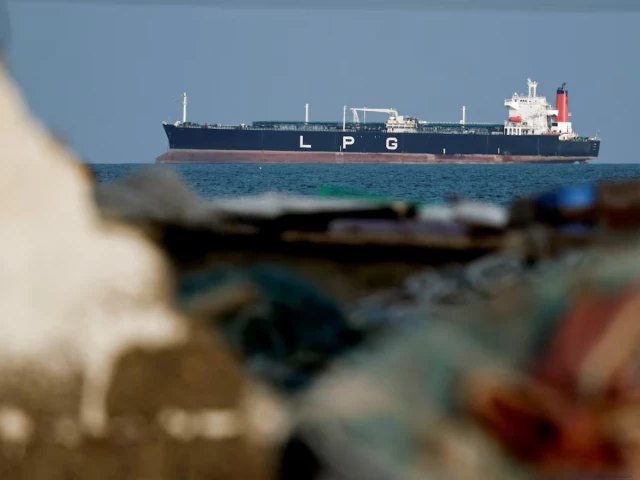
Oil prices rose after Iran said it had stopped ships in the Strait of Hormuz, with benchmark Brent crude futures advancing sharply and gains for July approaching 23 per cent (Geo News).
Iran said four other tankers turned back after its forces intervened. Those reports could not be independently confirmed.
Shipping data from Kpler recorded two large tankers carrying Gulf-loaded oil passing through the strait, along with two other commodities vessels. The data does not capture vessels transiting with their transponders switched off — a practice that has become common in the waterway.
The strait, a narrow channel between Iran and Oman, normally carries about a fifth of the world’s energy shipments.
The movement runs against the direction of the past week, in which crude had eased on reports of greater flows and a pause in American strikes on Iran. A 23 per cent monthly gain is the more telling figure: it prices the risk of the corridor closing rather than the volume actually moving through it.
For Pakistan the transmission is immediate. Under the daily pricing mechanism introduced on July 17, ex-depot fuel prices are revised every 24 hours against a seven-day rolling average of international prices, and both petrol and diesel rose in the latest revision.