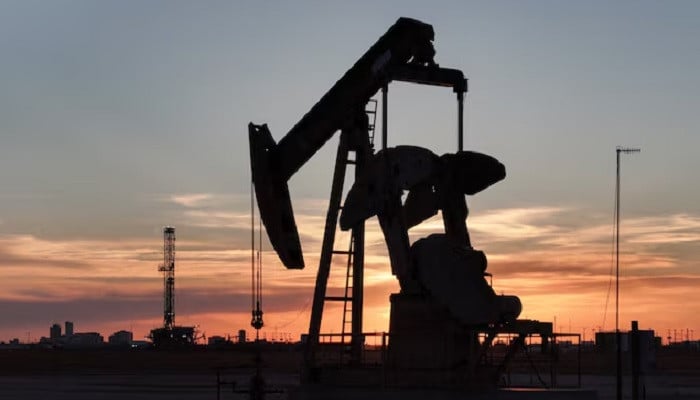
Oil rose on Tuesday as the prospect of ending the Middle East war receded further, with Iran signalling a more aggressive posture and the United States ruling out an extension of the ceasefire (Geo News).
Brent crude futures climbed 27 cents, or 0.3 per cent, to $91.14 by 0003 GMT, after reaching their highest since July 30 on Monday. US West Texas Intermediate rose 42 cents to $85.04, having gained more than 1 per cent earlier in the session to $85.37, its highest since July 31.
A senior Iranian official told Reuters that Iran would shift to a “fully offensive” military posture because efforts to negotiate a permanent end to the war had stalled.
The shipping numbers have not recovered. Only five commodity vessels transited the Strait of Hormuz on Saturday and none on Sunday, according to Kpler ship-tracking data, against 31 the previous weekend.
“Oil has jumped to start the week as US-Iran relations look increasingly shaky,” said Tim Waterer, chief market analyst at KCM. “A deal to reopen the Strait of Hormuz still does not appear to be in sight, and shipping numbers remain at a trickle.”
He pointed to the second chokepoint as well. “The dual chokehold on the Strait of Hormuz and the Bab el-Mandeb remains highly significant. These are not secondary concerns. They sit at the centre of the current supply-risk narrative.”
Yemen’s Houthis said they had attacked what they described as a Saudi military ship and four escort vessels in the Red Sea with missiles, according to military spokesperson Yahya Saree on Telegram.
For Pakistan, which imports around 90 per cent of its energy and buys most of its crude and LNG through the Gulf, a sustained Brent above $90 feeds into a fuel-pricing mechanism that averages the previous seven days — meaning this week’s move reaches the pump next week, on top of a petroleum levy that has already risen again.