Health officials in Khyber Pakhtunkhwa say chikungunya is spreading locally in Nowshera (Dawn).
The numbers
| | | |—|—| | Suspected cases tested | 28 | | Confirmed positive | 15 | | Positivity rate | 53.6pc | | Nowshera district | 14 cases | | Malakand | 1 case | | Period | 31 August – 8 September | | Age range | 5 to 76 | | Aged 30 or under | 67pc of positives |
What officials concluded
That the clustering and the positivity rate indicate “a credible localised transmission signal warranting an immediate, coordinated public-health response.”
Why “local transmission” is the operative phrase
Because it means the virus is circulating between people and mosquitoes inside the district, rather than arriving with travellers. Imported cases end when travel does. Local transmission continues on its own, and stopping it requires suppressing the mosquito population, not screening arrivals.
A 53.6 percent positivity rate is also high enough to suggest that testing is finding cases rather than ruling them out — which usually means the true number is larger than the confirmed one.
The response
Household vector control and contact tracing, strengthened surveillance, public awareness, screening on windows and doors, mosquito nets for daytime sleep, and protective clothing, with re-testing protocols.
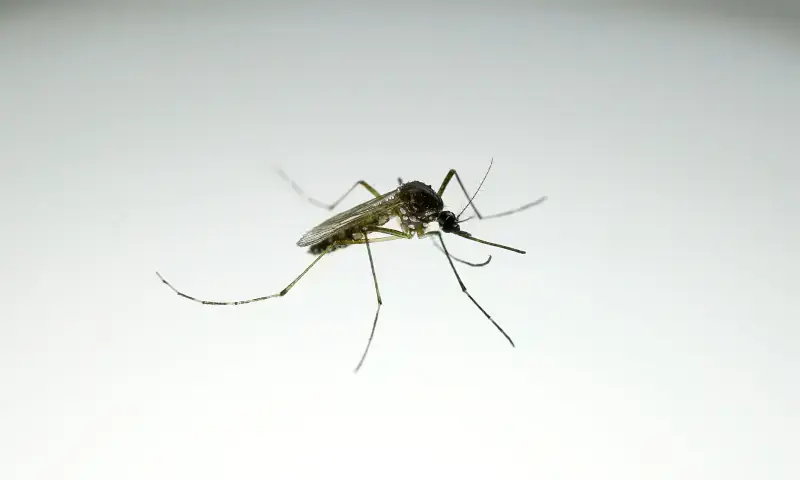
The daytime emphasis is deliberate. The Aedes mosquito that carries chikungunya bites during the day, unlike the anopheles that carries malaria — so a bed net at night is close to useless against it.
What is not established
No official is named in the reporting. No hospitalisation or death figures have been published, no case numbers for districts other than Nowshera and Malakand, and no indication of how many of the 28 suspected cases came from a single locality.
Chikungunya is rarely fatal but frequently disabling, with joint pain that can persist for months. No data on severity among these 15 has been released.
[Image: Reuters/File via Dawn]