
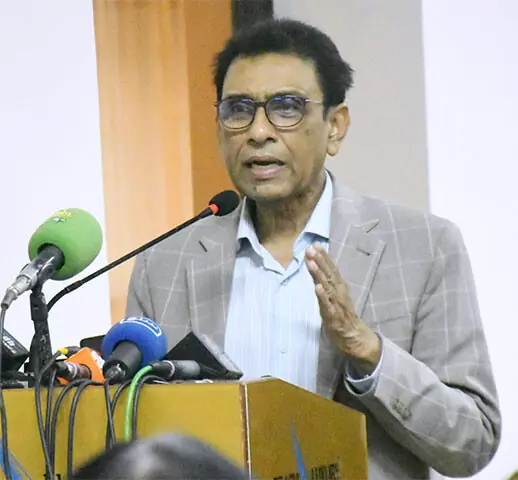
Speakers at a Karachi event organised by the Graduate Forum Pakistan with MQM-P argued that Pakistan’s existing provincial structure has failed to deliver effective governance (Dawn).
The event, held at a hotel on Saturday, was titled “Empowered Local Bodies System, Creation of New Administrative Units, Developed and Stable Pakistan”.
What was said
Federal Education Minister and MQM-P chairman Dr Khalid Maqbool Siddiqui: “The only indivisible entity is our homeland, Pakistan.” He said the demand predates his party, aims at administrative units rather than weakening the country, and proposed referendums in areas seeking new provinces.
Former Karachi mayor Dr Farooq Sattar proposed dividing Sindh into administrative regions with special status for Karachi, and criticised the four-province structure as preserving the political status quo.
Former finance minister Miftah Ismail, of Awam Pakistan, said empowering local government was “simply not possible” under existing arrangements: “Let Karachi run Karachi, Larkana run Larkana.”
The two arguments being run together
They are not the same argument, and the event’s title contains both.
One is about local government — that mayors and district administrations should hold real money and real powers. That case is made across the political spectrum and does not require redrawing any province.
The other is about new provinces, which does. Article 239(4) requires a two-thirds majority of the province’s own assembly before Parliament can act.
Running them together strengthens the weaker claim by association with the stronger one. A reader should notice when it is happening, whichever side they are on.
The referendum proposal
It has no constitutional footing. Article 239 contains no referendum mechanism for altering provincial limits; it requires the provincial assembly’s two-thirds vote. A referendum could be politically persuasive, but it could not substitute for that vote.
Where the other side stands
Sindh Chief Minister Syed Murad Ali Shah said on Friday that altering boundaries without the province’s consent would be unconstitutional and unacceptable. The Sindh Assembly passed a resolution rejecting any division and transmitted it to the President, the Prime Minister and both houses, as this newspaper reported on 9 September. That resolution passed amid a walkout by MQM-P and Jamaat-i-Islami.
What is not established
No party has tabled a bill. The federal government has not adopted new provinces as policy, and no boundary, name or capital has been proposed for any new unit.



