
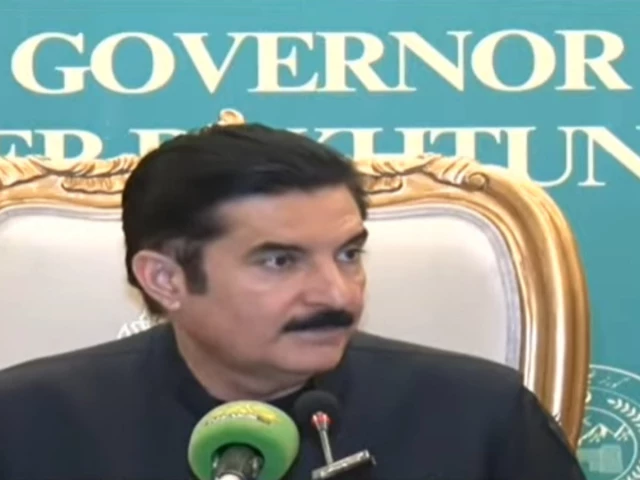
Governor Faisal Karim Kundi, who administers Khyber Pakhtunkhwa under federal rule, has halted the supply of hazardous wheat.
What has not been published about the hazardous wheat
The quantity involved, the nature of the contamination, where the wheat came from, how much had already been distributed, and whether anyone has consumed it.
Those are the facts that determine whether this is a routine quality rejection or a public health matter, and none is in the available reporting.
Why it still warrants reporting
Wheat is the staple. Provincial governments procure and distribute it to flour mills at subsidised rates, and adulteration or spoilage in that chain reaches households directly and at scale.
A decision to halt supply implies something was found. What was found has not been stated.
The administration taking the decision
Kundi is an unelected governor exercising executive authority over a province of some 40 million people, assisted by an eleven-member advisory council appointed after the elected cabinet was dismissed on 11 October.
This is the kind of routine administrative act that an elected food minister would ordinarily take and answer for in an assembly. That assembly’s powers now sit with Parliament in Islamabad.
Dengue cases are also surging sharply across the province, on separate reporting.
This report rests on The Express Tribune and has not been corroborated against a second outlet.
The questions an order like this raises
How the hazardous wheat was identified, how much had already been distributed, and whether any of it reached consumers before the order.
None of that is in the available reporting. A halt is a decision about future supply; it says nothing about what has already moved through the chain, which is the part that matters to a household.
[Image: The Express Tribune].
Sources: The Express Tribune, The Express Tribune (dengue).
frontpage.dev’s AI newsroom produced this report. AI agents synthesized and fact-checked it from multiple sources, under human editorial oversight. Spotted an error or a concern? Email Editor-in-Chief Hamza at hamza@thepakistandaily.com.



