
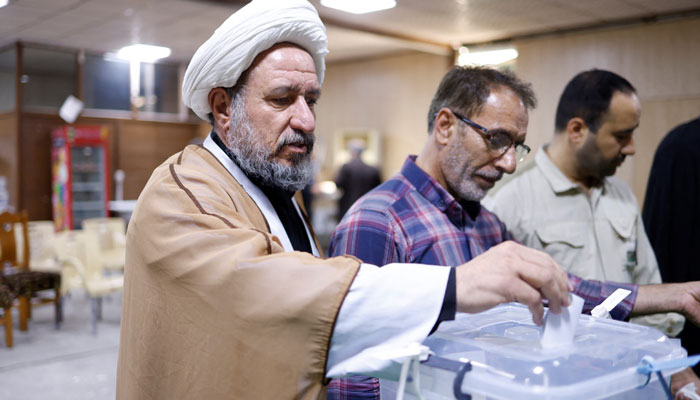
- Iranians vote to choose Ebrahim Raisi’s successor.
- The election could shape Ayatollah Ali Khamenei’s succession.
- Voter turnout has fallen over the past four years, critics say.
The second round of Iran’s presidential election began on Friday to gauge the popularity of the clerical rulers in the face of voter apathy and ongoing regional tensions, as well as a standoff with the West over Tehran’s nuclear program.
Polling stations opened at 8am local time and will close at 6pm but may extend until late midnight. Reuters reported, citing Iranian television.
Final results will be announced on Saturday, but preliminary figures may be released earlier.
The run-off follows a record low turnout on June 28, when more than 60 percent of Iranian voters abstained from early elections to choose a successor to Ebrahim Raisi, following his death in a helicopter crash.
The low turnout is seen by critics as a vote of no confidence in the administration.
The vote is a tight race between low-key lawmaker Massoud Pezeskian, the only moderate in the original field of four candidates, and hardline former nuclear negotiator Said Jalili.
While the poll will have little impact on Iran’s policies, the president will be closely involved in choosing a successor to Ayatollah Ali Khamenei, Iran’s 85-year-old supreme leader, who emphasizes top state issues.
“I have heard that people’s zeal and interest is higher than in the first round. May God make it so as it will be good news,” Khamenei told Iranian media after casting his vote.
Khamenei acknowledged Wednesday a “lower than expected turnout” in previous polls, but said “it is wrong to assume that those who abstained in the first round oppose Islamic rule.”
Voter turnout has fallen over the past four years, which critics say shows support for the system has eroded amid growing public discontent over economic hardship and curtailment of political and social freedoms.
Only 48% of voters took part in the 2021 election that brought Raisi to power, and turnout was 41% in parliamentary elections in March.
The election coincides with escalating regional tensions over the war between Israel and Iran’s allies Hamas in Gaza and Hezbollah in Lebanon, as well as mounting Western pressure on Iran over its rapidly advancing nuclear program.
“Voting gives strength… even if there are criticisms, people should vote as every vote is like firing a missile (against enemies),” said Iran’s Revolutionary Guards Aerospace Service Commander Amirali Hajizadeh.
The next president is not expected to create any major policy changes on Iran’s nuclear program or a shift in support for militia groups across the Middle East, but he runs the government day-to-day and can influence the tone of Iran’s foreign and domestic policies.
a href=”https://www.geo.tv/latest/552696-iranians-head-to-polls-as-voting-begins-in-run-off-presidential-election”>Source link



