
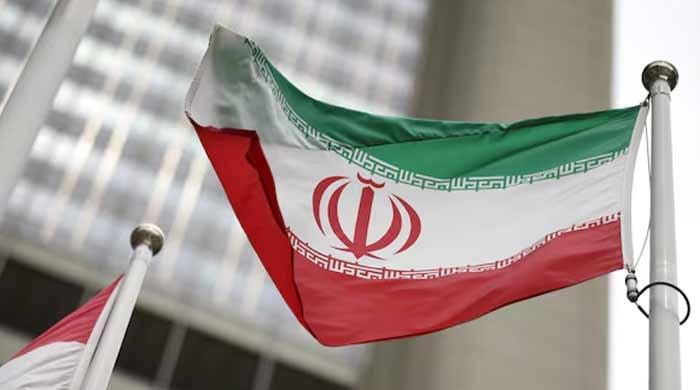

- “Iran has consistently expressed its commitment to diplomacy,” the ministry said.
- The IAEA says Iran is the only non-nuclear state to enrich uranium to 60%.
- Iran’s nuclear program was curbed in 2015 by the Vienna accord.
Iran said on Saturday it was no longer bound by restrictions on its nuclear program as a landmark 10-year deal between it and world powers expired, although Tehran reiterated its “commitment to diplomacy”.
The 2015 deal — signed in Vienna by Iran, China, Britain, France, Germany, Russia and the United States — saw the lifting of international sanctions against Iran in exchange for curbs on its nuclear program.
But the pact had already collapsed following Washington’s unilateral withdrawal during President Donald Trump’s first term, with Iran later withdrawing from its commitments.
The reimposition of UN sanctions last month at the urging of three of the deal’s European signatories has rendered the deal effectively moot.
From now on, “all provisions (of the deal), including restrictions on Iran’s nuclear program and related mechanisms are considered terminated,” Iran’s foreign ministry said in a statement on the day the pact expired.
“Iran has consistently expressed its commitment to diplomacy,” he added.
Western powers have long accused Iran of secretly pursuing nuclear weapons – something it has repeatedly denied, insisting its nuclear program is solely for civilian purposes such as power generation.
The agreement’s “end date” was set for October 18, 2025, exactly 10 years after it was enshrined in UN Security Council Resolution 2231.
The deal set Iran’s uranium enrichment at 3.67 percent in exchange for sanctions relief and provided for strict oversight of its nuclear activities by the UN nuclear watchdog, the International Atomic Energy Agency (IAEA).
But Washington pulled out of the deal in 2018 and reimposed sanctions, after which Tehran began ramping up its nuclear program.
According to the IAEA, Iran is the only country without a nuclear weapons program to enrich uranium to 60%. This is close to the 90% threshold required for a bomb and well above the level required for civilian nuclear use.
“Irresponsible Actions”
In July, Iran cut ties with the IAEA after the war with Israel, with Tehran pointing to the agency’s failure to condemn Israeli and US strikes on its nuclear facilities.
Israel’s unprecedented bombing campaign and Iran’s retaliation during the 12-day war derailed ongoing nuclear negotiations between Tehran and Washington.
At the initiative of France, Britain and Germany, extensive UN sanctions against Iran were reinstated at the end of September for the first time in a decade.
Iranian Foreign Minister Abbas Araghchi said in a letter to the United Nations on Saturday that the expiration of the 2015 deal made the sanctions “null and void.”
Britain, France and Germany accuse Iran of not cooperating with the IAEA and would like it to return to negotiations with the United States.
“Iran’s efforts to revive exchanges (with the IAEA) that led to the Cairo agreement are also being sabotaged by the irresponsible actions of the three European countries,” Iran’s foreign ministry said in a statement on Saturday, citing a recent framework for resuming cooperation.
a href=”https://www.geo.tv/latest/629221-iran-says-no-longer-bound-by-restrictions-on-its-nuclear-programme”>Source link



