Pakistan mounted a two-track push against India over the Indus Waters Treaty this week, with the deputy prime minister and its ambassador in Washington both insisting the 1960 agreement remains legally alive and warning New Delhi against turning shared rivers into leverage (Geo News; Geo News).
Two speakers, two different acts
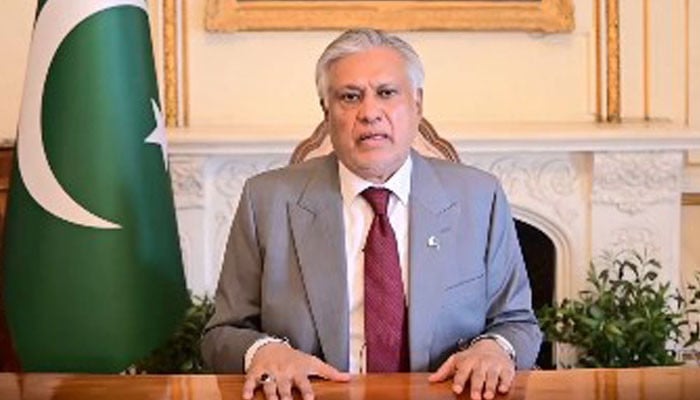
Ishaq Dar, deputy prime minister and foreign minister, gave the keynote on Friday to a seminar titled “The Indus Waters Treaty: South Asian Security at the Crossroads”, organised by Pakistan’s embassy in Washington. Dawn reports he addressed it virtually (Dawn).
Separately — and not at the seminar — Rizwan Saeed Sheikh, Pakistan’s ambassador to the United States since August 2024, made his case in an opinion piece in Newsweek headlined “Pakistan Ambassador: India Must Respect Indus Waters Treaty”, published on Friday 28 August. It was a direct reply to an earlier Newsweek column by India’s ambassador to the United States, Vinay Kwatra, headlined “A Treaty Pakistan Destroyed Long Before India Set It Aside” (Newsweek; Express Tribune).
What India has actually done
India has not terminated the treaty. In April 2025, after an attack at Pahalgam that killed 26 people, New Delhi declared it was holding the treaty “in abeyance” — a status the text itself does not define.
Both Pakistani officials argue that is the whole point. The treaty “contains no provision allowing either party unilaterally to suspend it, place it ‘in abeyance,’ or terminate it,” Sheikh wrote, noting Article XII allows termination only by a ratified treaty between the two governments. The treaty text bears that out: Article XII(4) says its provisions “shall continue in force until terminated by a duly ratified treaty concluded for that purpose between the two Governments”, and the 1960 text contains no withdrawal, suspension or abeyance clause at all.
India’s case
Kwatra’s column, published 1 August and updated 25 August, argues that the treaty gave India the three eastern rivers — the Ravi, Beas and Sutlej — carrying roughly 20% of the basin’s water, and Pakistan the three western rivers — the Indus, Jhelum and Chenab — carrying roughly 80% — an asymmetry he says “stifled development for decades” in Indian regions, and which India honoured anyway. He argues Pakistan answered by bogging Indian projects down in “endless dispute-resolution proceedings” and by decades of cross-border terrorism, and that Pakistan also blocked India’s own initiatives to renegotiate the treaty in the light of six decades of technological change. Quoting Prime Minister Narendra Modi, Kwatra writes: “Terror and talks cannot go together… Terror and trade cannot go together…. Water and blood cannot flow together.” His conclusion is conditional: if Pakistan wants India’s cooperation on bilateral issues, “it must first dismantle the terror infrastructure that it has built” (Newsweek).
The mechanism
Dar set out the architecture: the Permanent Indus Commission, a neutral expert, and a Court of Arbitration. Pakistan’s arbitration over the Kishenganga and Ratle hydropower projects continues at The Hague despite India’s abeyance claim, Dawn reports.
Sheikh cited a Supplemental Award of May 2026 as reinforcing that projects on the Western Rivers must stay within treaty limits. That characterisation is his own, in his op-ed; no Indian or third-party source has confirmed it, and The Pakistan Daily could not retrieve the case file from the Permanent Court of Arbitration to check the award’s existence or its terms.
What is unresolved
Nothing in either intervention moves the position on the ground. The abeyance stands. Kwatra’s column sets the dismantling of what he calls Pakistan’s terror infrastructure as the precondition for Indian cooperation; Sheikh’s reply calls allegations of terrorism “baseless” and says they “cannot create a unilateral right to suspend, disregard or rewrite the IWT”. And the arbitration grinds on in The Hague, toward rulings whose force over an upstream state that says the treaty is paused is exactly what neither side has settled.