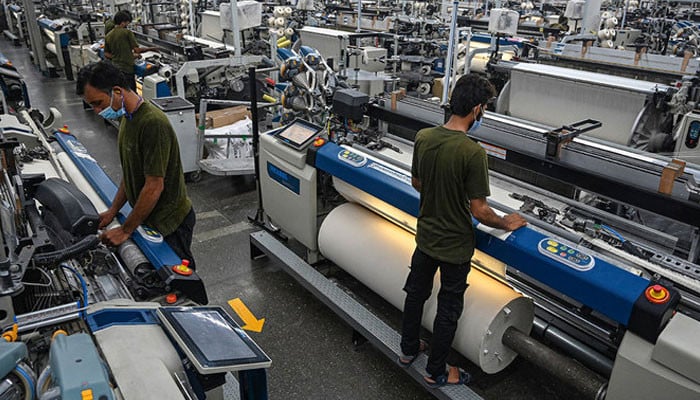
Imports of bleached cotton fabric into Pakistan under the Export Facilitation Scheme (EFS) jumped to 1,911 tonnes in February 2026, up from just 23 tonnes in the same month a year earlier — a year-on-year increase of roughly 8,200 percent, according to data presented by the textile lobby. The spike has reignited a bitter dispute over whether the scheme meant to boost exports is instead hollowing out the domestic cotton chain.
The All Pakistan Textile Mills Association (APTMA) contends the surge is no coincidence. After the government excluded greige (unprocessed) fabric from the EFS through SRO 1359(I)/2025 on 29 July 2025, the association alleges importers simply relabelled the same unprocessed cloth as “bleached” or “semi-processed” to keep bringing it in duty- and tax-free. APTMA first formally raised the issue at a meeting of the Technical Committee reviewing the EFS utilisation period on 26 February 2026, telling officials the pattern “suggests systemic misdeclaration.”
At the heart of the grievance is a tax asymmetry. Under the EFS, exporters can import inputs at zero sales tax, while identical locally produced fabric carries an 18 percent sales tax. Even after raw cotton, cotton yarn and grey fabric were excluded from the scheme under SRO 1435(I)/2025, APTMA says woven cotton fabric continues to enter through alternative descriptions such as “prepared for dyeing” under Chapter 52 of the Pakistan Customs Tariff, leaving the imported variant zero-rated while the domestic equivalent is taxed.
The dispute has played out across a flurry of regulatory measures. APTMA wrote to the Federal Board of Revenue on 28 February 2026, and the government issued SRO 528(I)/2026 on 19 March 2026, which the association says did not address its misdeclaration concerns. The matter has been pressed with senior officials including Minister of State for Finance Bilal Azhar Kayani and FBR Chairman Rashid Mahmood Langrial.
The fabric row sits atop a deeper crisis in the cotton chain. Domestic output has fallen sharply, with the Pakistan Cotton Ginners Association recording 5.43 million bales of arrivals as of 31 December 2025, a 0.33 percent decline year-on-year and a fraction of the roughly 15 million bales the country produced in the mid-2010s. The shortfall has driven up reliance on imports — a trend industry leaders warn is accelerating.
“Any further inaction by the Ministry may accelerate incessant decline in cotton production resulting in ballooning of import of cotton at the cost of valuable hard earned foreign exchange,” APTMA Chairman Kamran Arshad warned, pressing the government to implement a cotton revival plan approved by the Cabinet Committee on Essential and Cash Crops in October 2025 before the sowing season closed.
The stakes are substantial. Textiles account for around 46 percent of Pakistan’s manufacturing and 60 percent of its export earnings, and the country remains the world’s fourth-largest cotton producer and third-largest consumer. APTMA argues that a scheme designed to lift exports is, through the fabric loophole, simultaneously eroding the exchequer and undercutting the very mills it was meant to serve. The government has yet to announce measures specifically targeting the alleged “bleached” misdeclaration, leaving the dispute unresolved as the new cotton season approaches.