
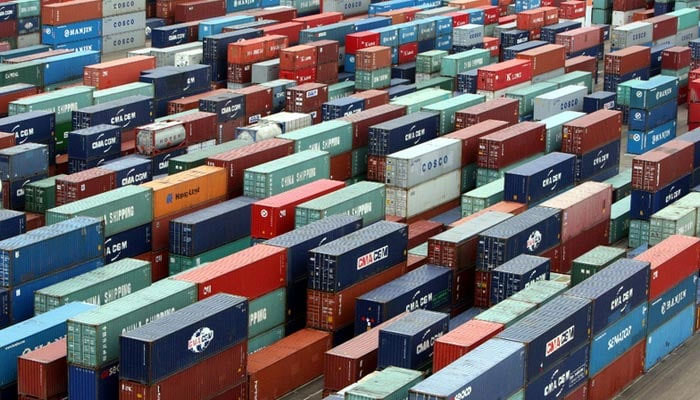
With the country struggling with dire economic conditions, it has been revealed that illegal trade costs Pakistan Rs 8 trillion every year, further exacerbating the prevailing economic crisis.
According to the Pakistan Business Council (PBC), Pakistan has “one of the highest” illicit trade in Asia, amounting to $68 billion or 20% of the official economy, which is also equivalent to 85% of the tax revenue target for the 24th financial year. .
The forum warned that the existing illegal trade also has a negative impact on the country’s economy and is also linked to criminal activities.
“Illegal trade undermines the development of the formal sector and exploits the workforce,” the PBC said, adding that not only such activities are harmful to the environment but also the production and trade of unsafe and substandard products.
Blaming high taxes and ineffective enforcement as the reasons behind the unfettered illicit trade, the forum said the phenomenon is further allowed to exist due to a “poorly documented cash-based economy”.
The PBC also criticized the aggressive measures taken against illegal trade as “unsustainable”.
Calling for “sustainable” fundamental reforms, the body provided a comprehensive framework to curb illicit trade and reduce its adverse impact on the economy.
According to the PBC, the government should
- Developing a strong political consensus to combat irregularity in the economy.
- Tackling the abuse of the Afghan transit trade.
- Control and eliminate the flow of foreign exchange finance smuggling and undervaluation.
- Limit the use of cash to ensure transparency in transactions.
- Bring all points of sale through which illegal goods are sold into the tax base.
It is pertinent to mention that Pakistan is facing a serious economic crisis due to the depletion of foreign exchange reserves and the depreciation of the local currency.
The caretaker government had launched a nationwide crackdown to curb illegal smuggling and hoarding of dollars and other foreign currencies.
Despite the rupee making notable gains against the dollar, the country is still not out of deep water as its current account deficit (CAD) stands at $6.5 billion.
Following the signing of the IMF’s $3 billion Stand-by Arrangement (SBA) agreement, foreign exchange reserves improved in July 2023, but in the past two months, the pace of external loans and grants has slowed.
Authorities expect the completion of the first review of the IMF program to boost dollar inflows from multilateral and bilateral creditors.
a href=”https://www.geo.tv/latest/517960-illicit-trade-costing-pakistan-rs8-trillion-per-year-in-tax-loss”>Source link



