
VIENNA: The UN Atomic Energy Organization’s 35-member Board of Governors adopted a resolution on Thursday calling on Iran to quickly step up its cooperation with the agency. The resolution also called for a “comprehensive” report, aimed at encouraging Tehran to join renewed nuclear negotiations.
Britain, France, Germany and the United States, which proposed the resolution, rejected as inadequate and disingenuous a last-minute move by Iran to limit its stockpile of near-weapons-grade uranium. Diplomats said Iran’s move was contingent on withdrawing the resolution.
Iran tends to insist on such resolutions and has said it will respond in kind to this one. After earlier criticism at the International Atomic Energy Agency Council, it has stepped up its nuclear activities and reduced IAEA oversight.
China, Russia and Burkina Faso voted against the text, diplomats at the meeting said. Nineteen countries voted in favor and 12 abstained.
The IAEA and Iran have long been locked in a standoff over a range of issues, including Tehran’s failure to explain traces of uranium found at undeclared sites, last year’s banning of most of the agency’s top uranium enrichment experts from its inspection team Iran and its denial. to expand IAEA monitoring.
The resolution seen by Reuters repeated wording from a November 2022 resolution that it was “essential and urgent” for Iran to explain the uranium traces and let the IAEA take samples as needed. The June resolution of this year did the same.
The new text called for the IAEA to issue “a comprehensive and updated assessment of the potential presence or use of undeclared nuclear material in relation to past and present outstanding issues related to Iran’s nuclear program, including a full report of its cooperation Iran with the IAEA on these issues.”
Western powers hope that report, due in the spring of 2025, will push Iran into negotiations for new restrictions on its nuclear activities, albeit less far-reaching than in the 2015 agreement with major powers that was dismantled after withdrawal of the United States by then-President Donald Trump from this 2018.
With Trump back in office in January and Iran having enriched uranium well beyond the deal’s limits, it’s unclear whether Trump would support negotiations aimed at setting new limits before lifting them. limits of the 2015 agreement on the “expiration date”. October next year.
If no new limits are agreed before then, the report could be used to bolster the case for a so-called “snapback”, a process under the 2015 agreement where the issue is sent to the UN Security Council and sanctions lifted under of the agreement may be withdrawn. reimposed.
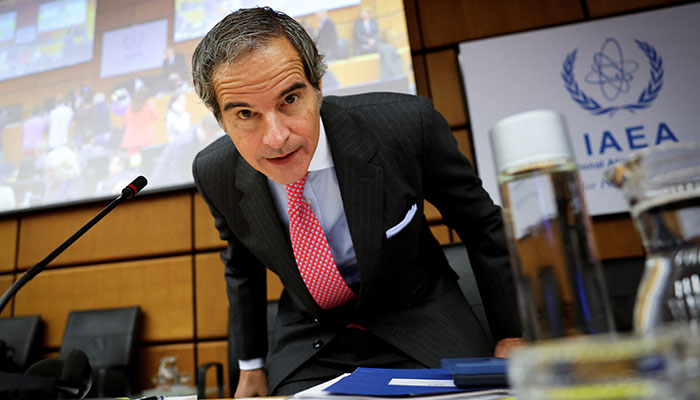
Last week, IAEA chief Rafael Grossi visited Tehran, hoping to persuade new Iranian President Massoud Pezhezkian, who is seen as a relative moderate, to improve Iran’s cooperation with the agency.
Iranian reaction
Grossi formally told member states on Tuesday that “the possibility of Iran not further expanding its stockpile of enriched uranium up to 60% U-235 was discussed” in his meetings with Iranian officials and that the IAEA had verified that Iran “has start the implementation of the preparatory measures”.
Iran already has enough material enriched at this level, close to about 90% weapons-grade purity, for four nuclear weapons if further enriched, according to an IAEA criterion. It has enough material enriched at lower levels for more bombs, but Iran denies it is pursuing nuclear weapons.
Grossi said on Wednesday that he had asked Iran to cap that material stockpile at 60 percent, and Iran had accepted his request.
He told a news conference that day that it was “a definite step in the right direction,” suggesting he believed a resolution could undermine that progress.
With the resolution passed, Iran is likely to respond.
Minutes after the vote, Iran’s state media cited a joint statement by the foreign ministry and Iran’s Atomic Energy Agency as saying Iran’s nuclear chief Mohammad Islami had issued orders for measures such as activating various new and advanced centrifuges, machines that enrich uranium.
“If there is a resolution, it (Iran) will either increase its activities or reduce the agency’s access,” a senior diplomat said before the vote.
a href=”https://www.geo.tv/latest/575639-iaea-board-passes-resolution-pushes-iran-towards-new-nuclear-talks”>Source link



