
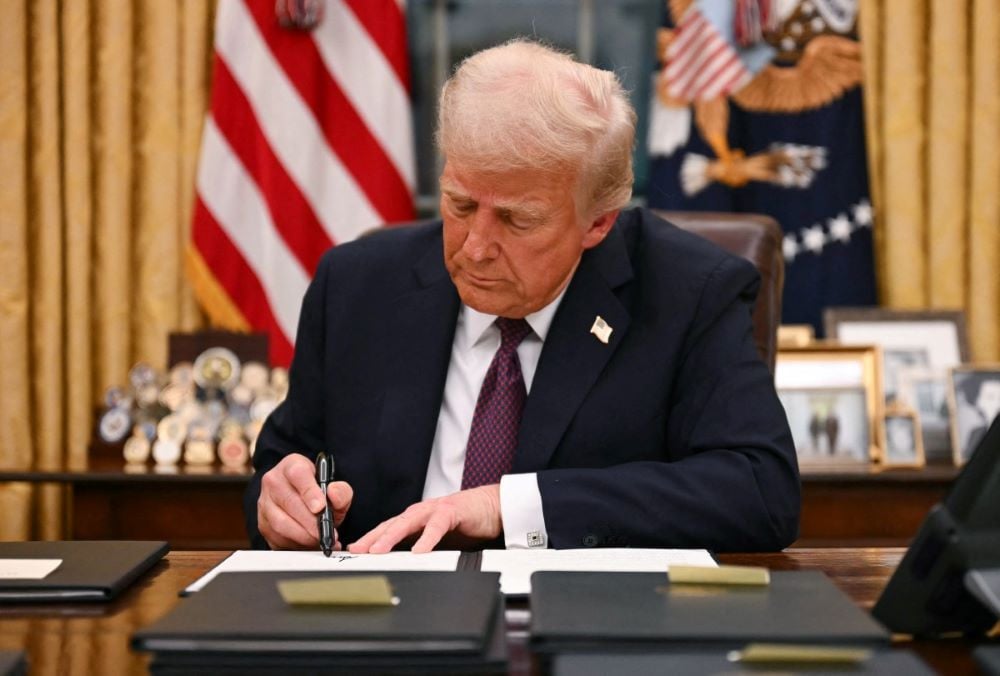
Donald Trump returned to the White House determined to make rapid changes to the administration, using executive order as his most immediate tool.
On his first day, he focused on boosting domestic energy production and stalling diversity, equity and inclusion initiatives within federal agencies, among other measures.
What is an executive order? Trump’s tool for quick government overhaul
What are executive orders?
Executive orders are directives by the president of the United States that describe how federal agencies should operate or what policies they must implement. They allow presidents to act quickly, bypassing Congress, but come with limitations. For example, they can be invalidated by future administrations or challenged in court.
Presidents have used executive orders for a variety of purposes, from furloughing federal employees to enacting general policies. In particular, President Joe Biden used one to regulate artificial intelligence, while Donald Trump often used them to deliver on campaign promises.
Trump’s use of executive orders
On his first day back in the White House, Trump issued a series of executive orders, including actions to:
Increasing domestic energy production.
End diversity, equity, and inclusion programs in federal agencies.
Trump also rescinded 78 Biden-era executive orders, continuing a trend where new presidents often undo directives from their predecessors. For example, one of Biden’s rescinded executive orders originally reversed some of Trump’s first-term actions.
Trump has used executive orders as a political messaging tool, with many tied to campaign promises. For example:
He imposed a temporary hiring freeze for federal agencies.
Commissioned federal employees return to offices.
He addressed federal investigations that he claimed unfairly targeted his supporters.
He has also expressed plans to use an executive order to extend the sale deadline for TikTok and stop offshore wind development.
How common are executive orders?
Presidential use of executive orders is a longstanding practice:
George Washington issued just 8.
Franklin D. Roosevelt signed a record 3,721.
Trump signed 220 in his first term, while Biden signed 160 on December 20.
Limits on executive orders
Although powerful, executive orders are not absolute. Congress may:
Revoking orders by passing contradictory legislation, as was done in 1992 to overturn an executive order by President George H. B. Bush.
Denial of funding to enforce specific mandates, effectively preventing their implementation.
Courts also serve as a check. For example, the Supreme Court ruled against President Harry Truman’s attempt to seize steel mills during the Korean War, saying it was not authorized by Congress.
What’s next with Trump’s orders?
While Trump’s new executive orders are expected to face opposition from Democrats, they underscore the broad, if temporary, influence a president can wield. Critics argue that many of Trump’s orders are more symbolic than substantive, reflecting campaign promises rather than direct policy changes. However, with the courts and Congress watching closely, the true impact of these orders remains to be seen.
a href=”https://tribune.com.pk/story/2523571/how-does-an-executive-order-work-trumps-blueprint-for-policy-overhaul”>Source link



