
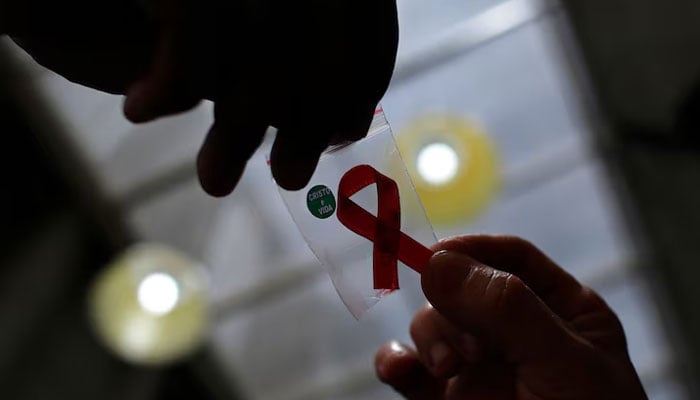
- Over 9,000 people were diagnosed with HIV between January, September 2024.
- The total number of HIV cases for this year could exceed 12,950.
- Experts note a wide spread of deadly infections from high-risk populations.
Islamabad: Pakistan is facing an alarming rise in human immunodeficiency virus (HIV) cases, with Ministry of National Health Services officials reporting 1,079 new infections every month.
According to the ministry on Friday, in the first nine months of 2024 alone, 9,713 people tested positive for the deadly virus.
If this trend continues, the total number of HIV cases for this year could exceed 12,950, a marked increase from the 12,731 cases recorded in all of 2023. The News was mentioned.
The statistics reveal worrying demographic trends, with men making up 69.4% of new cases, women 20.5%, transgender people 4.1% and children 6%.
Punjab recorded the highest number of new cases, with 5,691 cases detected between January and September 2024, with an average of 632 new cases each month.
Sindh followed with 2,383 new cases, an average of 265 per month, while Khyber Pakhtunkhwa (KP) reported 926 cases, translating to an average of 103 cases per month.
Balochistan recorded 329 new cases, while Islamabad and Azad Jammu and Kashmir (AJK) reported 378 and 10 cases respectively.
By comparison, the figures for 2023 were even higher, with 12,731 new infections reported nationally, but the continued increase in monthly averages for 2024 reflects the worsening nature of the epidemic.
Worryingly, experts have noted significant transmission of HIV infections from high-risk populations to the general population.
This is attributed to factors such as poor Infection Prevention and Control (IPC) in healthcare facilities, unsafe sexual practices, low awareness, stigma and other risky behaviours.
“Despite collective efforts, the HIV epidemic is growing in Pakistan. This calls for innovative and sustainable interventions,” said Trouble Chikoko, UNAIDS Pakistan Director, during a recent meeting with the Ministry of Religious Affairs.
Chikoko emphasized the central role religious scholars and institutions could play in raising awareness about HIV prevention and reducing stigma.
“Collaboration with UN agencies and partners is essential for a comprehensive response to this crisis,” he said.
Commenting on the HIV situation in Pakistan, the Joint Management Unit (CMU) for HIV, Tuberculosis and Malaria highlighted its ongoing efforts to contain the epidemic, asserting that 94 Antiretroviral Treatment (ART) centers have been established across the country to provide testing and treatment services.
In addition, mass media and social media awareness campaigns have been launched, including multilingual radio messages and city branding initiatives to de-stigmatize HIV testing and treatment.
Advocacy efforts involving key government officials and stakeholders have also been undertaken to mark events such as World AIDS Day, CMU officials added.
However, these measures have faced challenges.
CMU said it is expanding its harm reduction programs, particularly targeting IDUs, by providing clean needles and syringes. However, the scale of these programs remains insufficient given the increasing number of new infections.
The provincial analysis of cases highlights the need for local responses. Punjab, with the highest number of new infections, has been urged to step up prevention and awareness campaigns, particularly in urban centers where high-risk behaviors are more prevalent.
Similarly, Sindh’s efforts to reduce new infections have shown some progress compared to last year, but the numbers remain alarming, especially in Karachi and Hyderabad.
Islamabad’s significant drop in new cases, from 611 in 2023 to 378 in 2024, has been attributed to targeted campaigns and improved ART coverage. But experts caution against complacency, warning that the capital’s success needs to be replicated nationally to reverse the overall trend.
UNAIDS and CMU officials stress the need for greater community engagement to address stigma and misinformation surrounding HIV. “Community involvement is vital to raising awareness and encouraging testing and treatment,” Chikoko said.
With more than 1,000 new cases reported monthly, Pakistan is approaching a generalized HIV epidemic. Public health experts are urging the government to increase resources for prevention and treatment, while addressing barriers to care.
a href=”https://www.geo.tv/latest/582043-hiv-epidemic-worsens-in-pakistan-with-over-1000-monthly-infections”>Source link



