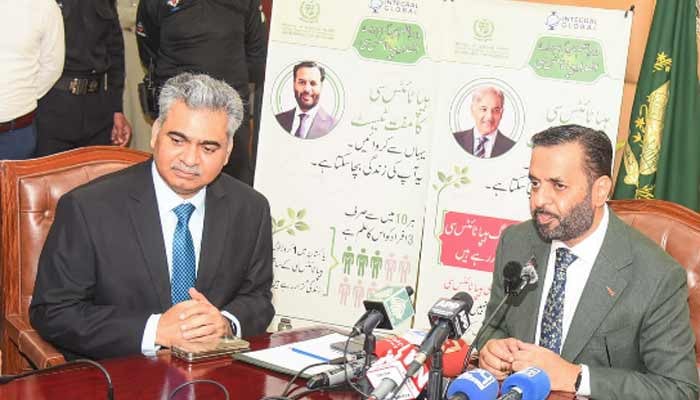
Federal Health Minister Mustafa Kamal has declared hepatitis C testing mandatory for all employees of the health department, warning that those who do not comply will not receive their salaries from next month (Geo News).
“Employees in the health department who do not undergo hepatitis C tests will have their salaries stopped,” he said at the inauguration of a screening programme.
Kamal announced a nationwide expansion of screening under the Prime Minister’s Programme for the Prevention of Disease, and said measures were being taken to make testing mandatory across all federal ministries, with letters going to each. Seventeen screening points have been established in Islamabad, and private hospitals will be given screening kits and digital equipment. “Every Pakistani will have to undergo screening,” he said, with priority for those over 12.
The scale of the problem justifies urgency: Pakistan has among the highest hepatitis C burdens in the world, driven substantially by unsafe injection practices and the reuse of syringes — the same mechanism at the centre of the child HIV outbreak at a state-run hospital in Karachi, where about 120 children have tested positive and nine have died.
Making health workers the first mandatory cohort has a defensible logic, since they are both at higher occupational risk and a potential transmission route.
Withholding salaries as the enforcement mechanism is the contentious part. It puts the cost of a public health measure on individual employees rather than on the system, and it is a sanction applied to workers in a sector where the failures that spread these infections have generally been institutional.