
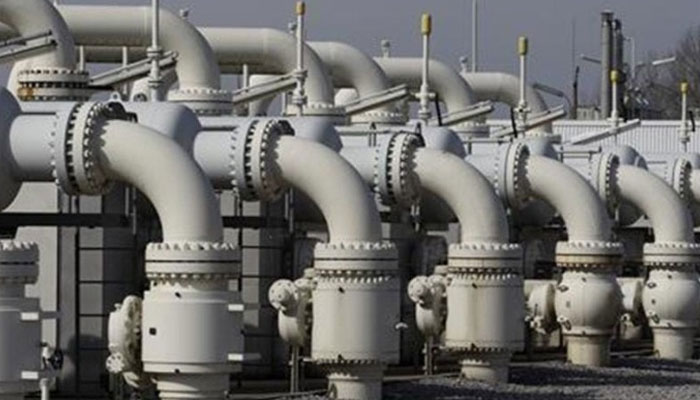
- Government officials are seeking time from the IMF until December 2024.
- The IMF claims that this project should be completed by June 2024.
- The government does not want to increase tariffs for domestic consumers.
ISLAMABAD: The International Monetary Fund (IMF) has asked the government to increase the gas tariff for captive power plants (CPP) at par with the price of Regasified Liquefied Natural Gas (RLNG) from July 1, 2024-25.
“The government has no option but to increase the gas price for captive power plants to the same level as the RLNG prices. These units have an efficiency of 30-35% and most of the CPPs are installed in the Sui Southern grid,” senior power ministry officials said. The news.
Government officials, they said, had sought time from the IMF until December 2024 to transition CPPs to national power grids, as many of them are not connected to the national grid. However, the IMF claims that the project should be completed by June 2024 with an increase in their tariff up to the RLNG price effective from July 1, 2024.
“The gas tariff for captive power plants currently stands at Rs 2,750 per MMBTU. These plants, using natural gas as an input fuel, not only generate electricity for their industrial consumption, but some of them also sell electricity generated from natural gas to electricity distribution companies (DISCOs).
When asked which gas consumers will face a hike in tariffs when the Oil and Gas Regulatory Authority (Ogra) hikes the gas tariff through its determination to meet the revenue requirements of Sui gas companies in 2024-25, the official said that the government has decided to increase the gas tariff of captive power plants based on the IMF’s mandate. In addition, the government is also looking at increasing gas tariffs for the power sector as the existing gas price for power plants stands at Rs 1,050 per MMBTU.
Sui Southern had asked for a gas price hike of Rs 274.4 per MMBTU, but Sui Northern has asked for a whopping hike of Rs 2,646.18 per MMBTU from July 1, 2024, taking the gas price to Rs 4,447 per MMBTU . Gas companies have included the previous years’ shortfall of Rs 600 billion in their applications, asking for a massive hike from July 1, 2024. Government officials are of the view that Ogra will come up with the marginal tariff hike, it may be in the range of increase in the order of 10-15% with impact of Rs 100-150 billion on tariff against high assumptions in the reports of Sui gas companies.
“Top officials have identified the power plants which include Guddu Power Plant, KE Power Plant, Nooriabad Power Plant and Engro Power, whose gas tariff will be increased. Guddu power plant receives 180 mmcfd natural gas at a cost of Rs 1,050 per MMBTU, KE power plant 10 mmcfd, Nooriabad power plant 20 mmcfd and Engro power plant 35 mmcfd gas. The gas tariff for the electricity sector has not increased since January 2023 despite two increases in gas tariffs, one from November 1, 2023 and the second from February 1, 2024.”
However, in the domestic sector, high-end consumers are already paying high tariffs not only at RLNG price parity but more than that. The government, last time, also increased the gas tariff of protected consumers by up to 67%.
The federal government does not want to further increase the gas tariff for protected and other domestic consumers. The industrial manufacturing tariff is also at the highest level of 2150 per unit. However, in Punjab, industrial consumers are supplied with a mix of RLNG and local gas in the ratio of 75:25% and in Sindh 40:60.
Domestic gas consumers have already experienced two-fold increase in gas prices — up to 193.3% from November 1, 2023 and then up to 67% from February 1, 2024. The government has massively increased the price of natural gas in the current financial year 2023-24 to achieve the revenue target of Rs 902 billion, knowing the fact that the revenue requirement for the current fiscal is Rs 701 billion. While consumers are under pressure, gas companies have submitted their new reports for 2024-25 based on exaggerated assumptions.”
Officials said the maximum hike from July 1, 2024 could be between 10-15% after rationalizing the assumptions by Ogra, excluding previous years’ shortfalls. They hoped that Ogra would not allow gas companies to recover the previous year’s huge shortfalls from consumers in one go, as it has done in the past. However, the regulator needs to scale back the impact of the previous years’ shortfalls and similarly, the cost of RLNG diversion in the domestic sector also needs to be reviewed. The ministry’s top mandarins want to curb the use of RLNG in the domestic sector as it is causing a rise in tariffs.
In the ongoing fiscal, RLNG cost of Rs 232 billion is estimated to be incurred for RLNG diversion from November 2023 to March 2024. However, the cost of RLNG diversion of Rs 250 billion in the domestic sector during FY19 to FY22 has not been recovered so far and has become part of the revolving debt of Rs 2.9 trillion.
Officials said that of the Rs 2.9 trillion circular debt, Rs 1 trillion was added just because gas prices did not rise in the last 10 years. “OGRA was giving decisions but governments were avoiding increasing gas tariff. Due to this fact, Rs 1 trillion was added to the circular debt”.
Originally published on The news
a href=”https://www.geo.tv/latest/538421-under-imf-diktat-govt-set-to-bring-gas-tariff-for-cpps-on-par-with-rlng-price-from-july-1″>Source link



