

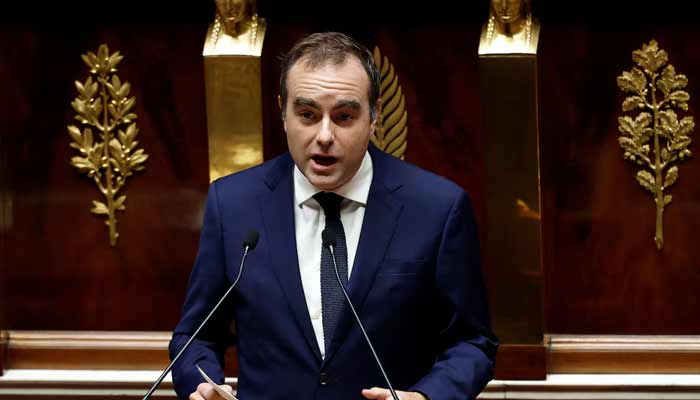
- The French prime minister comfortably survives both no-confidence votes.
- Lecornu’s bid to suspend his pension reform is gaining vital support.
- The socialists are helping Lecornu survive, but now they want other concessions.
French Prime Minister Sébastien Lecornu survived two no-confidence votes in parliament on Thursday, winning crucial support from the Socialist Party thanks to his pledge to suspend President Emmanuel Macron’s controversial pension reform.
The two proposals tabled by the hard-left France Unbowed and the far-right National Rally (RN) secured just 271 and 144 votes respectively — well short of the 289 votes needed to topple Lecornu’s government of the day.
Lecornos’ bid to squelch pension reform until after the 2027 presidential election helped sway the Socialists, giving the government a lifeline in the deeply divided National Assembly.
Despite the delay, the moves underscored the fragility of Macron’s administration midway through his final term.
“The majority brought together through horse-trading have today managed to save their seats, at the expense of the national interest,” RN party chairman Jordan Bardella wrote in X.
The French bond market was flat after the run-off vote, with a government win widely expected by investors.
Lecornou faces arduous budget negotiations
By pushing pension reform, Lecornou threatens to kill one of Macron’s main economic legacies at a time when France’s public finances are in peril, leaving the president with little to achieve domestically after eight years in power.
There are 265 lawmakers in parliament from parties that have said they would vote to oust Lecorno, and only a handful of rebels from other groups have joined their fight.
If Lecornu had lost any vote, he and his ministers would have had to resign immediately and Macron would have come under enormous pressure to call early parliamentary elections, plunging France deeper into crisis.
But despite the outcome of Thursday’s votes, Lecornou still faces weeks of grueling negotiations in parliament to pass a limited 2026 budget during which he could be ousted at any time.
“The French must know that we are doing all this work … to give them a budget, because it is fundamental for the future of our country,” said Yael Braun-Pivet, president of the National Assembly and a Macron ally.
“I am happy to see that today there is a majority in the National Assembly that operates in this spirit: work, compromise, best effort,” he added.
After winning the pension concession, the Socialists on Wednesday aimed to include a billionaires’ tax in the 2026 budget, underscoring how weak Lecorno’s negotiating hand is.
Political Kryptonite
France is in the midst of its worst political crisis in decades as a series of minority governments seek to push deficit-reducing budgets through a fractious legislature divided into three different ideological blocs.
Reforming France’s generous pension system has been political kryptonite since Socialist President Francois Mitterrand lowered the retirement age to 60 from 65 in 1982.
In France, the average effective retirement age is just 60.7 years, compared to the OECD average of 64.4.
Macron’s reform raised the legal retirement age by two years to 64 by 2030. While this only aligns French policy with other European Union member states, it removes a valuable social benefit cherished by the left.
a href=”https://www.geo.tv/latest/628897-french-pm-survives-no-confidence-votes-after-making-pension-concession”>Source link



