
Islamabad:
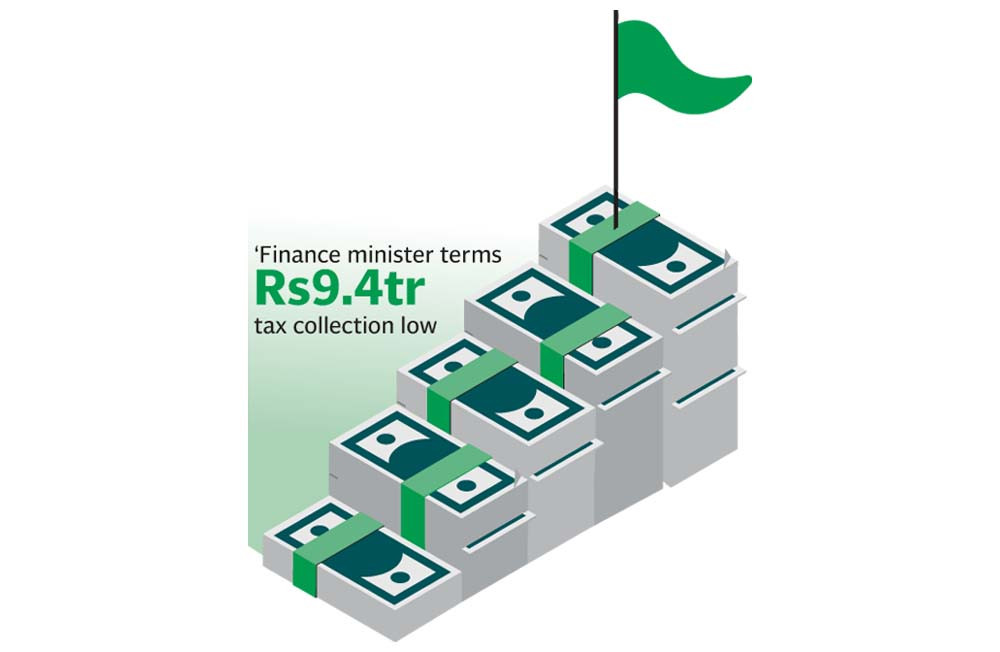
Caretaker Finance Minister Dr Shamshad Akhtar termed this year’s tax collection target of over Rs9.4 trillion as low and asked the authorities to work out a plan to increase collection to Rs15 trillion in the next financial year.
The minister’s remarks came during an internal meeting on the restructuring of Pakistan Revenue Automation Limited (PRAL), a subsidiary of the tax machine and its technology arm. Akhtar also expressed his displeasure over the performance of the Federal Bureau of Revenue (FBR) members and demanded a one-page report on their achievements during their stay at the FBR headquarters.
Sources said the finance minister told the meeting that the annual tax collection target of Rs 9.415 trillion was low for the FBR for this financial year, representing a 31% increase over the actual collection of the previous financial year, despite the prevailing average inflation almost 29% in the first four months.
However, the minister’s remarks may sway the International Monetary Fund (IMF), which launched a 14-day review of Pakistan’s performance in the first quarter of the current financial year on the same day.
The FBR surpassed its revenue target for the fourth consecutive month, collecting Rs2.75 trillion in July-October, surpassing the target by Rs68 billion and eliminating the need for a mini-budget. This year, FBR received Rs 591 billion more than the previous financial year.
Sources say the finance minister has urged the FBR to target a tax collection of Rs 15 trillion in the next financial year, claiming an 84% increase over this year’s projected collection of Rs 9.415 trillion.
Reading The minister is committed to adopting an innovative tax policy
During the first review meeting on FBR issues, the IMF was briefed on the collection regime of FBR and was asked about the taxation prospects of agriculture and real estate sectors.
A recent World Bank report suggested that Pakistan could collect additional taxes equal to 3% of GDP by boosting revenue collection from the real estate and agriculture sectors. However, due to constitutional restrictions, agriculture is a provincial matter and the federal government is not mandated to tax it.
design: Ibrahim Yahya
These developments coincided with the decision of the Sindh High Court to grant a stay order against imputed income tax on immovable property, protecting people who pay 50% of their tax liability. The taxpayers had challenged Section 7E of the Income Tax Act for the tax year 2023 before the Sindh High Court (SHC).
The SHC dismissed the petitions with directions to the FBR not to take any coercive action against the petitioners regarding the payment of tax on the accounting income for the Tax Year 2023, subject to payment of 50% of the deemed income tax liability for the said due tax year. The petitioners were represented by Abid Shaban, Barrister Asad Tola and Amayed Tola, who is a tax consultant.
Section 7E was introduced through the Finance Act 2022, subjecting properties with a fair market value of more than Rs 25 million held by private residents to a tax of 20% on an amount equal to 5% of their fair market value, subject to certain exceptions. That enforcement applied retroactively and prospectively, covering tax year 2022 and beyond, but faced legal challenges from taxpayers, resulting in several cases being filed in state Supreme Courts across the country.
Due to these legal challenges, the FBR had collected less than Rs 1 billion for imputed income tax, falling short of its annual target of Rs 25 billion. The deadline for companies to submit their returns is December 31 and the collection is expected to increase by then.
Sources said the finance minister expressed his displeasure over the performance of FBR members at grades 21 and 22, the highest rung in the bureaucracy, and sought suggestions from the FBR to restructure PRAL, despite PRAL’s role as a technology tool. The FBR had set up two committees to restructure PRAL, aiming to cut at least 25% of its workforce. The minister had given instructions for specific proposals for the layoffs, which would probably lead to the dismissal of about 220 workers out of the nearly 900 employed today.
For the dismissal of PRAL employees, a human resources committee was formed under Mukarram Jah, legal custom-members of FBR. This committee was tasked with assessing PRAL’s existing workforce and current workforce structure, including skill sets, roles, responsibilities and identifying areas where right-sizing of the workforce is required and making recommendations.
Published in The Express Tribune, November 3rd2023.
Like Businesses on Facebook, follow @TribuneBiz on Twitter to stay updated and join the conversation.
a href=”https://tribune.com.pk/story/2444378/fbr-asked-to-up-revenue-to-rs15tr”>Source link



