
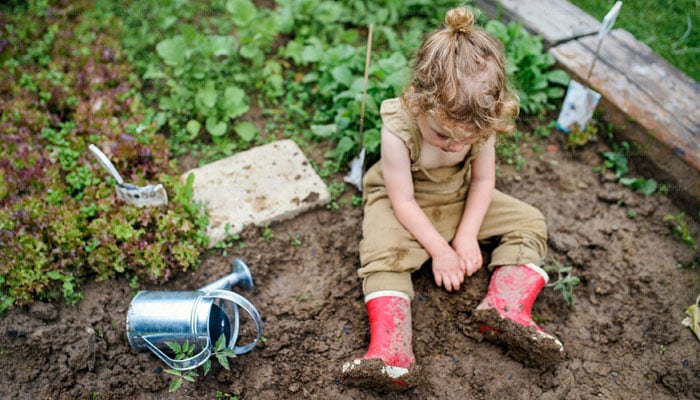
The next time you find your child playing in the dirt, you might want to think twice before stopping if you want them to have a strong immune system.
Numerous studies show that playing in the dirt during childhood can play a critical role in strengthening children’s immune systems, reducing the likelihood that they will develop allergies or autoimmune diseases, according to Live Science.
This means it can protect against conditions in which the immune system overreacts to allergens or body tissues.
This phenomenon occurs as a child’s immune system matures during the early years, helping the body’s protective cells learn to distinguish between harmless substances, such as dirt, and harmful pathogens such as bacteria and viruses.
This natural process not only helps identify and combat real threats, but can also prevent the immune system from overreacting to benign allergens.
It turns out that the molecular signals that drive the expansion of this regulatory arm of the immune system come mainly from microbes in the gut, said Graham Rook, emeritus professor of medical microbiology at University College London. Live Science.
This collection of microbes is called the “gut microbiome” and is essential to human health. For example, some of these microbes help make vitamins that humans need to live and help them digest their food.
The first year of a baby’s life is critical for the development of the microbiome, as it acquires bacteria from the birth canal during delivery and from breast milk if breastfed.
As children grow, they encounter a variety of germs from different sources.
A theory called the “old friends hypothesis” suggests that the greater the range of microbes that children are exposed to in early childhood, the more diverse their microbiomes will be and therefore the better their immune systems will be able to distinguish friend from foe.
The term “old friends” refers to helpful or “habitual” microbes that live on and in the body without harming a person’s health.
A trial in Finland looked at whether the immune systems of city children could be boosted with grass and soil removed from the forest.
They found that, within a month, children who played in the dirt had a more diverse collection of harmless bacteria on their skin and more immune-regulatory cells and signaling molecules in their blood than those who played on playgrounds.
Encouraging children to play with dirt can benefit their immune systems, experts say. However, translating current scientific understanding of immune status risk factors into practical advice is challenging.
For example, if you have a dog, you may be somewhat less likely to develop allergies than someone without pets — but you can’t tell someone to get a dog as a guaranteed way to prevent allergies, said Dr. Robert Wood. professor of pediatrics at Johns Hopkins Medicine in Baltimore.
Dirt in heavily polluted areas can also be unhealthy for children, as it could contain harmful pollutants, he noted. This would clearly not be the kind of filth you would want your child exposed to. And because dirt can contain potentially harmful chemicals, such as lead, as well as parasites, care should be taken to prevent children from inhaling or eating it.
a href=”https://www.geo.tv/latest/578470-does-playing-in-dirt-strengthen-kids-immune-system-experts-weigh-in”>Source link



