
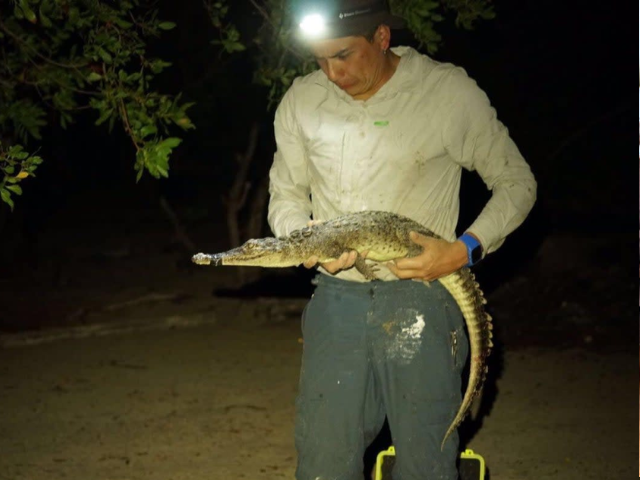
Scientists have identified two previously unknown crocodile species from the Mexican Yucatán peninsula, both of which may already be at risk of extinction due to small population sizes and habitat pressures.
The new species were found on Cozumel Island and Banco Chinchorro, a coral, and are genetically distinct from the American crocodile (Crocodulus acutus), according to a study published in the journal Molecular phylogenetic and evolution.
The discovery brings the total number of well -known New World crocodile species to six.
So far, scientists have only recognized the crocodiles of American, Morelet, Cuban and Orinoco in the region.
Researchers from McGill University in Canada, along with Mexican and Panama associates, conducted genetic and anatomical analyzes that have revealed several fluctuations to classify Cozumel and Banco Chinchorro as separate species.
“These results were completely unexpected,” said lead writer José Avila-Cervantes. ‘We assumed Crocodulus acutus It was just one species ranging from Baja California to Venezuela and the Caribbean. ”
The research included the collection of DNA and skull measurements from crocodiles in both positions. The remarkable differences included skull shape, with Banco Chinchorro crocodiles showing longer and wider mold.
The study estimates that each new species has fewer than 1,000 reproductive people and the effective sizes of the population can be as low as 500. While today’s numbers appear stable, scientists have warned that the limited habitat and growth growth -related growth could create serious risk.
“Biodiversity disappears faster than we can find out what we are losing,” said McGill’s Hans Larsson’s senior writer Hans Larsson. “Most types of crocodiles have already been threatened. Protection of these habitats is critical.”
Cozumel, an important cruise destination, received over 1.5 million visitors during the first three months of 2025. Banco Chinchorro, part of the Meso -American barrier system, is also under ecological pressure.
Researchers urged governments and conservation groups to implement stricter land use policies and establish habitat protections to maintain recently recognized species.
Although reptiles are not yet officially called, researchers implies that references to their geographical isolation – Crocodylus cozumelus or chin-In use in their taxonomic sorting.
The study emphasizes how natural obstacles such as ocean currents in the Yucatán region have helped to shape biodiversity by isolating species and allowing unique evolution.
“These crocodiles are evolutionary survivors,” Larssson said. “Now that we know they exist. We need to ensure that they don’t disappear before they are even called.”
a href=”https://tribune.com.pk/story/2543581/two-new-crocodile-species-discover-by-scientists”>Source link



