
As the Spring Festival travel rush unfolds, holiday consumption could significantly boost China’s GDP growth for the first quarter of 2024
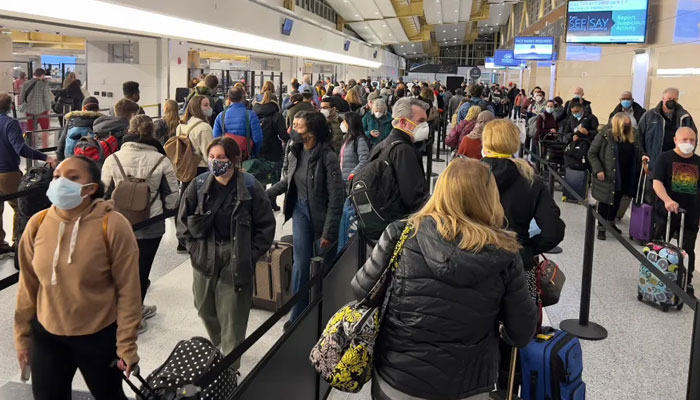
The annual 40-day travel rush, known as the chunyun or Spring Festival travel rush, recognized as the world’s largest human migration, is set to begin today, with an expected record 9 billion passenger trips.
The vibrant atmosphere, from bustling transport hubs to vibrant markets, is poised to not only mark the Chinese Lunar New Year but also contribute to the country’s steady economic recovery in 2024.
At Beijing International Airport, a snapshot of the expected travel rush was evident on Thursday. Throngs of tourists filled the departure hall, families waited for checked bags at counters and Year of the Dragon stickers adorned glass doors, setting the stage for a festive Chinese New Year atmosphere.
The airport anticipates an impressive 7.2 million passenger trips during chunyun, reflecting a remarkable 60% increase compared to 2023. In addition, the implementation of visa reciprocity policies is expected to boost overseas passenger flow to 1.41 million trips, highlighting the international dimension of this mass migration.
Observers predict that the travel rush will not only boost the holiday spirit but also act as a catalyst for increased consumption during the coming holidays. The rise in tourism is evident, with stories of retirees like Yin from Chongqing embarking on self-driving road trips and experiencing a pre-holiday tourist boom.
The economic impact extends beyond China’s borders, with the reciprocal visa waiver agreement between China and Singapore boosting tourism ties. The announcement led to an increase in searches for hotels and related services on Chinese travel platforms, indicating the positive impact of such international partnerships.
Domestic tourism is also booming, with winter tourism, particularly in cities such as Harbin, seeing significant growth in bookings. The booming chunyun is not just a testament to China’s transportation development, but also an economic driver, according to Jiang Yiyi, deputy head of the School of Sports Recreation and Tourism at Peking University.
As the nation embraces the record chunyun, its railway system sees a significant increase in ticket sales ahead of the Spring Festival, with 61.08 million tickets sold, an annual increase of 159 percent year-on-year.
To cope with the surge in travel, domestic carriers are ramping up efforts, with Air China planning 67,691 flights during the 40-day peak, a 32% increase compared to 2019.
Looking ahead to 2024, experts predict that the consumption dynamics seen in 2023 will remain. Consumption played a key role in China’s economic growth, contributing 82.5% of GDP growth. The flourishing of cultural tourism, characterized by the continuous upgrading of consumer structures, reinforces the optimistic outlook for the coming year.
Provincial GDP figures highlight national economic achievements, with Shanghai expanding 5% and Guangdong surpassing 13 trillion yuan in GDP. Continued growth in the consumption sector, especially services, is expected to drive GDP growth in the first quarter of 2024.
Cao Heping, an economics professor at Peking University, emphasizes the importance of holiday consumption in boosting GDP growth in the first quarter. If the growth rate exceeds 5.2%, there are expectations that overall growth for 2024 could approach 5.5%, beating estimates of 4.6% by some foreign institutions.
China’s economy, with GDP growth of 5.2 percent for 2023, is setting the stage for a promising start to 2024, fueled by the vitality created during the Spring Festival travel rush.
a href=”https://www.geo.tv/latest/528526-chinas-9b-trips-signal-unprecedented-economic-boost”>Source link



