The federal cabinet has approved drafts of two bills reshaping the legal architecture of Pakistan’s military command, including an amendment to the National Command Authority Act, 2010 — the statute governing the country’s nuclear command and control (Dawn).
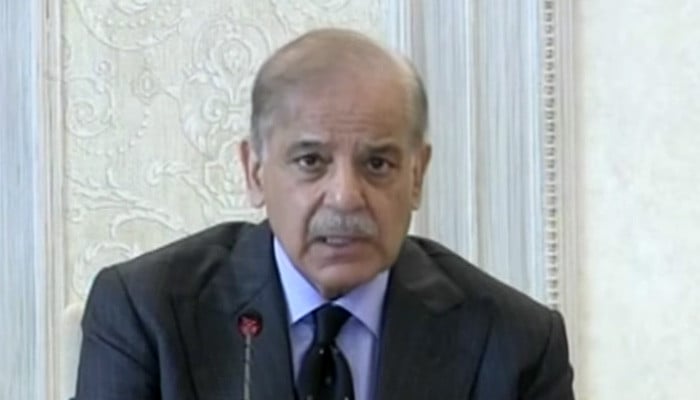
Prime Minister Shehbaz Sharif presided over the meeting on Thursday. The two drafts are the Defence Forces Act, 2026, which addresses administrative matters relating to the office of the Chief of Defence Forces and its headquarters, and the amended National Command Authority Act, 2010, which updates the NCA framework to reflect constitutional changes.
Both will be laid before Parliament during the session that began on August 17.
Why the Act needed changing
This is a catch-up exercise rather than a new departure, and the distinction matters.
The 27th Constitutional Amendment, enacted in November 2025, abolished the post of Chairman Joint Chiefs of Staff Committee and created the office of Chief of Defence Forces. Field Marshal Asim Munir became the first holder, a role he occupies concurrently with that of army chief. The amendment also created a four-star Commander of the National Strategic Command, overseeing the integration of strategic forces; Prime Minister Sharif appointed Syed Aamer Raza to that post in July, promoting him to four-star rank on appointment (Express Tribune; Arab News).
The NCA Act, however, still described the older hierarchy. Pakistan’s nuclear command statute referred to an office that no longer exists and did not account for two that now do. Analysts had noted for months that the Act would have to be amended for the legal framework to match the command structure actually in place.
What is not yet known
The text of neither draft has been published, and the cabinet’s announcement did not set out their provisions.
That leaves the central questions unanswered. It is not known where the new National Strategic Command sits within the NCA’s Employment Control and Development Control committees, or whether the composition of those committees changes.
On one point, reporting ahead of the cabinet decision pointed in a consistent direction: the amendments are expected to replace references to the abolished CJCSC with the Chief of Defence Forces, who would become Deputy Chairman of the National Command Authority. That expectation has been reported rather than confirmed, and the draft text has not been published to test it.
What has not been reported to be in question is who chairs the Authority. Under the 2010 Act the prime minister chairs the NCA, which retains ultimate authority over nuclear policy and employment, with the Strategic Plans Division serving as its secretariat. Nothing in the cabinet’s announcement indicates a change to that, and this newspaper has seen no reporting that suggests one.
The wider pattern
The amendment completes a sequence. The cabinet has already approved changes to the Pakistan Army Act, the Pakistan Air Force Act and the Pakistan Navy Act to bring them into line with the revised Article 243, and the defence ministry has been finalising a new organogram for the Chief of Defence Forces. The NCA Act was the significant remaining statute still written for the pre-27th-Amendment structure.
The 27th Amendment itself was contested. Opposition figures and a former senator characterised it as militarising the constitution, and it passed a parliament the PTI does not recognise as legitimately constituted. Legislation implementing it will be read in that light, and the parliamentary arithmetic has just become less certain: PPP Chairman Bilawal Bhutto-Zardari said on Wednesday that his party’s members would not vote for government legislation until its concerns are addressed, while allowing an exception for matters of national importance.
Whether nuclear command legislation qualifies as a matter of national importance is precisely the kind of question that exception was drafted to leave open.
The same cabinet meeting produced two other announcements: the prime minister renewed his offer of talks to the opposition, saying “it takes two to tango”, and a cut of about Rs32 a litre in the price of high-speed diesel.
A note on sourcing: the cabinet’s approval of these two drafts is reported by Dawn. The Pakistan Daily was not able to find independent confirmation of the cabinet decision in other outlets at the time of publication, though the substance of the expected amendments, the 27th Amendment changes and the appointments described above are corroborated by multiple sources. We will update this report as the drafts reach Parliament.