
They argue that it will not provide meaningful tariff relief, leaving industries uncompetitive
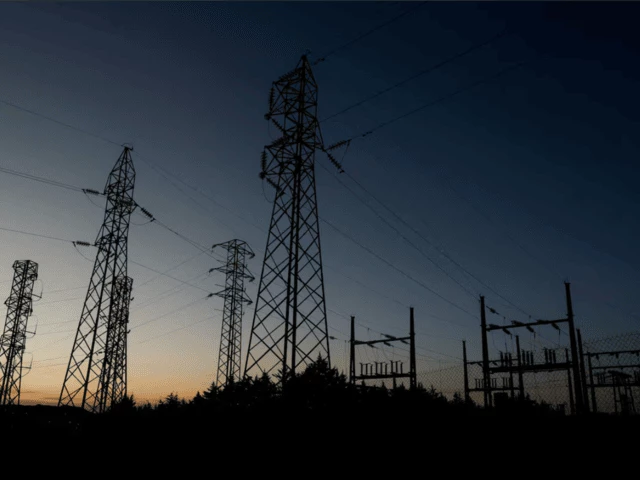
Power lines connecting high-voltage electricity pylons are seen during sunset at a power substation on the outskirts of Ronda, during a blackout in the city, Spain, April 28, 2025. Source: REUTERS
LAHORE:
The Pakistan Business Forum (PBF) has expressed its disappointment over the recently announced Roshan Maeeshat Bijli package, saying it will not effectively reduce the cost of doing business or make local industries competitive.
He called the offer ineffective as it would not address the core issue of high energy tariffs. In a statement, PBF chairman Khawaja Mehboobur Rehman said the new package – though well-intentioned – fails to address the fundamental problem of high electricity tariffs.
He recalled that the previous Bijli Sahulat package, launched last winter, also failed to yield meaningful results, with industries getting an average relief of just Rs2 per unit despite claims of a concession of Rs26.07 per unit.
Rehman stressed that “until the unit cost of electricity comes down to Rs 26, we will not stand idle,” adding that affordable energy is a must for every citizen, shop and factory.
Under the new Roshan Maeeshat Bijli package, industries and farmers will get additional electricity at Rs 22.98 per unit for the next three years – till October 2028 – but the basic tariff remains unchanged. PBF argued that with the current base tariff of around Rs 34 per unit (excluding taxes and fuel adjustments), the new package will not bring substantial relief.
PBF Director Ahmad Jawad said the current electricity tariff has become a serious burden on businesses, calling it a “tax on production and employment”. He added that Pakistan’s economy is stuck in a cycle where “for a hammer, everything is a nail”, meaning structural problems are being addressed with short-term fixes.
Jawad noted that while the system has 7,000 megawatts of excess power, this capacity will not yield results unless the basic tariff is rationalized.
It posed three critical questions to policymakers: How long can Pakistani industries remain competitive with tariffs exceeding 12 cents per unit, while regional competitors pay almost half that? What is the concrete roadmap to achieve the long-promised benchmark of 9 cents per unit for basic industrial tariffs? How will the government ensure that reforms go beyond short-term relief to achieve permanent tariff rationalization and structural competitiveness?
PBF officials also said that without significant tariff reduction and sustainable energy reforms, Pakistan’s industrial and agricultural sectors will continue to struggle against regional competitors.
a href=”https://tribune.com.pk/story/2574252/businessmen-call-new-bijli-package-ineffective”>Source link



