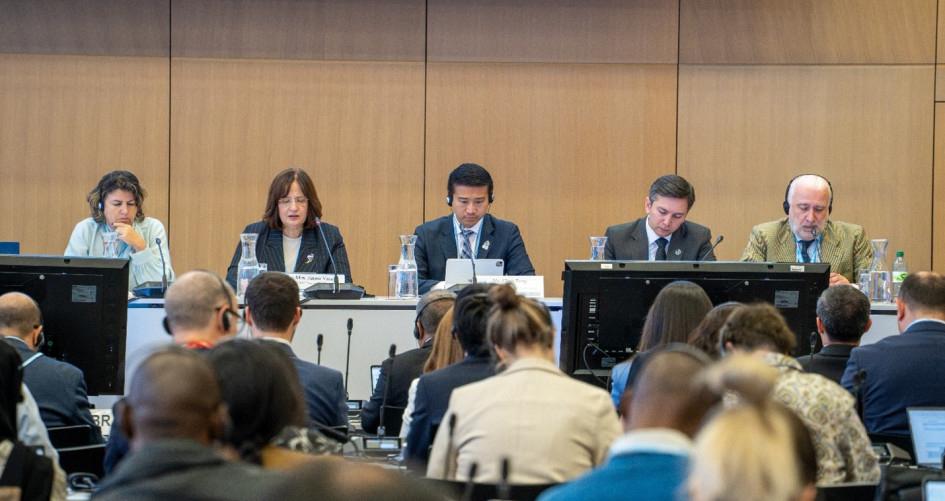
Climate leaders and experts meeting at the UN Climate Change June Sessions in Bonn emphasized that transparency under the Paris Agreement is no longer just a reporting obligation but a critical strategic tool for accelerating global climate action, improving policy decisions, attracting investment, and delivering tangible climate results.
The high-level dialogue on transparency was jointly organized by UN Climate Change through the #Together4Transparency initiative, the COP29 Presidency’s Baku Global Climate Transparency Platform, and the COP30 and COP31 Presidencies. The event brought together senior government officials, heads of delegation, international organizations, and climate experts to review progress on the implementation of the Enhanced Transparency Framework (ETF) and strengthen political support for future reporting cycles.
Speaking at the event, Fatma Varank, Chief Executive Officer of COP31 and Türkiye’s Deputy Minister of Environment, Urbanisation and Climate Change, described transparency as a “strategic tool” that helps governments develop stronger climate policies, improve coordination among public institutions, strengthen investment environments, and support long-term national transformation.
COP31 Deputy Chief Negotiator Chao Feng highlighted the importance of Biennial Transparency Reports (BTRs), noting that they play a vital role in informing global climate policy, guiding investment decisions, and contributing to the Global Stocktake process under the Paris Agreement.
Participants shared experiences from the first full cycle of BTR submissions, stressing the importance of building strong national institutions, investing in technical expertise, and integrating transparency systems across different sectors and levels of government.
Yalchin Rafiyev, COP29 Chief Negotiator and Deputy Foreign Minister of Azerbaijan, said the completion of the first BTR cycle has provided valuable lessons and practical experience that will help countries prepare for the next round of reports while implementing their updated Nationally Determined Contributions (NDCs), National Adaptation Plans (NAPs), and climate finance commitments.
Throughout the discussions, countries reported that transparency systems have improved data management, policy planning, stakeholder engagement, and institutional coordination, while also helping identify opportunities for stronger climate action.
However, delegates acknowledged that significant challenges remain, particularly for developing countries facing limited technical expertise and financial resources.
COP30 Chief Negotiator Ambassador Liliam Chagas stressed that support mechanisms must become more accessible, predictable, and responsive to national circumstances if climate implementation is to advance at the required pace and scale.
Representatives from organizations including the Consultative Group of Experts, UNEP, UNDP, GEF, ICAT, and FAO highlighted ongoing efforts to provide funding, technical assistance, and capacity-building support to developing nations. Participants also underscored the importance of international cooperation, peer learning, and knowledge-sharing in strengthening transparency systems worldwide.
Looking ahead, Parties called for timely submission of the second round of Biennial Transparency Reports in 2026 and emphasized the need for adequate financial and human resources to support technical expert reviews and multilateral assessments of progress.
In closing remarks, UN Climate Change Transparency Director Xuehong Wang reaffirmed the Secretariat’s commitment to developing innovative approaches to improve transparency processes and support countries in meeting their reporting obligations.
The dialogue concluded with a collective commitment to maintain momentum through upcoming climate engagements, including Climate Week in Baku in September and a COP31 ministerial meeting in Antalya in November, as countries continue working toward stronger climate accountability and action under the Paris Agreement.