In Pakistan’s largest yet most neglected province, the crisis is not sudden, nor is it hidden. It is slow, persistent, and visible in the most basic act of survival. Across Balochistan, and particularly in the district of Chaghi, access to clean water remains a daily struggle for thousands. In a region where annual rainfall averages between 50 to 100 millimeters in many arid zones, water scarcity is not an occasional hardship but a structural reality. The land receives little, stores even less, and offers almost nothing in return to those who depend on it for life.
Water is not a privilege. It is recognized globally as a fundamental human right. Under the United Nations Sustainable Development Goals, specifically SDG 6, access to clean water and sanitation is a universal commitment. Pakistan, as a signatory, has repeatedly acknowledged this obligation in policy frameworks and national resolutions. Yet, in places like Chaghi, this commitment feels distant, almost abstract. For many residents, the idea of safe drinking water remains out of reach, replaced instead by survival strategies that expose them to constant risk.
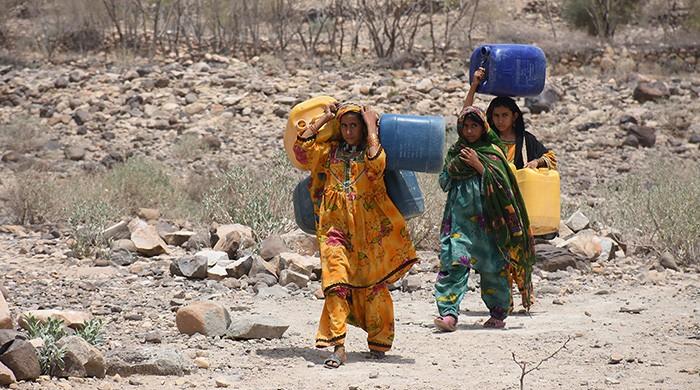
In scattered settlements, locally known as killis, the reality is stark. People collect water from shallow ditches, muddy depressions formed by occasional rain or minimal runoff. These are not protected sources. They are open, contaminated, and shared indiscriminately between humans and animals. Livestock drink from the same pools where children fill their containers. The water is often visibly polluted, carrying sediments, waste, and pathogens. There is no filtration, no treatment, and no alternative. It is consumed because there is nothing else.
This is not merely an issue of discomfort. It is a public health crisis. Contaminated water is a primary source of diseases such as diarrhea, cholera, typhoid, and hepatitis. In regions where healthcare access is already limited, these illnesses can quickly become life-threatening. Children are particularly vulnerable, with repeated exposure leading to chronic malnutrition and weakened immunity. Over time, entire communities are trapped in a cycle where poor water quality leads to illness, and illness deepens poverty.
The burden of water scarcity is not evenly distributed. Women and children often bear the responsibility of fetching water, traveling long distances under harsh conditions. In many cases, families walk for hours, sometimes several kilometers, to reach the nearest available source. The journey is physically exhausting and consumes time that could otherwise be spent on education or livelihood. For children, especially girls, this often means missing school altogether, reinforcing cycles of deprivation that extend across generations.
Chaghi carries an additional layer of historical and environmental complexity. The district is known as the site of Pakistan’s nuclear tests conducted in 1998. While the tests were a moment of national significance, the long-term impact on local communities remains a subject of concern. Residents frequently report higher incidences of blood-related illnesses, including cancers, though comprehensive long-term epidemiological data remains limited. In an environment already struggling with water scarcity and poor health infrastructure, such concerns deepen the vulnerability of the population.
For decades, the severity of the water crisis has driven some communities to seek solutions beyond national borders. There have been instances where residents crossed into neighboring regions to access water, reflecting the desperation that defines daily life. When access to a basic necessity requires leaving one’s own country, it raises serious questions about governance, equity, and the distribution of resources.
Within Chaghi, small communities like Killi Umer Shah illustrate the scale of the crisis at a human level. Home to around 50 families, approximately 200 people, this settlement faces acute water shortages. For these residents, the absence of clean water is not an abstract policy failure but a daily reality that shapes every aspect of life. Children grow up without reliable access to safe drinking water, and families are forced to make difficult choices between health and survival.
Amid this bleak landscape, localized efforts offer a glimpse of what is possible. Initiatives led by community groups and organizations are beginning to address the crisis in practical ways. One such effort involves the installation of a solar-powered water pump system in Killi Umer Shah, an initiative supported by UOL relief which I am directly involved with. The project aims to provide a sustainable and reliable source of clean water to the community by the end of May, coinciding with Eid ul Adha. By harnessing solar energy, the system reduces dependence on unreliable electricity supply and minimizes operational costs, making it a viable long-term solution for remote areas.
Such interventions, while impactful, highlight a broader gap. If small organizations with limited resources can implement targeted solutions, the potential for large-scale government action is far greater. What is lacking is not the feasibility of solutions but the prioritization of the issue. Water scarcity in Balochistan is often discussed in policy circles, yet implementation remains inconsistent and slow. Large-scale infrastructure projects are announced but rarely reach the most affected communities. Meanwhile, smaller, decentralized solutions that could be deployed quickly are not scaled up effectively.
The government’s role must extend beyond acknowledgment to sustained action. Investments in water infrastructure, including dams, reservoirs, and groundwater management systems, are essential. At the same time, there is a need for community-based solutions such as solar-powered pumps, rainwater harvesting systems, and localized filtration units. These approaches are particularly suited to the geographic and economic realities of Balochistan, where centralized systems often fail to reach remote populations.
Equally important is the need for accountability and coordination. Water management involves multiple stakeholders, from provincial authorities to local administrations. Without clear responsibility and oversight, efforts remain fragmented. A coordinated strategy that integrates policy, infrastructure, and community engagement is necessary to address the crisis effectively.
Public health interventions must also be prioritized. Providing access to clean water is one part of the solution, but addressing the consequences of long-term exposure to contaminated water is equally important. Mobile health units, vaccination campaigns, and awareness programs can help mitigate the immediate impact while longer-term solutions are developed.
At its core, the water crisis in Balochistan is a question of equity. It reflects disparities in resource distribution, infrastructure development, and political attention. While urban centers continue to expand and modernize, regions like Chaghi remain on the margins, their struggles largely invisible in national discourse. Yet, the cost of inaction is not confined to these المناطق. Public health crises, economic instability, and social inequality have far-reaching consequences that affect the entire country.
The story of water in Balochistan is not just about scarcity. It is about resilience in the face of neglect, about communities that continue to survive despite conditions that should not exist. But resilience should not be mistaken for acceptance. The fact that people have adapted to such hardships does not make them acceptable.
Access to clean water is one of the most basic measures of development. It is a foundation upon which health, education, and economic stability are built. In places like Chaghi, where people still rely on contaminated ditches for survival, that foundation remains absent. Addressing this crisis requires more than temporary relief. It demands a sustained commitment to ensuring that every citizen, regardless of location, has access to what is rightfully theirs.
Until that commitment is realized, the people of Balochistan will continue to wait, not for progress, but for something far more fundamental: a clean, safe glass of water.