
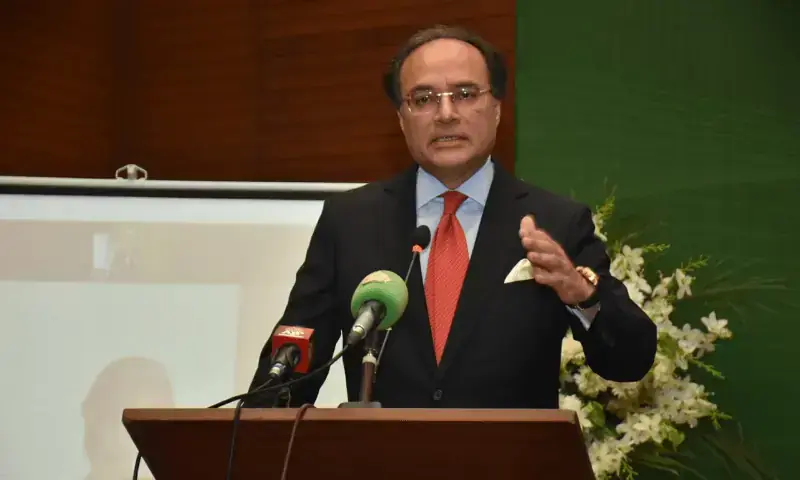
Finance Minister Muhammad Aurangzeb told Dutch business leaders in Islamabad that Pakistan is committed to policy stability, at a round table at the Netherlands ambassador’s residence (Dawn).
What he said
“Pakistan is in a good place with respect to trade and investment. On the back of external validation and growing confidence following global rating agencies, we are very committed to developing and assisting in any way we can.”
He emphasised consistent policymaking rather than cyclical booms and busts.
Who was in the room
More than 50 Dutch firms, spanning agriculture, food and beverage, and industrial storage, alongside Pakistani executives, officials and diplomats.
The Netherlands is Pakistan’s second-largest EU trading partner — a fact that gets less attention than it should, and one that sits directly on top of this week’s other European news.
What the Dutch side said back
The reassurance did not go one way. The Netherlands used the occasion to caution Pakistan that continued preferential access under GSP+ is not guaranteed, and that concrete steps on human rights are needed to retain it (Business Recorder).
That is the sentence that matters most from the evening, and it was said by the host rather than the guest.
The connection nobody made explicitly
The EU takes 28 per cent of Pakistan’s exports, and roughly €732 million a year in tariff exemptions flows through the GSP+ scheme. The European Commission’s review of that scheme, reported by this newspaper yesterday, credited Pakistan with legislative progress while flagging enforced disappearances, media freedom and judicial independence.
Dutch agriculture and food companies are exactly the sector that GSP+ preferences serve. A pitch for policy consistency to European investors was made in the same week a European institution said Pakistan’s implementation of its commitments remains uneven — and, it turns out, in the same room as a Dutch warning to the same effect.
On “consistency”
The claim is the right one to make and the hardest to evidence. Pakistan’s investors have historically been undone less by tax rates than by their frequent revision — and the Senate this week told the government to renegotiate IMF terms on special economic zones, which is itself a proposed change to terms investors were given.
No specific commitments on taxation, repatriation of profits or tariff treatment were announced. This was a statement of intent to an audience of prospective investors, and should be read as one.



