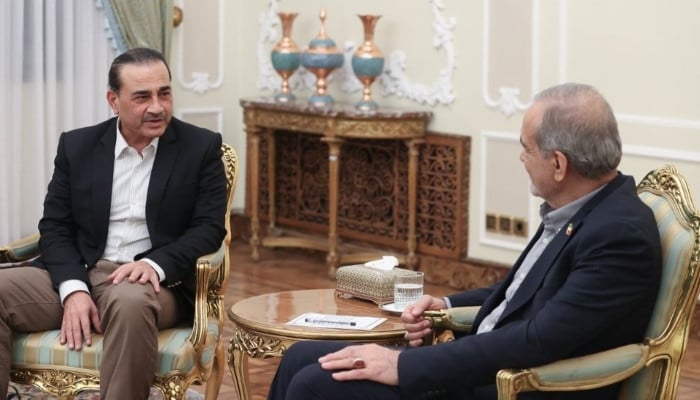
Field Marshal Asim Munir has concluded a day-long visit to Tehran, during which Pakistan and Iran discussed reopening the Strait of Hormuz and bringing an “expedited termination” to the US-Iran conflict, the Inter-Services Public Relations directorate said (Geo News; Geo News).
He travelled with Interior Minister Mohsin Naqvi.
Who he met
Munir called on Iranian President Masoud Pezeshkian; Mohsen Rezaei, the supreme leader’s representative on the Supreme National Security Council; Parliament Speaker Mohammad Bagher Ghalibaf; Foreign Minister Abbas Araghchi; and Interior Minister Eskandar Momeni.
That is close to the full spread of Iranian decision-making short of the supreme leader himself, in a single day.
What was discussed
ISPR said comprehensive discussions focused on measures to prevent further escalation, the reopening of the Strait of Hormuz, and an expedited end to the conflict.
Iranian leaders praised Pakistan’s efforts to facilitate dialogue and de-escalation, according to the military’s media wing.
The timing
The visit landed as Washington expanded its sanctions regime — measures US officials say are designed to cut off Tehran’s economic lifeline and put the world on notice to stop doing business with Iran.
Pakistan brokered a two-week ceasefire between the two sides on April 8 and has continued relaying messages between the capitals since.
The domestic stake
Hormuz is not an abstraction for Pakistan.
Oil traffic through the strait has been at a virtual standstill, holding crude above $91 a barrel. That is the condition under which four Karachi refineries agreed to absorb part of their margin to cut diesel by Rs32.63 — an arrangement written to last only until the situation in the strait improves.
Petrol rose again on Tuesday to Rs341.98 a litre and diesel to Rs370.69, and Jamaat-e-Islami’s sit-ins over the petroleum levy are in their ninth day.
What has not been said
Neither ISPR nor the Iranian side has indicated any commitment, timetable or mechanism for reopening the strait.
The characterisation of “significant progress” comes from the Pakistani side. Tehran’s public position as recently as the weekend was that not a drop of oil would flow from the Gulf if the economic war continued.