
Karachi:
The recently announced Pakistani team has again sparked discussions between fans and experts.
With a mixture of youth talents and bold exceptions, the choice raises an important question: Does the PCB finally hit the right balance or is this other bet on the big stage?
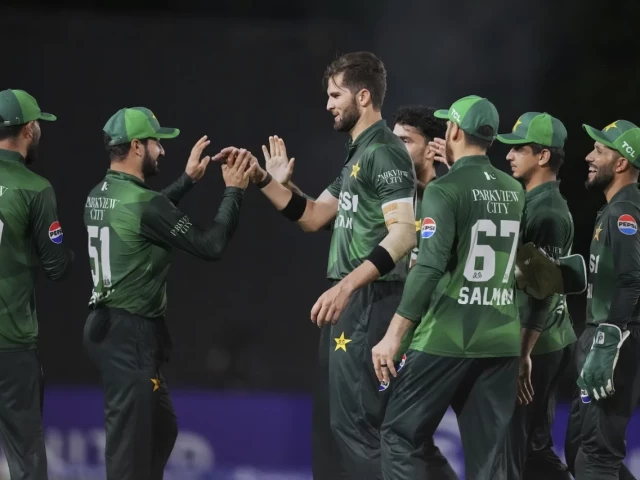
The PCB confirmed Pakistan’s team for the upcoming tripartite series against the UAE and Afghanistan, followed by the Asian Cup 2025. On paper, the side looks fresh, energetic and hungry to prove. However, for a tournament of this size – where Pakistan has not lifted the trophy since 2012 – the absence of experience is great.
Since the last victory of Pakistan, Asia, Sri Lanka claimed titles in 2014 and 2022, while India dominated 2016, 2018 and 2023.
A year later, under his leadership, the team crashed in fourth place. This painful story makes this group announcement even more important.
No two omissions have made more noise than those of Babar Azam and Mohammad Rizwan. Both were once regarded as the backbone of Pakistan’s T20i side, but statistics reveal why the selections chose a different route.
Babar has recently played T20i in 2024, and from the T20 World Cup, he has spent 10 races – including the Mega Event – without notice only one fifty. Its strike rate in this period is 118.59 on average 26.22.
Rizwan’s case is even worse. In his last 8 T20IS, he made only 211 strikes at a strike rate of 94.19. The 16 out of 26 against Australia, 74 out of 62 against South Africa and 31 of 44 against India in the T20 World Cup-but for the wrong reasons.
These numbers show why choices felt justified to move on. For a long time, Pakistan’s top class was accused of playing “cricket anchor” in a form that requires fearless blow.
In their place, Sahibzada Farhan and Mohammad Haris bring a refreshing intent. Farhan, with three players in the match awards in the last six T20IS, showed that he can perform under pressure. Harris also has the aggressive mentality of Pakistan of Pakistan.
The bowling section looks balanced. Shaheen Shah Afridi leads the attack with form and trust, having overcome the wicket charts on PSL 10. On the contrary, Naseem Shah’s blockade looks tough on some followers, but the numbers say – an economy rate of 8.01 and on average 34.68 in T20IS does not inspire confidence. ODI representations may be constant, but in the T20 cricket, it remains expensive.
The Spin department could prove decisive, especially in UAE conditions. The overall utility of Mohammad Nawaz, along with Sufiyan Muqeem and Abrar Ahmed, offers flexibility.
Pakistan’s middle class ultimately shows signs of balance. Mohammad Haris, Hasan Nawaz and Khushdil Shah are able to finish games with force. However, the key lies in Salman Ali Agha, the newly appointed ruler. His ability to anchor, rotate the strike and handling rotation will be vital to the UAE conditions. This leadership test could determine not only the Asian Cup of Pakistan, but also his career.
The rejection of big names like Babar and Rizwan is never easy. For years, they were considered “untouched” in Cricket, Pakistan. But cricket is a game of evolution and their inability to adapt to the modern T20 Tempo made this move inevitable.
Pakistan’s team for the Asian Cup 2025 has the energy of the youth, the clarity of the new talent and a clear intention to play fearless cricket. But the real question remains: Will this new side of the appearance increase, or will the inexperience in Pakistan cost another shot in silverware?
One thing is certain – all eyes will be in this group. And if they click, the asia Cup drought since 2012 can finally be over.
a href=”https://tribune.com.pk/story/2563768/pakistans-asia-cup-squad-faces-weight-of-expectations”>Source link



