
Local, global incidents used to convey “that Muslims are bad, that Hindus should be afraid,” says one fact-checker
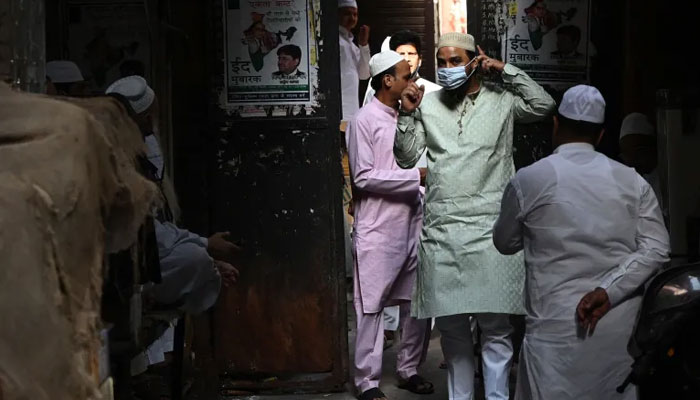
- Misinformation about Muslims is rife on social media in India.
- BJP sues Muslims vote, Modi denies discrimination.
- Platforms urged to do more to fight hate speech, fake news.
Hours after the Hamas attack in southern Israel on October 7, a WhatsApp message purportedly listing the names of 17 Indian Hindus killed or injured in the attack went viral in India, sparking horrific reactions. But the list was fake, as no one was hurt.
In the following weeks, hundreds of messages referring to the conflict between Israel and the Palestinian resistance group spread rapidly on Indian social media accounts, said auditors and researchers who document online misinformation about India’s Muslim minority.
Many of these messages warned Hindus that their security could be threatened by Muslims if the Hindu nationalist Bharatiya Janata Party (BJP) loses power in next year’s elections.
“Every local and global incident is being used to convey the message that Muslims are bad, that Hindus should be afraid,” said Bharat Nayak, an independent fact-checker in the eastern Indian state of Jharkhand.
“When there is no current incident, past incidents are recycled with distorted images and videos to say: if Hindus want to stay safe, vote for the BJP,” said Nayak, who monitors misinformation and hate speech in viral whatsapp messages. Thomson Reuters Foundation.
Islamophobic and anti-Semitic hate speech has surged globally since Oct. 7, with millions of abusive posts on Facebook, Instagram, TikTok and X — formerly Twitter, according to the Institute for Strategic Dialogue think-tank and the Anti-Defamation League , non profit organization.
In India, Muslims make up about 14% of the Hindu-majority country’s 1.4 billion population. With a general election due in May 2024 and several state elections this month, misinformation and hate speech targeting them is on the rise, fact-checkers and technology experts said.
“Conflicts, elections are always going to breed these kinds of narratives (and) the nature of this conflict is an opportunity to grind an ax of Hindus against Muslims,” said Marc Owen Jones, an associate professor at Hamad bin Khalifa University in Qatar.
“It’s being weaponized by state actors to rally the base with divisive rhetoric and sensationalized disinformation,” said Jones, who studies disinformation.
Asked to comment, Tom Vadakkan, BJP national spokesperson, said, “The BJP and the government do not encourage any hate speech against any community or individual.”
Speaking during a visit to the White House in June, Prime Minister Narendra Modi said there was “no room for any discrimination”.
Religious disputes
India has a long history of communal conflict. During the BJP’s rule over the past decade, party members and allies have been accused by human rights groups of inflammatory speech against Muslims inciting violence on the ground.
Hashtags such as #coronajihad and #lovejihad have gone viral in recent years and are being used to falsely accuse Muslims of deliberately spreading the coronavirus and forcibly converting and marrying Hindu women.
Deadly clashes broke out over false rumors on WhatsApp and Facebook about Muslim gangs abducting children.
The BJP, widely tipped to win a third term in 2024, has launched a nationwide campaign to woo Muslim voters. A senior Muslim party leader told Reuters this month that Hindu-Muslim violence is making headlines now only because political rivals are using it to target the party.
Elections often lead to an increase in anti-Muslim hate speech, researchers found, with such incidents averaging more than one per day in the first half of 2023, mostly in states with upcoming elections, according to Hindutva Watch, a group based in Washington. monitoring attacks on minorities.
Data control agency BOOM Live showed there was an increase in disinformation ahead of polls in the southern state of Karnataka in May, which the opposition Congress party won.
“The misinformation targeting Muslims has become more aggressive and aggressive, with most of the false claims reinforcing negative stereotypes,” said Karen Rebelo, associate editor at Antenna.
Facebook and Instagram owner Meta Platforms said it has added more background checks in India, “making it the country with the most third-party background check partners globally across Meta.”
“We have a comprehensive election strategy, which includes identifying and removing hate speech and content that incites violence, reducing the spread of misinformation … (and) working with election authorities to action content that violates local law.” , Meta said the spokesperson said.
Video-sharing platform YouTube removes “infringing content as quickly as possible when it is brought to our attention,” the company said, adding that its team monitors trends in “dangerous forms of content” and addresses them before they become bigger issues.
Social media platform X did not respond to a request for comment.
Removal Requests
With its young population, India is among the largest markets for social media platforms, with more than 300 million users on Facebook and around 500 million on YouTube and WhatsApp.
Social media companies have often clashed with Indian authorities over content control.
Modi’s government banned the short-form video app TikTok in 2020 over security concerns and has tightened social media regulations, requiring the rapid removal of posts deemed harmful and requiring traceability of information.
Meta received nearly 64,000 content takedown requests from the Indian government in the second half of 2022, according to its data, more than a quarter of all requests.
Google’s YouTube removed more than 2 million videos in India in April-June this year, more than any other country.
But government officials are mainly targeting posts by dissidents and human rights activists, including Muslim activists, not harmful content spread by BJP leaders or their allies, said Jayshree Bajoria, deputy Asia director at Human Rights Watch, a global non profit organization.
“BJP leaders or BJP supporters who make hateful comments against Muslims or other minorities, inciting violence, are not held accountable,” Bajoria said.
The IT Ministry and the Home Ministry did not respond to requests for comment.
After Facebook whistleblower Francis Haugen leaked internal documents in 2019 showing the platform’s struggles to monitor hate speech in countries including India, Meta agreed to conduct an independent human rights impact assessment.
Meta has not released the full report, despite calls from human rights groups to do so.
Meta has “clear policies against hate speech and removes hateful content that targets anyone based on their religion, ethnicity, nationality or caste,” the spokesperson said.
“Enhancing Bias”
It’s not just in India: social media companies have failed to act on 89% of posts containing anti-Muslim hate and Islamophobic content reported to them, the Center to Combat Digital Hate (CCDH), a British non-profit, says in a report organization. last year.
The platforms similarly failed to act on anti-Semitism, anti-Black racism and misogynist abuse, the CCDH found.
“Platforms seem more intent on shutting down Muslim users than shutting down hate speech,” said SQ Masood, a minority rights activist in the Indian city of Hyderabad, who has filed two complaints about hate speech on social media. .
When nearly 300 people were killed in a train accident in the eastern state of Odisha in June, Antenna and Alt News recorded at least a dozen false claims about the incident – from the station master being a Muslim and hiding, to there being a mosque near the track.
“These messages go viral because there is support for these narratives in society,” said Kiran Garimella, an assistant professor at the Rutgers School of Communication and Information in New Jersey who studies misinformation on WhatsApp.
“These platforms just make it easier to reinforce prejudices.”
a href=”https://www.geo.tv/latest/520612-as-indias-election-nears-hindu-muslim-tensions-play-out-online”>Source link



