
Karachi:
In a world that is struggling with environmental crises, the electricity revolution (EV) has become a global necessity. Driving the road to South Asia is India, with the ambitious initiative of the Prime Minister’s electronic mobility, the “National Electric Mobility Plan” (NEMMP).
This policy aims at the electricity of the country’s transport sector, reducing the dependence on fossil fuels and a significant reduction in carbon emissions. India’s subsidies for electric two -wheeled, tax benefits and investment in infrastructure charge have promoted the EV sector forward, achieving impressive growth.
The result; India has become one of the largest markets for electric two -wheelers, with manufacturers such as Ola Electric, Ather Energy and Bajaj, set worldwide benchmarks.
In a strong contrast, Pakistan has not yet embraced the revolution of the electronic bicycle with similar vigor. Although it hosts over 22 million conventional motorcycles – an ideal electricity platform – the country is delayed both in adoption and policy development.
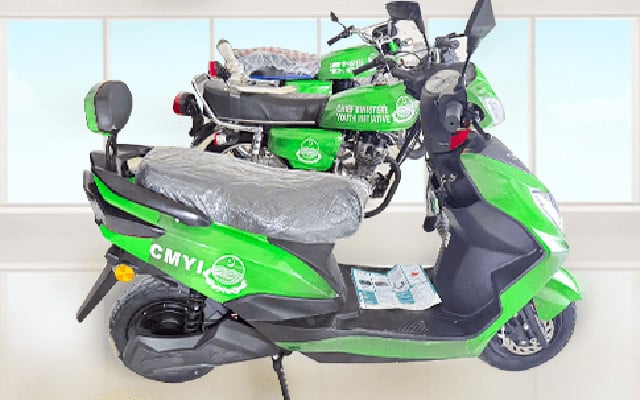
Electronic bicycles, or electric Ditrolas, have begun to pay attention to Pakistan, especially in urban centers such as karachi, Lahorei and Islamabad. Increasing fuel prices and increasing environmental awareness have pushed medium -income households and delivery services operators to explore this alternative. Several local companies, such as Jolta Electric and Road King, have introduced electronic bike models ranging from basic travel bicycles to slightly higher models designed for performance.
While the cost of a conventional 70cc motorcycle in Pakistan ranges between RS120,000 and RS160,000, most electronic bikes are higher, starting with RS170,000. Despite the initial cost, electronic bikes offer significant long -term savings by eliminating fuel costs, which are currently burdened by Pakistani households, as gasoline prices remain unstable. In addition, the low maintenance requirements of the two-vehicle electric-without engine oil changes or spark plugs-make a financially attractive choice.
Lessons from India
India’s preventive approach to promoting electronic mobility offers valuable lessons for Pakistan. The Indian Government has released multiple subsidy programs in the context of faster adoption and manufacture of hybrid and electric vehicles (reputation), offering significant financial incentives for electronic bike shoppers.
Combined with infrastructure investments, such as installing over 5,000 EV charging stations, India successfully created an ecosystem that supports EV growth.
In addition, the Indian market is characterized by healthy competition between domestic players, leading to innovation and price reduction. For example, the affordable models of Ola Electric have made electronic bikes accessible to the masses, while high performance brands, such as Ather Energy, serve specialized sections. This diversity in bids fueled rapid adoption.
Pakistan can reproduce these strategies by introducing targeted subsidies and reducing import duties to EV components. Cooperation with China, a global EV leader, could also facilitate technology transport and cost -effective construction.
Challenges that hinder the adoption of electronic bike
Despite its potential, Pakistan faces significant obstacles in the arms of electronic legs:
High Initial Cost: Electronic bicycles remain economically away for the majority of Pakistanis. While the highest prior price is offset by the lowest operating costs, this compromise is not immediately apparent to many potential buyers.
Infrastructure Lack: Unlike India, Pakistan has not yet invested in infrastructure charge. Most urban areas do not have committed charging stations, making the uncomfortable for electronic bicycle owners to recharge their vehicles.
Limited policy support: Pakistan has no coherent EV policy. Although the government announced an EV policy in 2020, its implementation was slow and the motives for the two -wheelers are scarce.
Public awareness and skepticism: Many consumers do not know the long -term benefits of electronic legs, while others remain skeptical about their reliability and performance, especially in hilly soils or during power holidays.
Energy Crisis: Frequent Pakistan’s electricity deficiencies raise concerns about whether the grid can handle the additional load from the charge of HSs, creating a vicious circle of mistrust.
The road ahead
As global trends shift rapidly to sustainable mobility, Pakistan is at a critical juncture. People are watching an increase in the adoption of electric two -wheeled, driven by a combination of climate concerns, fuel costs and technological developments.
Countries such as India determine reference points with visionary policies and public-private partnerships, proving that a coordinated effort can produce transformative results.
For Pakistan, the question is no longer concerned with the feasibility of electronic legs, but whether the country can afford to delay their adoption further. With urban air pollution reaching the alarming levels and fuel import bills stretching the national economy, the time for action is now. The large population of Pakistan’s motorcycle users presents a huge opportunity for electric drive if properly utilized.
The global EV market is expected to grow exponentially over the next decade, with a significant share that is expected to come from Asia. If Pakistan invests today in the production and infrastructure of electronic bike, it can be placed as a regional player in the EV supply chain. In addition, regional partnerships, such as technology exchange agreements, could reduce costs and create local know -how.
The integration of genetics AI into modeling and implementation of policy could further accelerate progress. Knowledge of AI can help design optimized billing networks, predict market trends and effectively involve consumers through targeted campaigns. Utilizing such technologies, Pakistan can overcome traditional obstacles and integrate into the modern mobility ecosystem.
The window to cover is rapidly closing. While there remain challenges such as infrastructure, costs and public skepticism, they are not insurmountable. With a decisive action and a clear map map, Pakistan can not only achieve its environmental goals, but also create a sustainable, confident economy powered by green energy. The revolution of the electronic bike knocks on the door of Pakistan. It’s time to answer the call.
The writer is a mechanical engineer and pursues his postgraduate degree
a href=”https://tribune.com.pk/story/2526184/e-bike-revolution-a-road-yet-to-be-taken”>Source link



