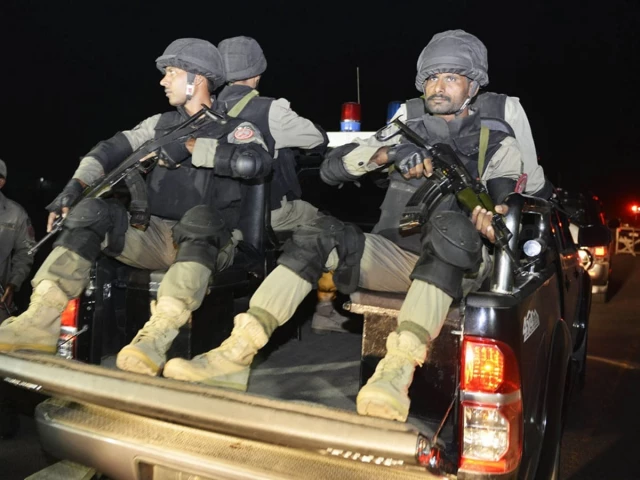
Operation Shaban entered its 17th day on July 21 as Pakistan Army, Frontier Corps and Balochistan Police units continued the dual-front counterterrorism campaign launched on July 5 against TTP cells in northern Balochistan and BLA networks in the south (Dawn; The Nation).
The cumulative toll from Operation Shaban and concurrent intelligence-based operations across Balochistan has exceeded 132 since the campaign began in response to coordinated attacks that killed 42 people — including 38 security personnel — across multiple Balochistan districts on July 4–8. The ISPR has maintained throughout that operations will continue “until the last militant is eliminated.”
Monsoon friction
Heavy monsoon rains now falling in northeastern Balochistan — the PMD’s heaviest-rainfall zone for the July 19–23 period — have added logistical complexity to the operation’s second half. Districts including Khuzdar, Sibi, Kohlu, Dera Bugti and Naseerabad, identified by the PMD as high-rainfall areas, overlap with the districts most active in Operation Shaban’s southern BLA front. Rain disrupts aerial ISR — the intelligence, surveillance and reconnaissance operations that have guided the daily IBO pattern — and restricts road movement for ground forces in mountainous terrain.
NDMA is simultaneously pre-positioning monsoon relief stocks in the same districts, using the same road infrastructure and provincial government logistics support. The concurrent demands of active counterterrorism operations and monsoon relief pre-positioning in northeastern Balochistan represent an unusual logistical challenge for both the Army and the Balochistan provincial government.
Pakistan’s security forces have been running two parallel counterterrorism campaigns this week: Operation Shaban in Balochistan and a separate IBO campaign in Bannu district (KP), which killed 24 militants this week in intelligence-based operations targeting TTP-aligned Fitna al-Khawarij elements. The combined operational picture represents the broadest simultaneous counterterrorism footprint Pakistan has maintained since the post-2014 period.