
Secretary Austin urges united action against non-state actors that threaten the principle of freedom of navigation
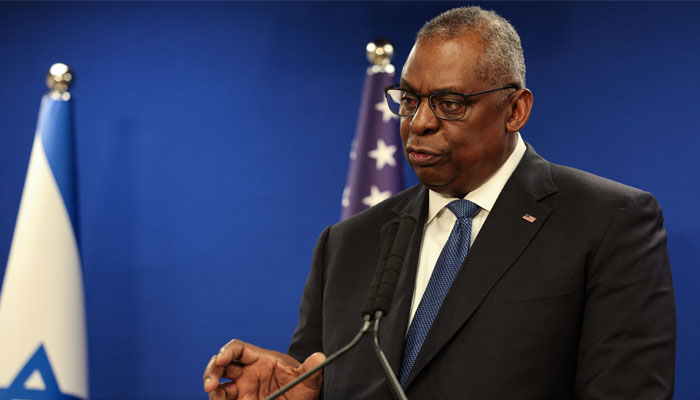
- The Houthi rebels threaten the route that serves nearly 12 percent of global trade.
- Coalition formed to ensure smooth navigation for all nations.
- The disruption of maritime operations leads to a “maritime security crisis”.
In an effort to curb escalating missile and drone attacks by the Iranian-backed Houthis in the Red Sea, the United States announced Operation Prosperity Guardian, a formation of a 10-nation alliance aimed at protecting ships traveling on this vital sea route.
Joining forces with Britain, France, Bahrain, Italy and others, US Defense Secretary Lloyd Austin stressed the need for united action against non-state actors that pose a threat to the principle of freedom of navigation.
The Houthis have stepped up their attacks on various ships in the Red Sea, endangering a critical passage that serves nearly 12 percent of global trade.
This increase in hostile activities raised concerns and necessitated a collective security approach.
Austin articulated that the primary goal of the coalition revolves around ensuring seamless navigation for all nations while enhancing regional security and prosperity.
This multinational effort enlists the participation of the US, UK, Bahrain, Canada, France, Italy, Netherlands, Norway, Seychelles and Spain.
However, amid these developments, the recent incident involving the Swan Atlantic, owned by Norway’s Inventor Chemical Tankers, revealed the complexity of the situation.
The ship, which was carrying biofuel feedstock from France to Reunion Island, had no ties to Israel and was operated by a Singaporean entity. Fortunately, the Indian crew remained unharmed and the vessel sustained minimal damage.
The effects of these attacks have reverberated throughout the global shipping industry. Major entities such as British oil giant BP and Taiwan’s Evergreen have suspended their Red Sea transport and cargo shipments from Israel, respectively.
In addition, Frontline, a prominent tanker company, said it was rerouting ships and tight control for new operations, opting for South Africa’s longest and most fuel-intensive route to the Cape of Good Hope.
Consequently, rising insurance premiums for ships crossing the Red Sea made the Suez Canal economically unfeasible for some ships.
Major shipping companies such as Mediterranean Shipping Company, CMA CGM, Hapag-Lloyd, Euronav and AP Moller-Maersk have all suspended operations in the Red Sea until further notice.
This unprecedented disruption to maritime operations has led experts to categorize the situation as a “maritime security crisis” with far-reaching commercial and economic implications.
Torbjorn Soltvedt of analyst firm Verisk Maplecroft emphasized the seriousness of the issue, noting the profound implications not only in the regional context but also globally.
The coalition’s collective efforts are therefore aimed at restoring stability to the region and ensuring the uninterrupted flow of global trade through this critical sea corridor.
a href=”https://www.geo.tv/latest/523603-us-announces-alliance-of-10-nations-to-counter-houthi-attacks-in-red-sea”>Source link


