
Lahore:
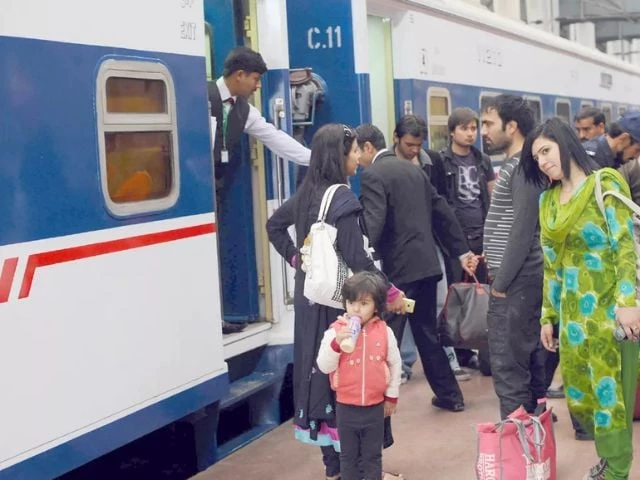
Hamza Ali, who chose to travel through railways after a few years, arrived early at Lahore Railway Station on Friday, pleasantly surprised by the modernized central induction passenger (CIP) lounge. Air-conditioned waiting rooms, clean toilets, free Wi-Fi, tea service and chairs lying down was a welcome change from the outdated and overcrowded facilities he was used to.
“This is something one would expect at an international airport, not at a train station in Pakistan,” he told The Express Tribune with a smile, estimating visible improvements. As the Islamabad Express departed for her journey, Ali felt optimistic about the direction of Pakistan Railways she eventually took.
But just an hour on his journey, this optimism quickly turned into fear and mistrust. Near Kala Shah Kaku, a sudden jerk sent panic through the coaches. Many Islamabad stretches were derailed, luggage and passengers were thrown around. Although there were no deaths, many were injured and the train service was postponed for hours. “At the time it happened, I thought we would die,” Ali explained. “All this comfort has disappeared in a second. I am not sure I will ever feel safe to travel by train again.”
This contrast incorporates the current state of Pakistan’s railways. A company trying to modernize and attract passengers with new facilities but struggles to secure basic travel security. In recent years, the Ministry of Railways has taken several initiatives to improve infrastructure at large stations such as Lahore, Karachi and Rawalpindi. Recently designed passenger lounges, clean platforms and digitized ticket systems aim to provide better experience, especially for high quality travelers. Lahore’s new cip lounge is part of this broader plan to enhance customer service and restore public confidence.
However, a series of accidents – derailments, conflicts and even terrorist attacks – continue to shake the confidence of passengers. The derailment of Islamabad Express near Kala Shah Kaku is not a secluded incident. Only in July, three small derailments were reported in the main line 1 (ML-1), the country’s busiest and most critical railway artery. ML-1 has over 70% of passenger and freight traffic in Pakistan, but the decade that old infrastructure and its rolling material need a comprehensive review.
Pakistan’s railways have given his hopes of the very defined ML-1 upgrade, an flagship project in the context of China Pakistan’s economic corridor (CPEC). The $ 6.8 billion project aims to modernize 1,872 kilometers from Karachi to Peshawar, allowing faster and safer trips. While previous discussions with China seemed to be promising, funding has tackled constant delays. Recently, railway officials have begun to engage in the Asian Development Bank (ADB) to co-finance some parts of ML-1, especially those involving high traffic zones.
A senior railway official, in search of anonymity, admitted that the internal challenges are as scary as external. “The biggest issue is institutional inactivity. He added that current management is now trying to create a specialized rail safety authority to monitor the status of tracks, rolling stock and real -time signaling systems.
Despite failures, Pakistan’s railways managed to publish a moderate increase in revenue. For FY25, the entity has won 93 billion Rs, from 88 billion Rs last year. This increase is attributed to higher ticket fares, improved cargo handling and an increase in online bookings. However, safety concerns add another layer of complexity other than derailments.
In recent months, passenger trains at Balochistan and Sindh have targeted fighters, increasing alarms for passenger safety and rail staff. The department has now proposed the development of dedicated groups of police railways in long -distance trains and is in talks with provincial governments to increase the distribution of information to prevent such incidents.
The challenge for PR management and its minister is much greater and more serious. The work is no longer just about upgrading infrastructure or increasing revenue. It is about rebuilding passenger confidence such as Hamza Ali, who now weigh the dangers every time they book a train ticket. Railways may circulate new facilities and plan large projects, but if it cannot guarantee safe and safe trips, these efforts may eventually be derailed.
a href=”https://tribune.com.pk/story/2559349/train-derailment-hits-modernisation”>Source link



