
Households around the world threw away one billion meals every day in 2022 in what the United Nations on Wednesday called a “global tragedy” of food waste.
More than $1 trillion worth of food was wasted by households and businesses at a time when nearly 800 million people went hungry, the latest UN Food Waste Index Report says.
It said more than 1 billion tonnes of food — almost a fifth of all products on the market — was wasted in 2022, most of it by households.
“Food waste is a global tragedy. Millions will go hungry today as food is wasted around the world,” Inger Andersen, executive director of the UN Environment Programme, said in a statement.
This waste was not just an ethical but an “environmental failure”, the report said.
Food waste produces five times the global-warming emissions of the aviation sector and requires the conversion of vast tracts of land to crops that are never eaten.
The report, co-authored with the non-profit organization WRAP, is only the second on global food waste produced by the UN and provides the most comprehensive picture to date.
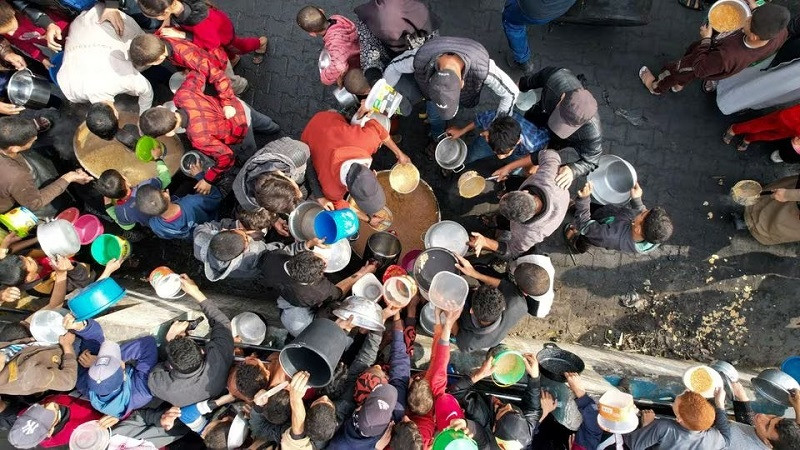
Palestinians gather to receive food cooked by a charity kitchen in Rafah in the southern Gaza Strip December 17, 2023. PHOTO: REUTERS
As data collection has improved, the true scale of the problem has become much clearer, said UNEP’s Clementine O’Connor.
“The more food waste you look for, the more you find,” he said AFP.
The report said the number of “billion meals” was a “very conservative estimate” and “the actual figure could be much higher.”
“To me, it’s just shocking,” said WRAP’s Richard Swannell AFP.
“You could actually feed all the hungry people in the world right now — about 800 million people — with one meal a day just from the food that is wasted each year.”
He said bringing producers and retailers together has helped reduce waste and get food to those who need it, and more such actions are needed.
Food services such as restaurants, canteens and hotels are responsible for 28% of all food waste in 2022, while retail such as butchers and grocers dumped 12%.
Also read: Scientists are working on the reuse of organic waste
But the biggest culprits were households, which accounted for 60% — about 631 million tons.
Swannell said a lot of this happened because people simply bought more food than they needed, but also misjudged portion sizes and didn’t eat leftovers.
Another issue was expiration dates, he said, with perfectly good products thrown in the trash because people mistakenly assumed their food had gone off.
Much food, particularly in the developing world, was not so casually wasted but was lost in transit or lost due to lack of refrigeration, the report said.
Contrary to popular belief, food waste is not just a “rich country” problem and can be seen around the world, the report says.
Warmer countries also produced more waste, possibly due to higher consumption of fresh foods with significant inedible parts.
Businesses also underestimate the cost of food waste to their bottom line because it was cheap to throw unused products into landfills.
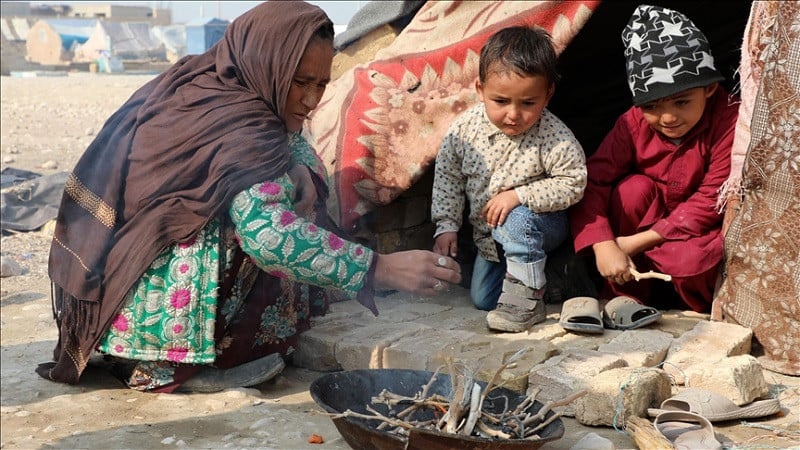
According to WFP, women and children are among those particularly affected by food insecurity. PHOTO: ANADOLU AGENCY
“It’s quicker and easier to dispose of right now because the waste fee is either zero or very low,” O’Connor said.
Food waste had “devastating effects” on people and the planet, the report said.
Conversion of natural ecosystems for agriculture is the leading cause of habitat loss, yet food waste takes up the equivalent of nearly 30 percent of the world’s agricultural land, the report says.
“If we can reduce food waste throughout the supply chain, we can … minimize the need to have land set aside growing produce that’s never been used,” Swannell said.
It is also a key driver of climate change, producing up to 10% of annual greenhouse gas emissions.
“If food waste were a country, it would be the third largest source of greenhouse gas emissions on the planet behind the US and China,” Swannell said.
But people rarely think about that, he said, despite the opportunity to “reduce our carbon footprint, reduce our greenhouse gas emissions and save money, just by making better use of the food we already buy.”
a href=”https://tribune.com.pk/story/2460726/just-staggering-un-says-households-waste-1b-meals-a-day”>Source link


