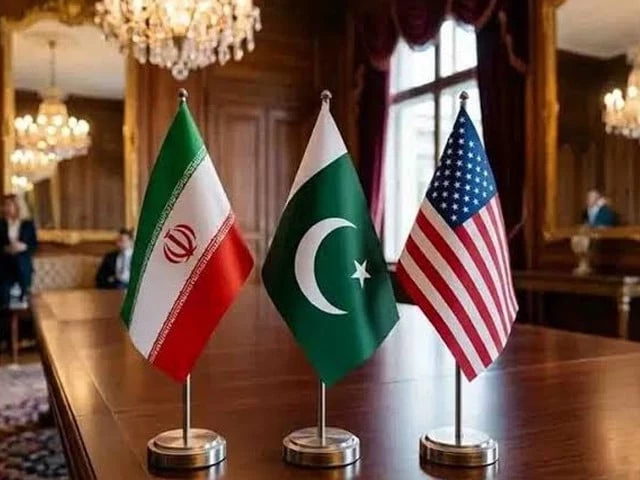
Pakistan spent June being congratulated.
The Islamabad Memorandum of Understanding — brokered by Deputy Prime Minister Ishaq Dar in a series of intensive shuttle meetings between Washington, Tehran and Gulf capitals — was widely described as Pakistan’s most significant diplomatic achievement in a generation. Two powers on the edge of all-out war had agreed to a framework. The Strait of Hormuz would remain open. The strikes would stop. Pakistan was the honest broker.
On July 18, Iran’s Deputy Foreign Minister Kazem Gharibabadi announced that Tehran was suspending all its commitments under the MoU. “We have suspended our commitments and are currently focused on defending the country,” he said. The United States had already declared the agreement “over” at the NATO summit in Ankara three weeks earlier. On the night of July 18–19, Iran struck water and power infrastructure in Kuwait.
Dar is now calling the Kuwaiti Foreign Minister.
The call has a certain geometry to it. Pakistan is calling Kuwait — a US-aligned Gulf state that just had its desalination plant bombed by Iran — to explain that the framework Pakistan brokered to stop Iran from bombing things is still the right framework. Kuwait, whose government needs to explain to its citizens why their water supply was disrupted, is presumably listening politely.
This is the position of the honest broker when the deal collapses: you are the last person still arguing for the deal, calling the people who were just harmed by the party you vouched for, assuring them that diplomacy remains the only realistic path forward. It is not a comfortable position. It is also, in some senses, the only position Pakistan can hold.
Pakistan’s regional role has always been structurally constrained. It shares a border with Iran. It has deep financial and community ties with the Gulf states that Iran is now attacking. It hosts US military logistics relationships it cannot formally acknowledge. It is currently trying to keep the IMF programme intact while oil prices — set daily, as of yesterday — move with each night of strikes in a conflict it did not start and cannot stop.
The honest broker in this situation is not a power with leverage over either party. It is a country that made itself useful during a moment of de-escalation and now finds itself responsible for maintaining the fiction of a framework that exists only in its own Foreign Office statements. The MoU is suspended. The strikes continue. The Strait is closed.
What Pakistan actually has left to offer, in this situation, is a phone call.
That is not nothing. Dar called Kuwait and Saudi Arabia; both returned the call. In the architecture of crisis diplomacy, being the country that both the attacker and the attacked will still talk to has value — not this week, when the bombs are falling and the frameworks are suspended, but in the next cycle of negotiations, when both parties eventually want a way out and need a channel that neither side has publicly burned.
Pakistan’s bet, implicit in every Foreign Office statement since July 8, is that the current escalation has a ceiling — that neither the US nor Iran wants full-scale war, that the MoU’s suspension is tactical rather than terminal, and that the country which kept calling even when nobody was listening will be useful when the calls start mattering again.
That may be right. It may also be optimistic. But it is the only move a country of Pakistan’s weight and position can make: keep the lines open, keep calling, keep insisting the framework is viable.
Even when it is not.
Even when Kuwait’s water plant is offline.
Even then, you make the call.