
Pakistan is a nuclear state. It has the sixth-largest military in the world by active personnel. It has fought three declared wars and several undeclared ones. It has air superiority over every neighbour.
And this week, the Taliban — a government that does not have a conventional air force, a functioning central bank, or an internationally recognised seat at the United Nations — fired drones into Pakistani territory.
Pakistan’s military said it shot all four down. The Inter-Services Public Relations used careful language: “sophisticated countermeasures,” “neutralised,” “rudimentary” aircraft. The framing was designed to minimise the significance of the event. But the ISPR’s choice of words did not change the underlying fact: for the first time in this conflict, a non-state government running a pre-industrial economy launched an aerial weapon into Pakistan and made Islamabad respond.
This is worth sitting with.
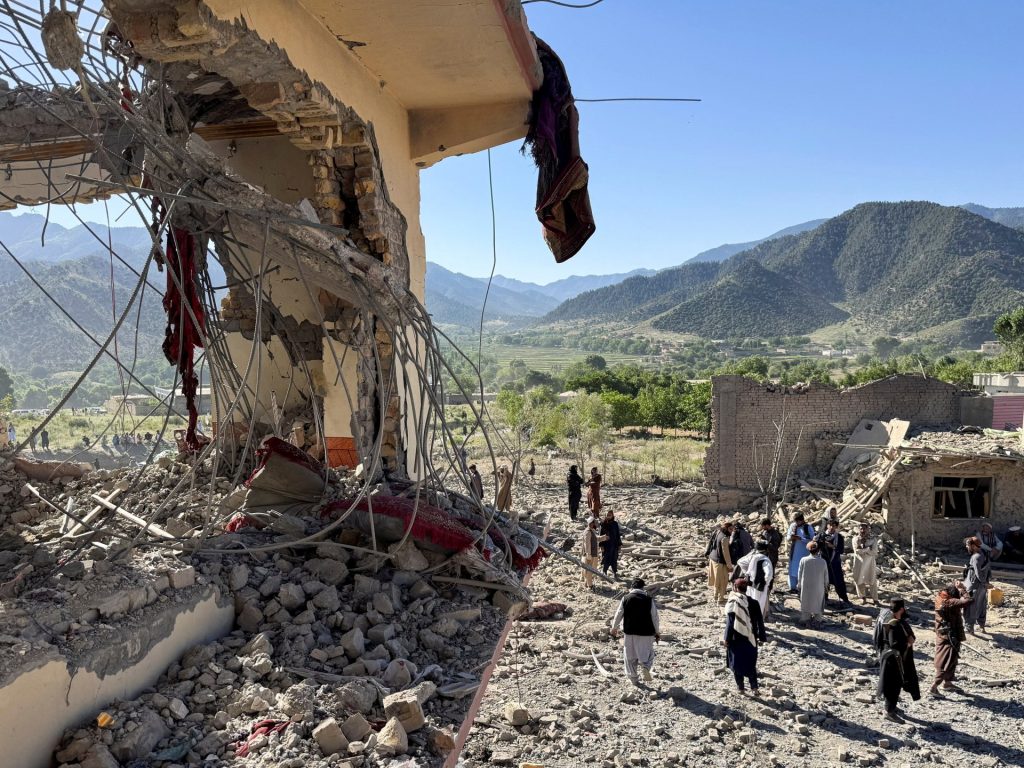
Pakistan’s deterrence framework — like that of most nuclear states — is built on existential threat logic. The bomb is meant to prevent an adversary from seeking to destroy the country. It works for that purpose. It did not deter four drones launched at a government school in Saranan. Nuclear weapons cannot deter a drone any more than a dam can stop a thorn.
The gap between Pakistan’s high-end military capability and its actual security situation is not new, but the Taliban have now illustrated it in a form that will be studied by everyone else watching. Pakistan has been fighting this conflict since February — conducting airstrikes inside Afghanistan, losing soldiers in border engagements, absorbing mass-casualty attacks inside its own cities — and it has not been able to end it. The Taliban are still there, still functioning, still launching.
There is something important in the word the ISPR chose for the drones: “rudimentary.” The adjective is accurate and also alarming. Rudimentary means cheap. Cheap means scalable. A Taliban government with constrained resources can produce or acquire rudimentary drones in quantity. Pakistan must field sophisticated countermeasures against each one. The arithmetic of this exchange is not flattering to the larger party.
The deeper problem is political. Pakistan entered this conflict in February with a clear military objective — degrade Taliban capacity to shelter the Pakistani Taliban fighters it holds responsible for mass-casualty attacks inside Pakistan. Several months later, the attacks have not stopped, the Taliban government has not collapsed, and Pakistan has added a new adversary: the Afghan civilians whose deaths in Pakistani airstrikes have been documented and remembered. You do not deter a government by creating a population that hates you.
Pakistan’s relationship with Afghanistan is among the most structurally complicated bilateral relationships in the world. The two countries share a disputed border. They share an ethnic population that does not recognise it. They have a long history of using each other’s territory to project influence and destabilise each other. Every Pakistani government since 1947 has believed it could manage this relationship through combinations of pressure and patronage; none has succeeded permanently.
The drones this week were four pieces of metal in the air. What they were carrying, beyond their payload, was a message: that the conflict’s terms have changed, that the Taliban have decided to cross a threshold they previously held back from, and that Pakistan’s security establishment should update its assumptions about what the next phase of this war will look like.
Pakistan’s military will have better answers to the four drones than it did before. It does not yet have an answer to the question the drones were really asking.



