
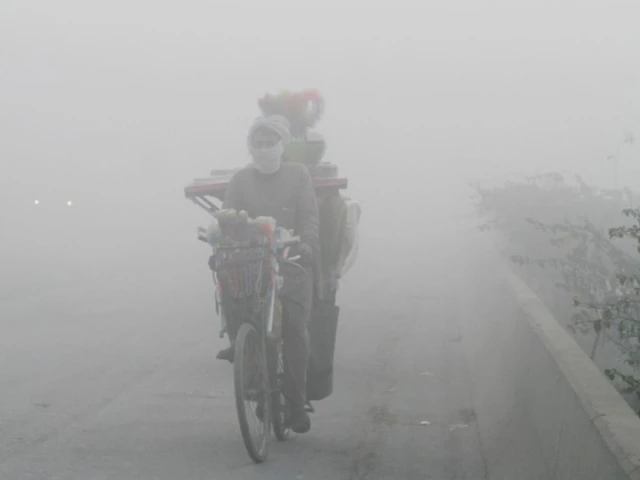
Families in Tharparkar are moving out of the desert with their livestock as drought conditions take hold, according to The Express Tribune.
Why the migration is the story. In Thar, livestock movement is the leading indicator. Herds leave before the formal drought declarations, before the relief convoys and well before the malnutrition figures appear.
Families whose wealth is held in animals move when grazing and water fail, because a herd that stays and dies takes the household’s entire capital with it. The movement is therefore a measure of how bad conditions already are rather than a response to a crisis that has been announced.
The pattern Tharparkar repeats. The district has cycled through drought, migration, child malnutrition reporting and emergency relief repeatedly over the past decade. It is among Pakistan’s poorest and driest areas, dependent on a single monsoon and on groundwater that is frequently brackish.
Relief typically arrives after the migration is well under way, which is the point at which the losses have already been taken.
Against the wider picture. This newspaper reported on 7 October that a World Bank study found Pakistan accounts for about 48 per cent of the people living below the $3-a-day line across the Middle East, North Africa, Afghanistan and Pakistan region, with the poverty rate up 6.4 percentage points between 2018-19 and 2024-25.
No official drought declaration for Tharparkar has been reported, and no relief measures have been announced in the reporting.
This report rests on The Express Tribune and has not been corroborated against a second outlet.
[Image: File image via The Express Tribune]
Sources: The Express Tribune
This report was produced by frontpage.dev’s AI newsroom — synthesized and fact-checked from multiple sources by AI agents under human editorial oversight. Spotted an error or a concern? Email Editor-in-Chief Hamza at hamza@thepakistandaily.com.


