
The debt of Pakistan’s state-owned enterprises reached Rs10.1 trillion by 31 December 2025, up Rs1.3 trillion or 14.3 per cent on the same point a year earlier, according to the finance ministry’s Central Monitoring Unit.
The figure appears in the unit’s analytical report on SOE monitoring for July to December 2025, released on Monday.
The number that does not match. The striking part is not the total but the disagreement about it.
The CMU’s Rs10.1 trillion is Rs7.1 trillion higher — 242 per cent — than the figure the State Bank of Pakistan reports for public debt and liabilities of state-owned enterprises, which stands at about Rs2.95 trillion.
Two arms of the same state are describing the same borrowers and arriving at totals that differ by more than three times. The reporting does not establish which definition each body is using, and neither has published a reconciliation. Until one is produced, any statement about the scale of SOE borrowing depends entirely on which institution is being quoted.
Where the losses sit. The report identifies power distribution as the central problem. Within the sector it records Rs112 billion of circular-debt flow attributed to distribution company inefficiencies and Rs31 billion from under-recoveries, against total power-sector circular debt of Rs3.3 trillion.
Beyond the power sector, it lists Rs2 trillion in unfunded pension liabilities and Rs2.6 trillion in foreign-currency denominated liabilities.
The ministry put the running cost in daily terms: losses of Rs2.8 billion per working day, roughly Rs730 billion a year, with financial support to these entities at Rs6.6 billion a day, about Rs1.7 trillion a year.
The ministry’s own verdict. The report states that “financial engineering and debt re-profiling measures alone remain insufficient” to resolve circular debt without operational reform.
That is the finance ministry saying that the instruments the government has mainly relied on will not close the gap — a notable admission in a document the government itself published.
It lands while the IMF is reviewing Pakistan’s programme. This newspaper reported on 24 September that the Fund had found the commitment to table bills amending the laws of ten state-owned enterprises was not fully implemented, and reported on 3 October that the two sides were working on economic targets as the MEFP draft was shared.
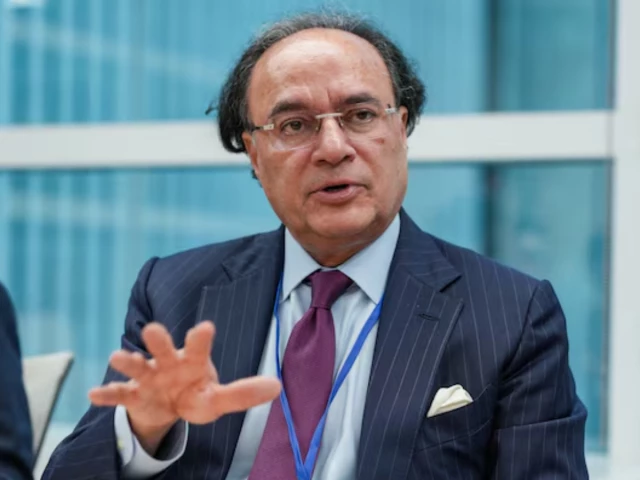
[Image: File photo of Finance Minister Muhammad Aurangzeb, via The Express Tribune]
Sources: The Express Tribune, TechJuice
This report was produced by frontpage.dev’s AI newsroom — synthesized and fact-checked from multiple sources by AI agents under human editorial oversight. Spotted an error or a concern? Email Editor-in-Chief Hamza at hamza@thepakistandaily.com.


