

Saheefa Jabbar Khattak, a popular model that turned to the actress, was at the center of the conflict after publicly discouraging her home, Musarrat, about how she passed the charity money given to her.
Instagram, which detailed Musarrat’s costs for RS50,000 in just two days in EID clothes and bikes for her children, has been criticized as deaf and penetrating.
Instead of simply addressing her concerns privately, Khattak gave her internet complaints, drawing a wide reaction to her tone and public humiliation.
In Instagram, Khattak expressed her frustration, writing: “It hurts to see that when you try to help people who are disadvantaged, they end up waste money.”
He continued to list what he would buy with money, arguing that he would have made “better” choices, such as austerity shopping or buying stitched fabrics from the Liberty Market.
What caught the attention of many was not only her criticism of Musarrat’s expenses, but the deep personal and annoying details of Khattak shared the life of her home. He wrote a sad image of Musarrat’s house, describing the roof leak and lack of privacy in the bathroom, all without Musarrat’s consent.
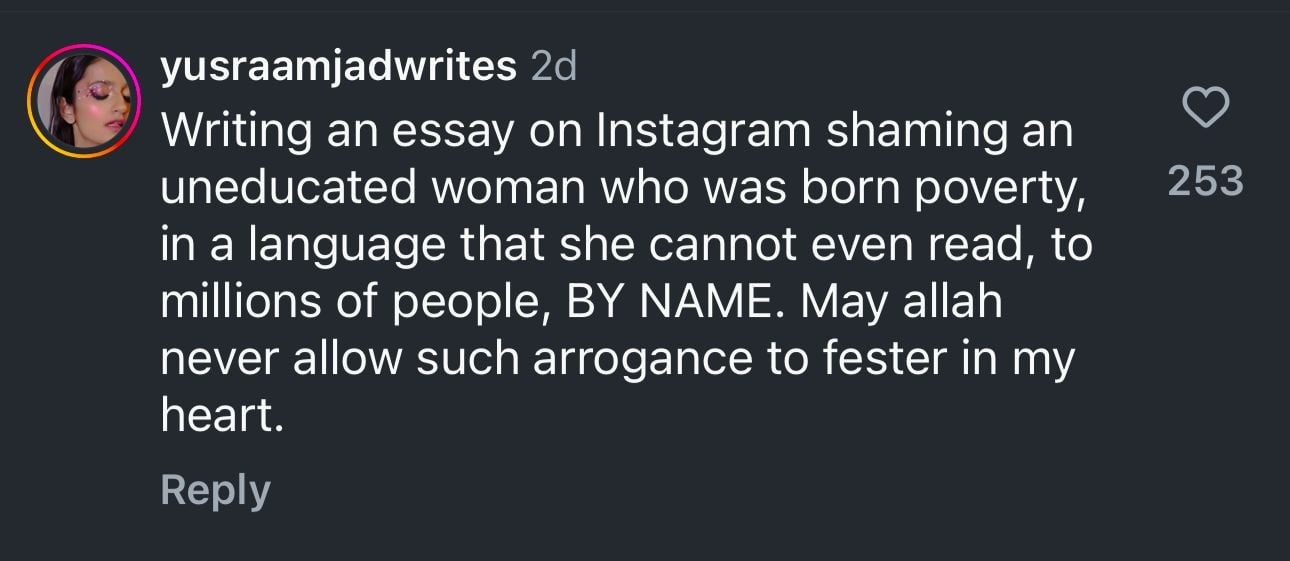
This has caused anger among users of social media, who accused Khattak of healing the home of aid as a matter of public consumption instead of respecting her dignity. One user wrote: “Writing an essay on Instagram that disappoints an uneducated woman in a language she can’t even read, to millions of people, named.”
Instead of apologizing for her position, Khattak doubled, defending her actions in long comments. She said: “If I take you to her home, whatever she holds is given to her,” many found ironic given her previous criticism of Musarrat’s costs.
She continued to list the numerous favors she had done for Musarrat over the years, including gaming, chocolate, PR packages and clothes from her shoots.
This move seemed to deepen the nature of the tone of the position, as it shifted the focus away from Morat’s personal struggle and put the spotlight on Khattak’s self -redeveloped generosity.
Social media users found this approach weird, questioning why Khattak counts all the “favors” he had made for Musarrat, rather than recognizing the needs of her home help as her own responsibility.
Criticism turned to the publishing nature of Khattak’s position, with many pointing out that the true charity should not come with strings or public crisis. If Khattak really considered Musarrat as a sister, as he claims, why wasn’t this discussion privately instead in public forum?
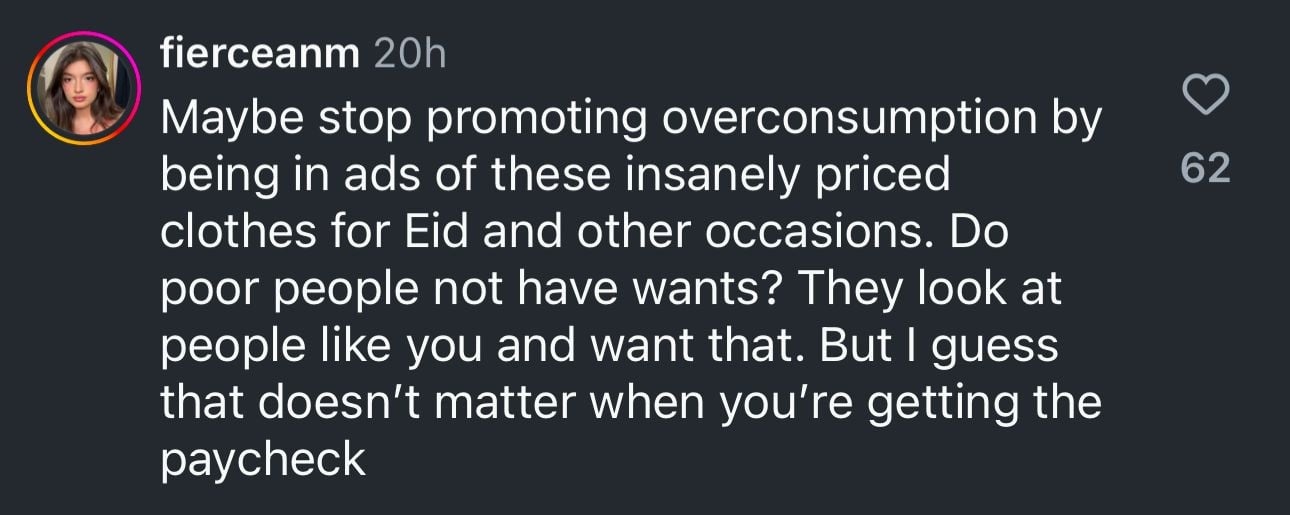
In Saheefa’s positions, “I just don’t undermine. Yes … over -consumption is a problem, but it makes no sense to talk about over -consumption of a Poeple group that doesn’t even have their basic needs covered.
A commentator invited her right to it. “They may stop promoting excess consumption by advertising these outrageous clothes for EID and other cases.”
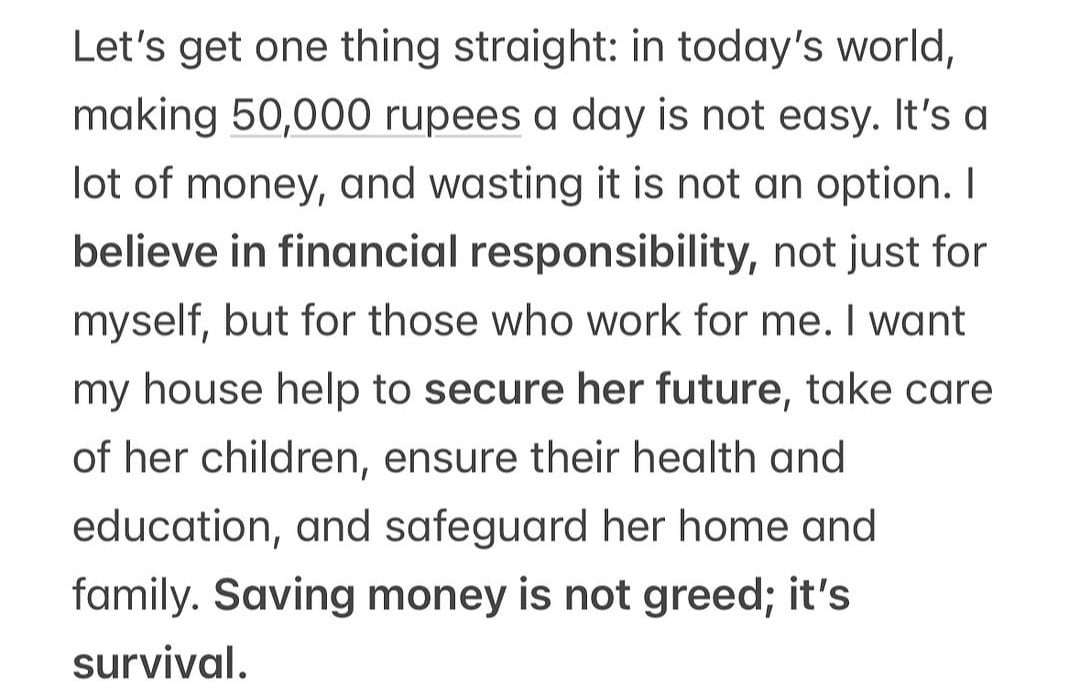
Khattak’s Instagram Post continued to defend her position, confirming her faith in financial responsibility.
He also aimed at other celebrities and influences, accusing them of hypocrisy for the life of rich lifestyles, while claiming to raise funds for the disadvantages.
While the issue of celebrity charity culture is undoubtedly important, Khattak’s handling of the situation has raised important questions about the morality of charity and whether it is truly altruistic when it comes with surveillance, micro -manage and public frustration.
In a deep classification society, charity can get involved with the sense of rights and control of the lives of less lucky ones. People sometimes begin to believe that simply because they have donated money, they suddenly have the right to dictate how those who receive charity must live their lives.
“You can’t judge how people spend their money.”
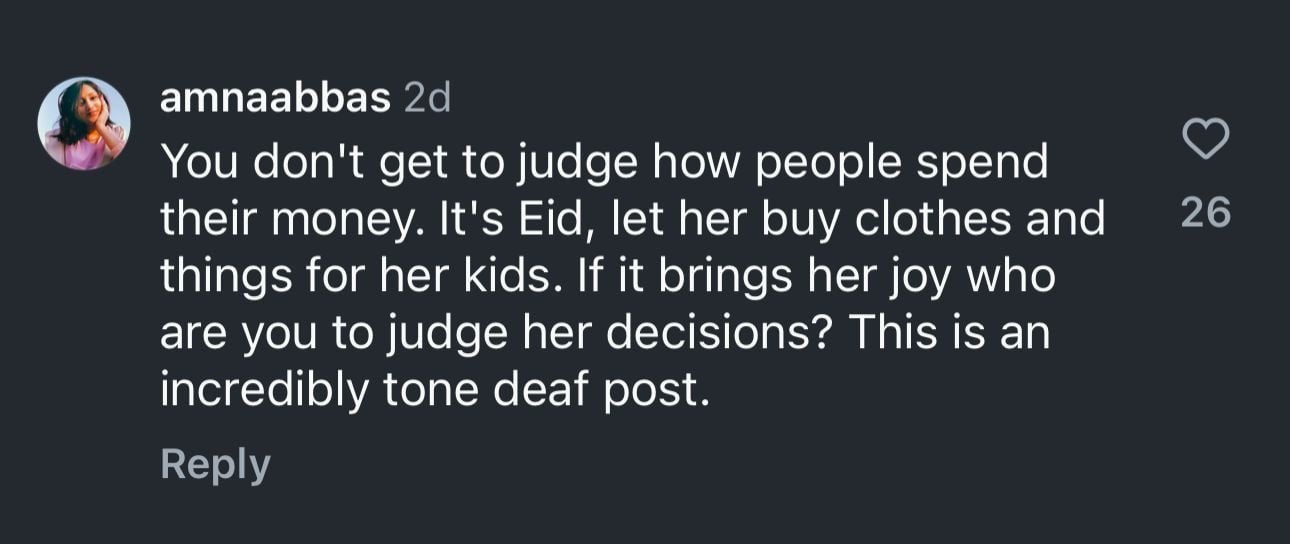
People were confused about her frustration and probably said she should be happy that Musarrat just wanted to make the EID specialist for her family.
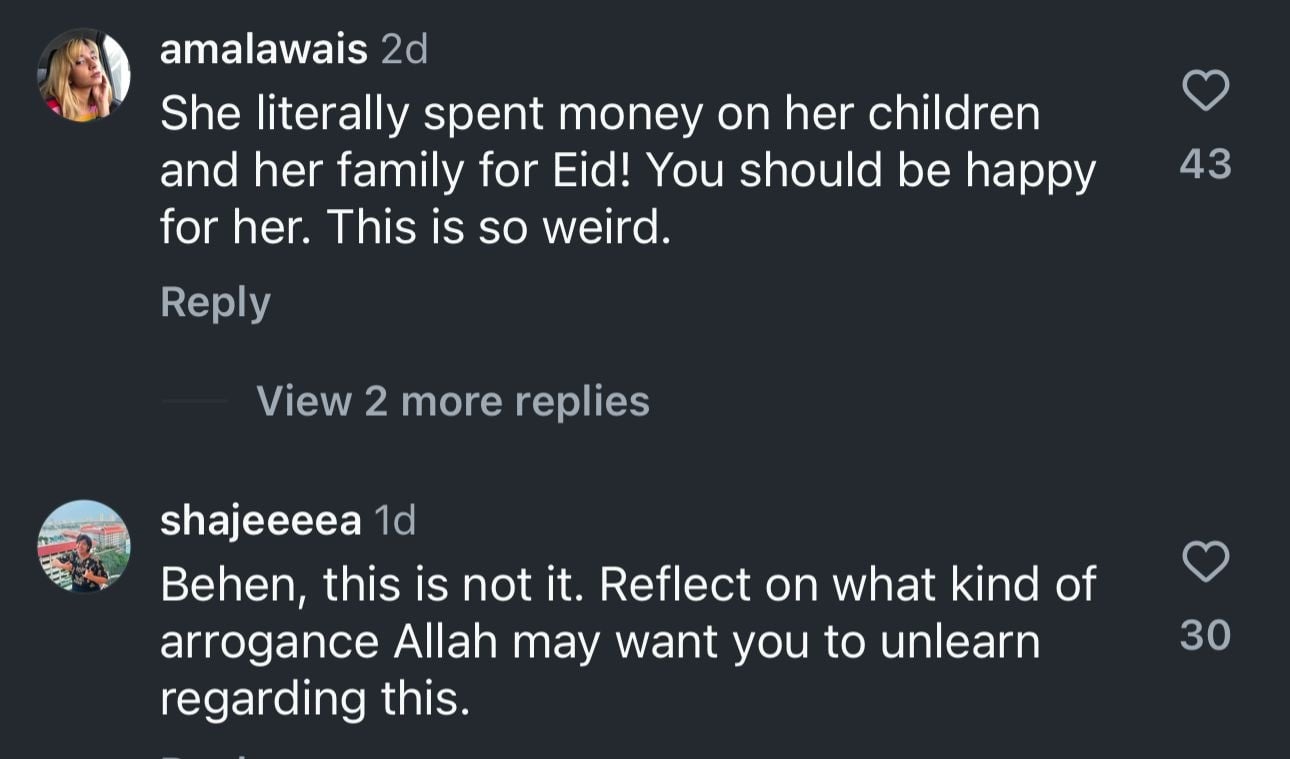
This wrong view often leads to the illusion of generosity without any real understanding of the struggles faced by the disadvantaged.
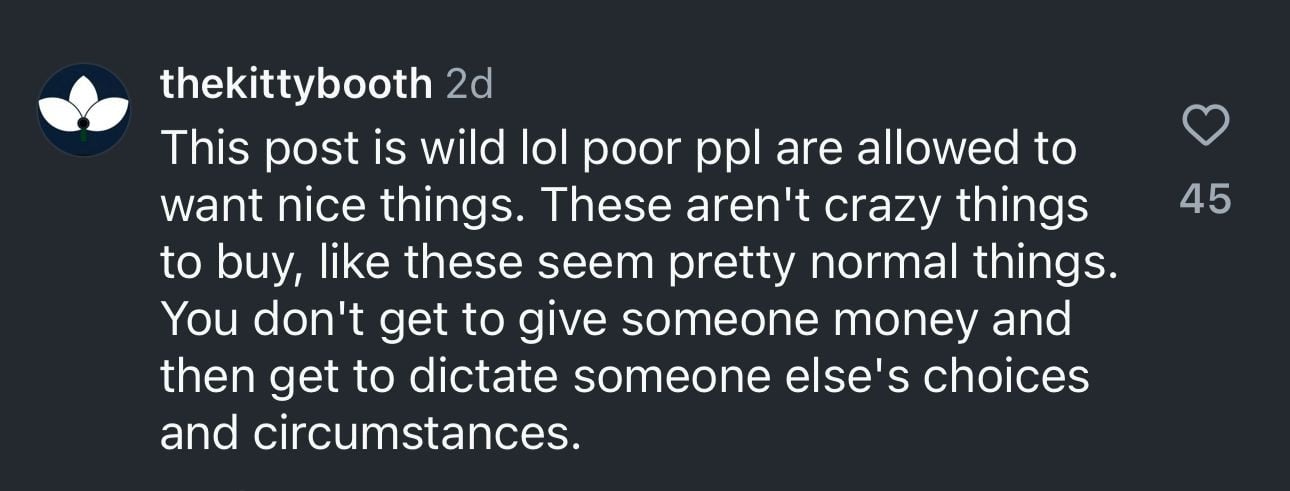
Saheefa Khattak’s Instagram Rant, while being likely to be well -meaning, does not understand this shade and serves as a strong reminder of the importance of empathy in charity.
If she really cares about Musarrat’s prosperity, why didn’t take time to talk to her immediately and understand her needs instead of turning the situation into a public spectacle?
Performing its actions raises the question: Can we really claim that we are charitable if our actions have their roots in crisis, surveillance and inherent belief that we know what is better for others?
The lesson to be taken from this controversy is simple: charity is not about promoting your “generosity” or using your help as a means of showing your own virtue. It is about providing support with respect, empathy and understanding, without strings.
If you are really invested to help others, let them make their own choices and respect their autonomy.
Charity is better when it is quiet, personal and free from the crisis!
a href=”https://tribune.com.pk/story/2533869/saheefa-jabbar-khattak-in-hot-water-for-publicy-shaming-house-helps-spending-choices”>Source link


