

Karachi:
Wali wants to make music, but his father sends him to the Medical School. Maya wants to become a doctor, but her father forces her to deal with a man who has only met once. Aania wants to end her life because no one listens to her when she says she’s tired.
These characters are the main Gen-Z set of Ary’s PalmBut off -screen is all of us.
Directed by Meesam Naqvi for the Big Bang Entertainment, the show follows a common home sharing two brothers, Jahangir and Suleiman. Jahangir (Noman Ejaz), Rash and Stern, returns from the US with his wife Mahnoor (Sawra Nadeem) and their children, Wali (Samar Jafri) and Aania (Nooray Zeeshan). They find it difficult to live in the ways of a tightly connected middle class life in Pakistan. Suleiman (Saad Zameer), calm and soft, remains in the same house as his wife Panah (Saman Ansari) and their children, Sameer (Abul Hasan) and Amal (Reham Rafiq), who are very familiar with this life – including the solid problems coming in their lives.
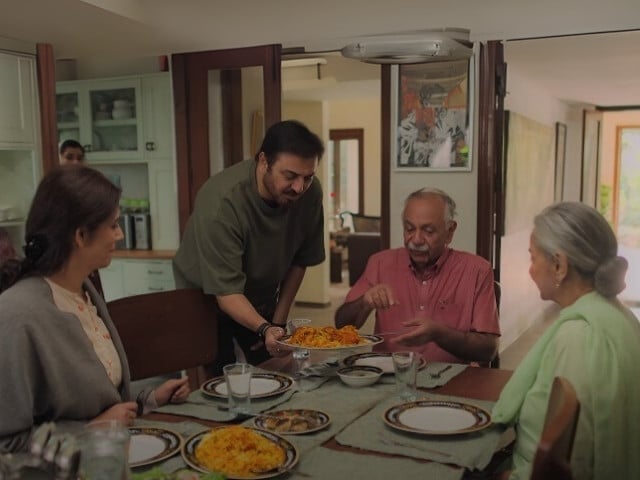
In the subject, the Maya sisters (Aina Asif) and Mashal (Haleema Ali) live with a rigorous father who makes every call for them. Until Maya and Wali, both in Med School, develop a relationship.
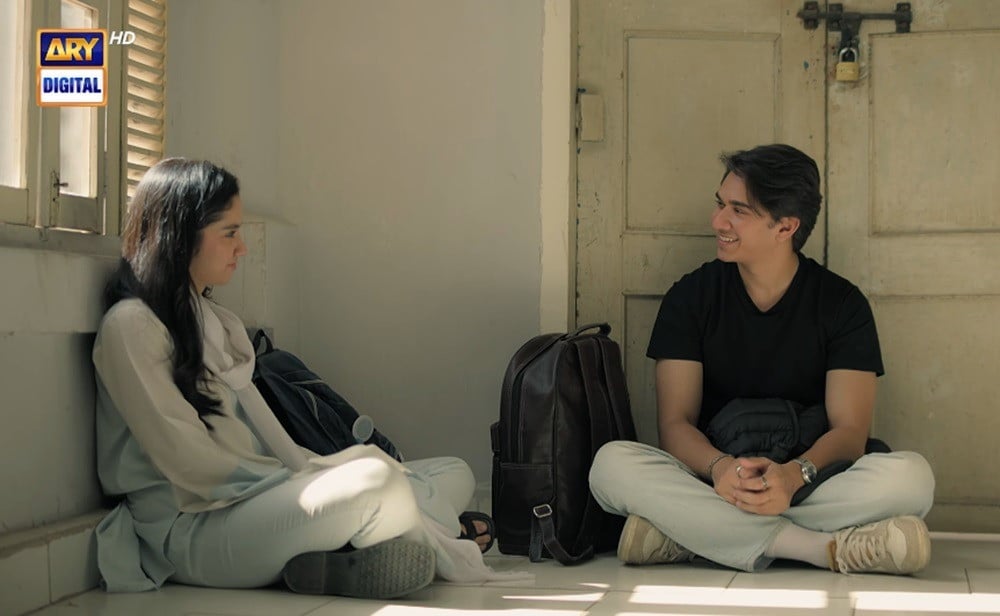
What follows shows what it means to grow up in a culture shaped by generation differences.
This is the distance Palm has recorded. Every week since it was first aired on April 7, the serial television has given the new twenty-something Gen-Zs in Pakistan a version of themselves that is not a reverse mechanical to be “analog”. (Exhibition A: We all remember when Abubakr Shak is painful “sorry my foot!” Hit our schedules). At the same time, the 50 parents gave the Gen X, who grew up in a much stricter “Don’t ask, just do what” culture, the opportunity to look in more honestly. In this way, the show brought two generations closer, giving them the opportunity to finally speak.
In episode 29, Maya embraces Shaheer’s father for the first time. He apologizes that he insisted on meeting Wali, supporting the rejection he always followed. But for once, Shaheer – a man who has gone through the entire show clinging to the idea of family price – softens. She tells her that they will understand it. Later that night, he confesses to his wife that while they grew up to fear dishonesty, the refusal of Maya’s support may mean that he will lose it entirely.
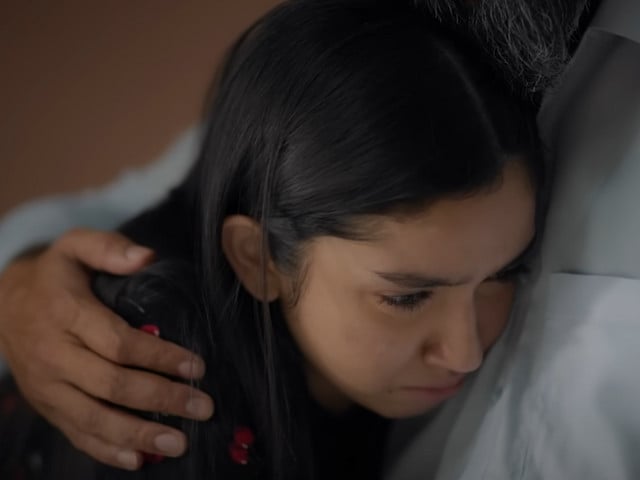
This is a time for purification for both and an important turning point in history.
Mohammed, 26, had a similar experience as he entered the room with his father watching the scene where Maya’s mother, Saadia, allows her to meet Wali. “It turned something inside me,” he said. “He didn’t say anything, but somehow seeing what made me easier for me to fool it. I told him about my relationship right now.”
Yet, Palm It is not the first television drama to face the Gen Z. College portal (2023), Udwaa (2024), and Chaos of summer (2021) He tried, but soon fell because their main focus was on appearance and no races. These characters might have looked like Gen Z and talked like them, but that was all.
“I don’t really watch Pakistani dramas because they only show Gen Z as Bats,” Mohammed said. “Also, he always feels that parents and children are constantly contrary to each other that is so boring to watch.”
And that’s what Parwarish has done differently. Just like the children, she has shown parents in shades of gray, as well as ongoing works-like Parna, the second guess like Suleiman and even harsh like Jahangir. But they try.
Following the drama made me stop and reflect, “said Irum, 52, mother of two.” Care and control are not the same. Sometimes, trying to protect our children, we end up having their choices. I didn’t realize how deeply it could affect them until I saw it playing on the screen especially when Aania hurt herself. It made me think how heavy things can feel about our children when we don’t hear. ”
It is a realization that confirms what Dr. Shelina Bhamani, Assistant Professor and Youth at AGA Khan University. “In our culture, parental control is wrong as love,” Dr. Bhamani said in a conversation with Express Tribune Life & Style. “Parents think if I can check you. If I don’t let you go out with your friends or sit in your room alone, that’s love.”
This is exactly the difference that leads Jahangir’s story throughout the show. He cannot separate his role as a father from the Patriarch. For him, his son is not a person in himself, but an extension of his own reputation. So, when Wali is unfaithful for pursuing full -time music, he offends Jahangir so deeply that he is willing to let his son sleep on the streets instead of accepting his choices.
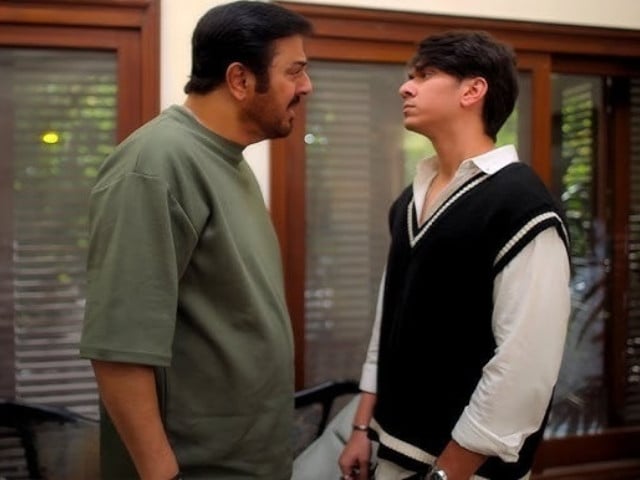
“This is where individual identity is at stake for a family price,” said Dr. Shelina.
It is not only Wali’s rejected autonomy, Maya’s love for Wali is also not regarded as a relationship between two consensual young adults, but as a threat to the image of her family. When their relationship is exposed, it is Maya that pays the highest price. Her commitment is frustrated, her father pulls her out of the university and even thunderstorms at Wali’s home to face him in front of his entire family.
Nevertheless, Palm It does not diminish Maya’s relationship with the scandal. Instead, it becomes the heart of the show. “Relationships were the most emotional part we need to watch,” said Mariya, 19.
This progressive imaging has still been criticized. Online commentators said the demonstration overflows teenage freedom and relationships. To them, it gives too much space to emotions that need to be discouraged or at least managed. “There are many lessons and goals to teach your children except to fall in love. This is not age for this and should not be depicted on television.” said Kiran Naz, a right -wing preservative anchor on Samaa TV, on Tiktok review. Over five hundred comments were flooded with an agreement.
But this is just a reality that Parwarish reflects. Teenage love is messy, all by consuming and deeply visible in this culture as well. The creators make a clear effort to deal with it in a practical way instead of looking at the other way. In episode 32, Maya, who has spent the last three episodes that have done nothing but talk with Wali and define his problems, loses her false exams. She collapses, she was destroyed as she realizes that she loses herself in the relationship. She plans a healthy line with Wali and agree to return so that she can focus on her studies.
“Who critics often overlook is the media’s pedagogical potential,” Shelina Bhamani said. “The media are teachers and they can greatly teach parental care.
Writer Kiran Siddiqui repeated it in an interview with Express Tribune Life & StyleBy saying: “By the end, it came to a point where people understand the complexity of life, the complexity of human nature, the complexity of a human brain, and the way in which the differences of land or generations can become a factor that even the most basic feeling of a person can be done.”
It is the character of Suleiman that brings this complexity to life. He knows every person where he is – either standing by Sameer’s son’s decision to become a gamer, even after being caught in a pharmacy, or swallowing his pride to apologize to his brother only because his father who asked for him.
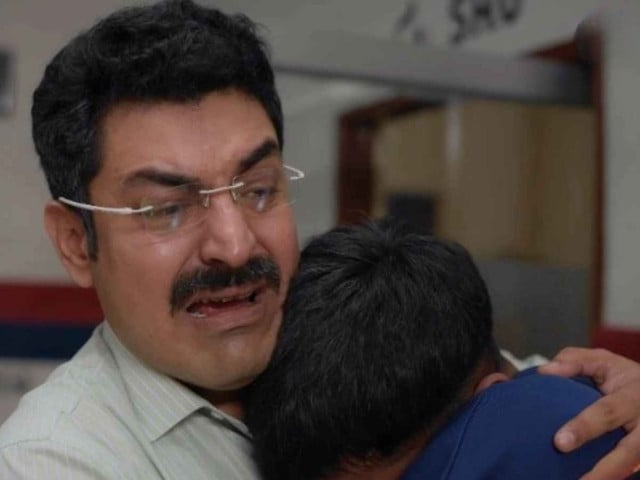
This, after all, is where Palm leaves its deepest sign.
In a culture where the emotional vocabulary between generations is such a chaos, it shows us that children and parents can talk to each other and that power and adolescence can sit at each other on the table. It helps young people understand their silence and forgive parents for everything they could not be.
As Kiran Siddiqui said, “everyone has their own experiences with their family members and friends. If it can happen somewhere we understand each other’s struggles, there may be a path of forgiveness.”
And that can just be the kind of Parwarish we all need.
Palm Air every Monday and Tuesday at Ary. The latest episode has been on air on August 11, 2025.
a href=”https://tribune.com.pk/story/2559936/parwarish-seats-parents-and-children-at-the-same-table”>Source link


