
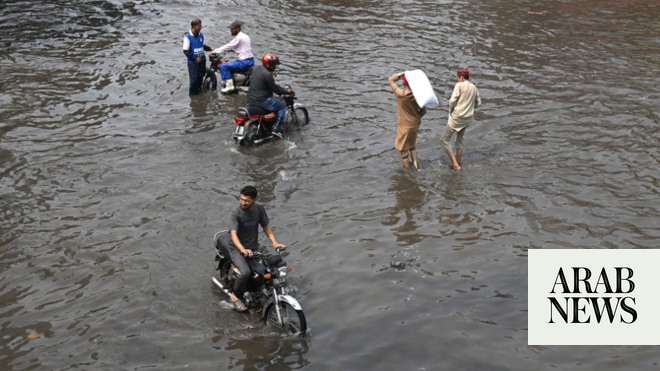
Pakistan’s National Disaster Management Authority (NDMA) issued a nationwide alert on Monday warning of flash floods, glacial lake outburst floods (GLOFs), and landslides from June 28 to July 3, as the country enters the most meteorologically active window of the year (Arab News; Pakistan Today).
The Pakistan Meteorological Department (PMD) said the first organised monsoon spell is expected to enter from northeastern Punjab and Azad Jammu and Kashmir on July 1, spreading north and westward over the following days. Landslide risk is elevated across upper Khyber Pakhtunkhwa, Gilgit-Baltistan, Murree, Galiyat, and Azad Kashmir, while heavy rainfall may trigger urban flooding in low-lying parts of Islamabad, Rawalpindi, Peshawar, Sialkot, Gujranwala, Lahore, and Faisalabad (Al Jazeera; The Nation).
Daytime temperatures in several cities are expected to exceed 40 degrees Celsius on Monday before the rain system moves in — a combination of heat and moisture that the NDMA warns can accelerate glacier melt and trigger glacial lake outbursts in northern mountain regions. Aaj English TV’s Monday morning bulletin described the incoming system as a “new rain system” prompting a high alert across the country.
A pattern of escalating weather damage
Pakistan’s northern infrastructure has been under severe weather stress throughout 2026, with landslides, floods, and storms repeatedly damaging telecom towers and power grids across the highlands. The country was catastrophically hit by flooding in 2022, which submerged roughly one third of the national territory, killed more than 1,700 people, and caused damages estimated at $30 billion. The NDMA has urged provincial governments to pre-position rescue equipment and maintain communication with district administrations in at-risk areas ahead of the July 1 onset.



